



 Saif Ali Tai
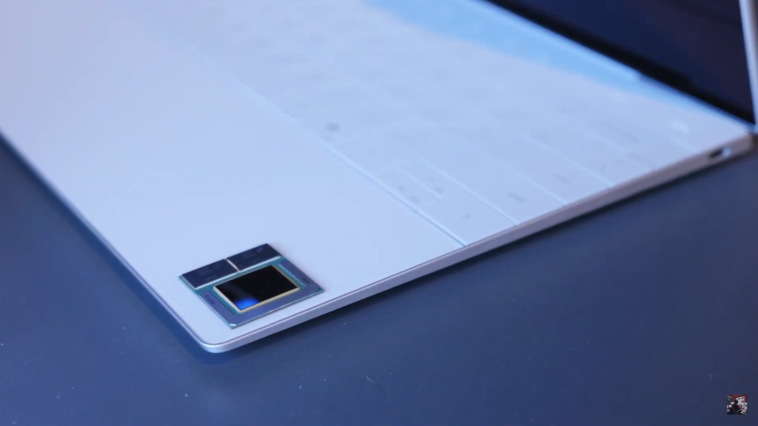
Computex 2026 live updates are rolling in, and this year’s show is all about AI, efficiency, and raw performance. Intel dropped the details on its Lunar Lake processors, AMD unveiled its Zen 6 architecture, and NVIDIA showcased the Blackwell B200 GPU. This year’s announcements solidify the industry’s shift towards on-device AI acceleration, promising significant upgrades for consumers and pro users alike. It’s clear that the battle for your next laptop and desktop CPU is heating up, with power efficiency taking center stage alongside raw clock speeds.
📋 In This Article
Intel Unveils Lunar Lake: A Mobile AI Powerhouse

Intel’s keynote was all about Lunar Lake, their next-gen mobile CPU designed from the ground up for AI performance and extreme power efficiency. They confirmed it’s built on the Intel 20A process, which is a big deal for power draw. The integrated NPU now boasts a staggering 120 TOPS of AI performance, a massive jump from the 48 TOPS in Meteor Lake. This isn’t just for Windows Studio Effects; we’re talking about running complex local AI models like Stable Diffusion XL 1.5 or even smaller LLMs directly on your laptop without hitting the cloud. Intel claims a 3x performance-per-watt improvement over its previous generation for AI workloads, which, if true, will make a huge difference for battery life in future ultrabooks. I’m genuinely excited to see these in action, especially for creators who need local processing.
Lunar Lake’s Xe2-LPG Graphics: A Major Leap
Beyond the NPU, Lunar Lake integrates the new Xe2-LPG graphics, promising a significant uplift in gaming performance for integrated solutions. Intel demonstrated Cyberpunk 2077 running at a respectable 1080p medium settings, hitting over 60 FPS on a pre-production unit. This puts it squarely in competition with some entry-level discrete GPUs, making it a compelling option for thin-and-light gaming laptops around the $1200-$1500 mark.
AMD’s Zen 6: More Cores, More Cache, More Power
AMD didn’t hold back, detailing their Zen 6 architecture for both desktop and server. While specific SKUs are still under wraps, the focus was on increased core counts, larger L3 cache, and improved IPC (Instructions Per Cycle). Zen 6 will ship with an integrated XDNA 3 NPU, offering up to 90 TOPS, pushing AMD’s on-device AI capabilities closer to Intel’s. For gamers and content creators, the promise of higher clock speeds and even more cores means a significant boost in multi-threaded applications. Analysts are predicting Zen 6 to bring a 15-20% IPC uplift over Zen 5, which would be a huge win for AMD in the desktop space, especially for those running heavy workstation loads. I’m keen to see how the pricing shakes out, as AMD has been aggressive lately.
Socket AM5 Longevity Confirmed for Zen 6
One of the biggest wins for consumers is AMD’s commitment to the AM5 socket. They confirmed Zen 6 will continue to use AM5, meaning existing motherboard owners won’t need to upgrade their entire platform to get the latest performance. This is a massive cost-saver, especially with DDR5 RAM still being a bit pricey. It’s a smart move that builds serious customer loyalty.
NVIDIA Blackwell B200 GPU: AI Dominance Continues
NVIDIA’s keynote, as expected, was heavy on AI. They officially launched the Blackwell B200 GPU, touting it as the world’s most powerful chip for AI. It features 208 billion transistors and delivers an insane 20 petaflops of FP4 AI performance. This isn’t a consumer card, obviously; it’s designed for data centers and massive AI model training. Jensen Huang showcased impressive gains in training times, claiming a large language model that previously took 90 days to train can now be completed in just 4 days on a Blackwell system. While you won’t be putting a B200 in your gaming rig, the underlying architecture and advancements will eventually trickle down to future GeForce cards, improving ray tracing and AI upscaling technologies. The sheer scale of this chip is mind-boggling.
Blackwell’s Impact on Consumer AI Features
While the B200 is for enterprise, its advancements in AI processing are critical. Expect future GeForce RTX cards, likely in the RTX 60 series, to inherit some of this improved tensor core efficiency and architecture. This means even better DLSS 4.0 performance, more sophisticated AI-driven game features, and faster local AI applications on your desktop. The gap between cloud AI and local AI is closing rapidly, and NVIDIA is driving that charge.
What Computex 2026 Means for Your Next PC Build
This year’s Computex proves that AI is no longer a buzzword; it’s a fundamental component of future computing. For consumers, this means laptops and desktops will be far more capable of handling local AI tasks, from image generation to advanced video editing and even real-time language translation, without constant internet access. Expect to see ‘AI PC’ branding become even more prevalent. The competition between Intel and AMD for NPU performance is fantastic for us, the end-users, as it will drive innovation and likely keep prices competitive. If you’re planning a PC upgrade in late 2026 or early 2027, these announcements mean you’ll have some genuinely powerful, AI-accelerated options to choose from, offering significant performance gains over current generation hardware. Don’t buy a new high-end laptop right now if you can wait; the next wave is going to be big.
The Rise of On-Device AI: Privacy and Speed
The shift to powerful on-device NPUs addresses major concerns around privacy and latency for AI applications. Running AI models locally means your data doesn’t leave your machine, and responses are instantaneous. This is crucial for sensitive work and for users in areas with unreliable internet. It’s a win-win for user experience and data security.
⭐ Pro Tips
- If you’re building a new PC, consider waiting for Zen 6 CPUs later this year; the AM5 platform offers great upgrade potential.
- For new laptops, hold off until Lunar Lake models arrive in Q4 2026. The NPU performance jump will be worth the wait for AI-heavy users.
- Don’t overspend on a high-end GPU right now unless you absolutely need it. New architectures are always around the corner, and prices can fluctuate wildly.
Frequently Asked Questions
When will Intel Lunar Lake and AMD Zen 6 be available?
Intel Lunar Lake is expected in Q4 2026 for mobile devices. AMD Zen 6 will likely launch in late 2026 or early 2027 for both desktop and server.
Is an ‘AI PC’ worth it or just marketing hype?
An ‘AI PC’ is definitely worth it for creators, developers, and anyone who uses AI tools regularly. The dedicated NPUs genuinely accelerate tasks, improving efficiency and battery life.
How much will new AI PCs cost?
High-end AI-accelerated laptops with Lunar Lake or Zen 6 are expected to start around $1,500-$2,000. Desktops will vary based on components, but expect flagship CPUs to be $500+.
Final Thoughts
Computex 2026 proved that the future of computing is deeply intertwined with AI. Intel’s Lunar Lake and AMD’s Zen 6 are set to redefine mobile and desktop performance, while NVIDIA’s Blackwell pushes the boundaries of data center AI. If you’re in the market for new hardware, these advancements mean you’re in for a treat with significantly more powerful and efficient options coming soon. Keep an eye on the market in late 2026; your next PC is going to be an AI powerhouse. Stay tuned for deeper dives into these products as they hit the shelves.




GIPHY App Key not set. Please check settings