



 Saif Ali Tai
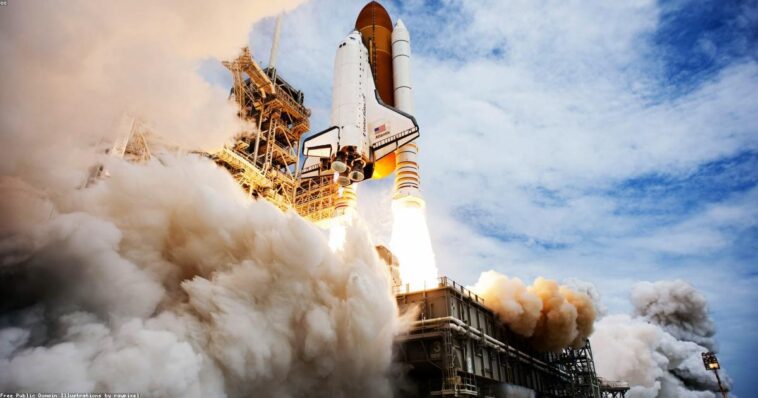
Rocket engine developer Impulse just announced it secured an eye-watering $500 million in Series C funding. This massive capital injection isn’t just for building bigger rockets; it’s earmarked for an ambitious hiring spree focusing on human engineers, not AI. In an era where every other startup is hyping its AI-first strategy, Impulse’s commitment to human expertise for its intricate rocket designs stands out, signaling a calculated bet on traditional engineering for high-stakes aerospace projects.
📋 In This Article
A $500 Million Bet on Human Ingenuity in Aerospace

Impulse’s latest funding round, led by tech giants and venture capital firms, brings their total raised to over $850 million since their inception in 2022. This half-billion dollar boost is specifically aimed at scaling up their engineering teams, particularly for propulsion systems and advanced materials. While many companies in 2026 are heavily investing in AI for design automation and optimization, Impulse CEO, Dr. Anya Sharma, stated their core philosophy remains rooted in human problem-solving for the unique challenges of rocket science. I think it’s a refreshing take; some things just need that human touch, especially when lives and billions of dollars in payload are on the line. It’s not about shunning AI entirely, but about knowing its limits in mission-critical applications.
Why Human Engineers Still Matter for Rocketry
Designing complex rocket engines requires an intuitive understanding of physics, material science, and manufacturing tolerances that current AI models, even advanced ones like Gemini 2.0 or Claude 3.5, struggle with in a truly novel, end-to-end fashion. Human engineers bring years of experience, gut feelings from past failures (and successes), and the ability to think outside the box in ways AI still can’t replicate for truly groundbreaking designs. Impulse’s approach acknowledges that while AI can assist, it’s not ready to lead the charge.
Shunning AI for Core Design: A Risky or Brilliant Move?
In a market saturated with AI-driven solutions, Impulse’s decision to explicitly state they’re hiring ‘people, not AI’ for critical design roles is both a marketing statement and a strategic choice. While AI is fantastic for data analysis, simulation, and even generating initial design concepts, the iterative refinement, material selection under extreme conditions, and the sheer intellectual leaps required for next-gen propulsion systems often demand human oversight. We’ve seen AI make incredible progress, but for something like a new liquid oxygen/methane engine, the stakes are too high for unverified AI-generated blueprints. This move sets Impulse apart from competitors like Relativity Space, which heavily uses AI and 3D printing for rocket manufacturing, showing a clear philosophical divide.
The Current State of AI in Aerospace Engineering
Today’s AI excels at optimizing existing designs or running millions of simulations faster than humans ever could. Companies like SpaceX use AI for flight path optimization and anomaly detection. However, generating a completely new engine architecture from scratch, capable of handling 3,000 psi chamber pressures and extreme temperatures, still largely falls to human experts. Impulse’s strategy suggests they see AI as a powerful tool, but not a replacement for the core creative and problem-solving aspects of engineering.
What This Means for the Future of Space Tech
Impulse’s substantial funding and human-centric hiring strategy could signal a shift, or at least a diversification, in how space startups approach innovation. If Impulse’s human-led approach yields faster, more reliable, or more efficient rocket engines than AI-heavy competitors, it could force a re-evaluation across the industry. For consumers and businesses relying on space services, this could mean more reliable launch options and potentially lower costs if Impulse can achieve efficiencies through traditional engineering brilliance. It’s a fascinating experiment playing out in real-time, with hundreds of millions of dollars on the line. Their first orbital test flight is slated for late 2027, which will be the real litmus test for this strategy.
Impact on Talent Acquisition and Industry Trends
This move is a huge win for human engineers. While many fear AI will automate their jobs, Impulse is actively creating high-skill, high-paying positions. It could also encourage other industries handling critical infrastructure to reconsider the balance between AI automation and human expertise. It’s a powerful statement that some problems, especially those with catastrophic failure modes, still demand the nuanced judgment of a human mind.
⭐ Pro Tips
- If you’re an aerospace engineer, keep an eye on Impulse’s careers page; they’re clearly investing heavily in human talent.
- For investors, this signals a potential divergence in space tech strategies; watch Impulse’s 2027 test flight closely.
- Don’t assume AI is the only path to innovation in every sector; Impulse proves human expertise still holds immense value in complex engineering.
Frequently Asked Questions
Why did Impulse raise $500 million?
Impulse raised $500 million in Series C funding to significantly expand its human engineering teams and accelerate the development of next-generation rocket engines.
Is Impulse shunning AI completely?
No, Impulse isn’t shunning AI completely, but they are prioritizing human engineers for core design and critical problem-solving roles, using AI as a tool rather than a primary driver.
When is Impulse’s next rocket launch?
Impulse is targeting its first orbital test flight for late 2027, which will showcase their human-engineered propulsion systems.
Final Thoughts
Impulse’s $500 million funding round and its explicit commitment to human talent over AI for rocket engine design is a bold, contrarian move in 2026. It underscores a belief that for the most complex, high-stakes engineering challenges, human intuition, experience, and creative problem-solving remain irreplaceable. Whether this strategy yields superior rockets compared to AI-first approaches is the multi-million dollar question. I’ll be watching their 2027 test flight with keen interest. Stay tuned to see if human ingenuity truly outpaces silicon for reaching the stars.




GIPHY App Key not set. Please check settings