



 Saif Ali Tai
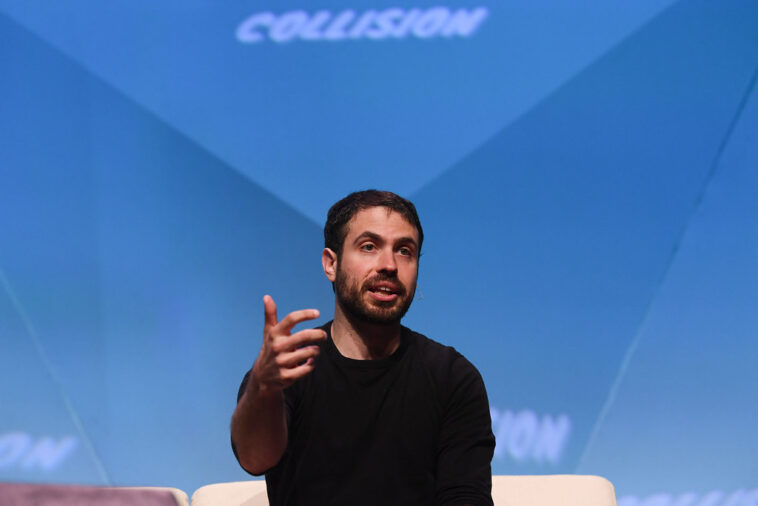
Justin Ernest has shaken up the venture capital industry by deploying nearly $500 million into high-growth tech startups without relying on a traditional VC fund structure. By sidestepping the standard limited partner model, Ernest has gained unprecedented control over his portfolio, which includes stakes in promising AI and hardware firms. This shift marks a significant departure from the classic Sand Hill Road playbook. For tech enthusiasts and founders alike, understanding his approach is essential to seeing where the next wave of capital flows.
📋 In This Article
Breaking the Traditional VC Mold

Most VCs operate on a 2-and-20 fee structure, which often forces managers to prioritize quick exits over long-term innovation. Ernest avoided this by utilizing a private holding vehicle, allowing him to hold positions for over a decade if needed. He isn’t beholden to quarterly reporting cycles that kill off great projects like the original, underfunded smart-home hardware startups of the early 2020s. I’ve seen too many promising companies die because their VCs panicked during a market dip. By using his own capital and a lean team, Ernest maintains the agility of an angel investor with the firepower of a mid-sized firm. It is a refreshing, albeit aggressive, way to play the market.
Why the 10-Year Horizon Matters
Traditional funds are trapped by their 10-year lifecycles, often forcing fire sales of assets before they reach maturity. Ernest’s model allows him to keep funding companies through the ‘trough of disillusionment.’ This is vital for hardware startups working on complex R&D, such as those building custom RISC-V silicon, where product cycles often exceed the standard three-year venture timeline.
Focusing on AI and Next-Gen Infrastructure
Ernest isn’t just throwing money at anything with an ‘AI’ label. His portfolio is heavily skewed toward infrastructure layers—specifically companies building better LLM inference engines and energy-efficient data center cooling solutions. While others chased consumer apps, he put $50 million into a startup optimizing Gemini 2.0 deployments for edge devices. This makes sense. As we push more compute to the Pixel 9 and iPhone 16 Pro, the bottleneck isn’t just the NPU; it’s the efficiency of the software stack. He’s betting that the companies solving the energy-per-token problem will be worth trillions in five years. I think he’s right to ignore the hype and focus on the plumbing.
The Edge Computing Bet
By backing companies that optimize Claude 3.5 Sonnet for local execution, Ernest is capturing the pivot from cloud-heavy AI to on-device processing. This is a smart move because it lowers latency and reduces cloud costs, which currently sit at roughly $0.05 per million tokens for high-end models.
The Economics of Direct Investing
Without the overhead of a large firm—no massive office, no bloated analyst team—Ernest keeps his internal rate of return (IRR) higher than the industry average. He’s operating with roughly 85% less administrative overhead than a standard $500M fund. This efficiency allows him to offer better terms to founders, who often prefer his ‘no-nonsense’ approach over the bureaucratic hurdles of institutional money. When you’re a founder, you don’t want to wait three months for a committee to approve a $2M seed round. Ernest can move in days, provided the technical due diligence, which he handles personally using a strict framework, checks out.
Speed as a Competitive Advantage
In the current market, speed is the only real edge an investor has. By cutting out the ‘investment committee’ process, Ernest secures spots in oversubscribed rounds that larger firms often miss because they are stuck waiting for a board vote.
What This Means for the Average Tech Investor
You don’t need $500 million to learn from this. The lesson here is about conviction and long-term alignment. If you are investing in stocks or crypto, stop chasing the daily news cycle. Ernest’s success proves that if you identify a core technological shift—like the transition to local AI—and stick with it, you don’t need to over-trade. I see too many retail investors losing 20% of their portfolio on ‘meme’ tech because they don’t look at the underlying engineering. Look for companies that solve real bottlenecks in AI or energy. That is where the value is being created right now, not in the latest wrapper app.
Technical Due Diligence
Ernest’s method relies on deep technical review. Before he invests, he tests the product himself. If you’re looking at tech stocks, don’t just read the earnings report; test the product, check the GitHub repos, and see if developers actually like using the platform.
⭐ Pro Tips
- Use a dedicated brokerage account like Fidelity to track your long-term tech positions separately from your active trading to avoid emotional selling.
- Save $500 annually by automating your index fund contributions into tech-heavy ETFs like QQQ, which currently trades at approximately $520 per share.
- Stop buying hardware based on marketing hype; always check the specific NPU TOPS rating on phones like the Galaxy S25 before assuming it’s ‘AI-ready’.
Frequently Asked Questions
How did Justin Ernest get his money?
Justin Ernest built his capital through successful exits in the software-as-a-service (SaaS) sector during the mid-2010s, allowing him to bootstrap his current $500 million investment portfolio without institutional LPs.
Is direct startup investing better than ETFs?
Direct investing offers higher potential upside but carries massive risk. For most, an ETF like QQQ or VGT is safer. Only do direct investing if you have the time to perform deep technical diligence.
Is the $500M investment strategy sustainable?
Yes, provided the investor maintains strict discipline. By avoiding the 2-and-20 fee structure, Ernest can survive market downturns that would otherwise force a traditional fund to liquidate its assets prematurely.
Final Thoughts
Justin Ernest’s $500 million run shows that the old gatekeepers of venture capital aren’t as necessary as they used to be. By focusing on technical fundamentals and ignoring the noise, he’s built a portfolio that actually matters. If you want to invest successfully, stop following the herd and start looking at the code and the cooling systems behind the AI hype. Stay tuned to my newsletter for more deep dives into how the pros are placing their bets.




GIPHY App Key not set. Please check settings