



 Saif Ali Tai
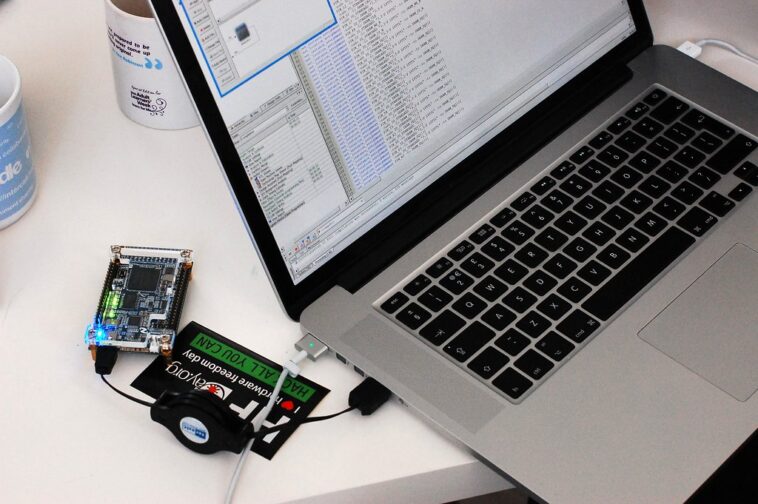
Cyberdecks are having a massive moment in 2026, and it is not just about the retro-futuristic aesthetic. As mainstream laptops from Apple and Microsoft become increasingly locked down with proprietary silicon and cloud-based telemetry, enthusiasts are building their own portable computing rigs. These custom machines prioritize physical security, modularity, and total user control over the opaque software environments of modern flagships. If you are tired of your OS reporting your usage patterns to Big Tech, building a deck is the ultimate rebellion.
📋 In This Article
What Actually Goes Into A Cyberdeck Build?

Most functional cyberdecks today rely on the Raspberry Pi 5, which packs a quad-core ARM Cortex-A76 processor. This chip is plenty fast for Linux-based workflows like coding, terminal-based browsing, or offline document editing. I recently priced out a solid build using a 7-inch Waveshare touchscreen ($65), a mechanical 40% keyboard ($50), and a 10,000mAh battery bank ($30). Total cost sits right around $300, which is significantly cheaper than a base-model MacBook Air. The real draw is the enclosure. Whether you 3D print a ruggedized case or repurpose a vintage Pelican box, you get a machine that is entirely yours. There is no hidden firmware tracking your keystrokes, and you can physically disconnect the Wi-Fi module with a dedicated kill-switch, something no modern iPhone 16 or Galaxy S25 can offer.
The Power of Physical Kill-Switches
Privacy is the main selling point. Unlike a standard laptop, you can solder a physical toggle switch directly to the power rail of your wireless card. This guarantees you are offline when you want to be. I use this for sensitive writing projects where I cannot risk accidental syncing or background updates. It is a level of assurance that software-based ‘Airplane Mode’ settings simply cannot provide in an era of persistent cloud connectivity.
Software Freedom Over Cloud Bloat
The software experience on a cyberdeck is intentionally stark. Most builders run a stripped-down version of Debian or Arch Linux. You aren’t dealing with the bloated telemetry found in Windows 11 or the restrictive ecosystem of macOS. When you open a terminal, you are the root user. You choose your packages, you manage your own encryption, and you don’t have to deal with AI-driven ‘Copilot’ features trying to predict your next move. For a developer or a security researcher, this is a breath of fresh air. You spend 100% of your time on actual work, not fighting against OS-level updates that break your drivers or force you to sign into an online account just to change your wallpaper.
The Linux Advantage
Running a lightweight Linux distribution like Alpine or Void keeps your hardware requirements low. You can get usable performance even with 4GB of RAM. This makes cyberdecks incredibly efficient, often pulling less than 10 watts of power under load, which is a fraction of what a high-end Intel or Apple M4 chip consumes while sitting idle on a desktop.
The Reality Check: Is It Worth The Hassle?
Let’s be honest: cyberdecks are not for everyone. If your daily driver is an iPhone 16 Pro Max, you are used to a high-density OLED display and a battery that lasts 20 hours. A DIY cyberdeck will likely give you a lower-resolution screen and a battery life that struggles to hit 6 hours. You have to be willing to spend your weekends debugging display drivers or sourcing the right ribbon cables. However, the satisfaction of fixing a broken port with nothing but a soldering iron and a $5 spare part is something you will never experience with a modern, glued-shut ultrabook. You pay in time and frustration, but you gain a device that will never be remotely wiped by a manufacturer or rendered obsolete by a planned update.
Repairability at Scale
The modular nature of these rigs means you can upgrade your screen or CPU whenever a new Raspberry Pi model drops. You aren’t trapped in a cycle of buying a $1,500 laptop every three years. If a component fails, you replace just that part for $20, not the entire motherboard.
Joining The Community
If you want to start, don’t try to build a masterpiece on your first try. Look at the r/Cyberdeck subreddit. There are thousands of users sharing their schematics and 3D print files. Start with a simple ‘Pi-Top’ style build or a basic slab design. The goal isn’t to replace your primary workstation immediately, but to build a companion device that respects your digital boundaries. Once you have a working terminal, you will start to realize how much unnecessary digital weight we carry in our pockets every day. It is a rabbit hole, but it is one that leads to genuine hardware literacy. Stop consuming tech and start building it.
Where To Find Parts
I recommend checking out Adafruit or Pimoroni for components. They provide excellent documentation for their HATs and displays. Avoid cheap, unbranded screens from auction sites if possible, as they often lack the driver support needed for a smooth Linux experience on ARM architecture.
⭐ Pro Tips
- Use a 60% mechanical keyboard with Gateron switches to keep your deck’s footprint small and tactile.
- Save $50 by using a recycled 18650 battery bank from an old laptop instead of buying a new power module.
- Avoid using high-gloss screens; they cause terrible glare in outdoor environments where you’ll actually use your deck.
Frequently Asked Questions
How hard is it to build a cyberdeck?
It depends on your skill level. If you can handle a soldering iron and follow basic Linux tutorials, you can build a functional deck in a weekend for under $300.
Is a cyberdeck better than a cheap laptop?
For privacy, yes. For general consumer convenience, no. A $300 laptop is faster, but it tracks your every move. A cyberdeck is slower, but it is entirely yours to control.
How much do cyberdecks cost to build?
You can build a capable unit for $250 to $400 depending on the screen, battery, and enclosure materials. It is far cheaper than a flagship laptop and infinitely more repairable.
Final Thoughts
Cyberdecks are a pushback against the ‘black box’ mentality of modern hardware. By building your own, you reclaim your privacy and gain a deep understanding of how your tools actually function. They aren’t just toys; they are a manifesto for a more open computing future. If you are fed up with being the product, pick up a Raspberry Pi and start your first build this weekend. Your digital footprint will thank you.




GIPHY App Key not set. Please check settings