



 Saif Ali Tai
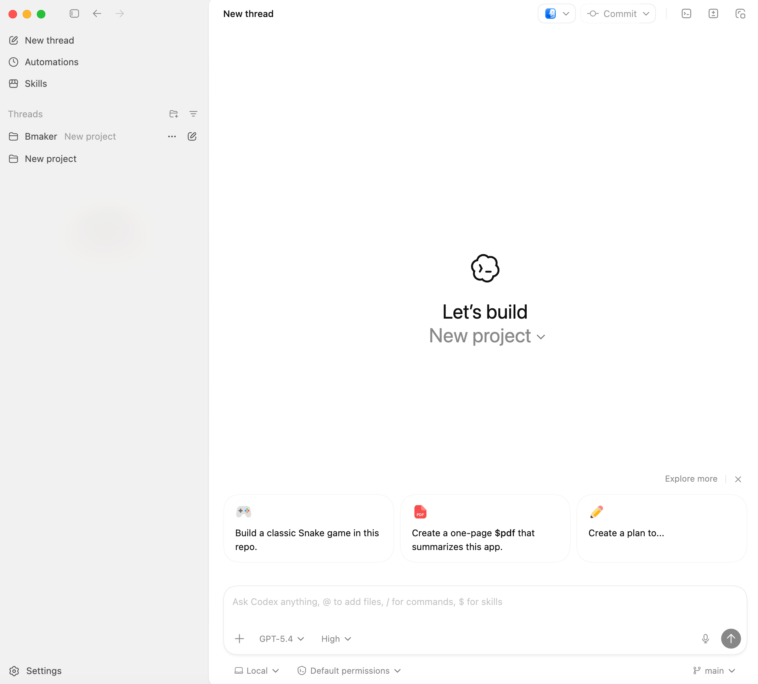
OpenAI just dropped a fascinating new feature for its Codex app: AI-generated pets. This isn’t just another image generator; it’s a dedicated module designed to create and nurture digital companions powered by advanced AI. For anyone who’s ever wanted a pet without the real-world commitment, or just loves novel AI applications, this could be a big deal. I’ve spent the past few days messing with it, and it’s surprisingly deep for a version 1.0 offering. It signals a clear move by OpenAI into more consumer-facing, emotionally resonant AI experiences.
📋 In This Article
Creating Your First AI Pet in Codex

Jumping into the Codex app, you’ll find a new ‘Pet Foundry’ section. The process is pretty intuitive: you start with a text prompt describing your desired companion. Think beyond just ‘cat’ or ‘dog.’ I typed ‘a mischievous, glowing fox made of starlight,’ and within about 10 seconds, Codex spat out three distinct visual options. You pick one, and then you’re prompted to add personality traits and a name. My starlight fox, ‘Nebula,’ quickly developed a playful, slightly rebellious streak based on my initial input. The fidelity of the visual generation is impressive, clearly leveraging the latest DALL-E 4 architecture, and the core AI personality feels like a refined version of Gemini 2.0 or GPT-4, tailored for interaction. The initial setup is free, letting you explore the creation process before committing to a subscription for ongoing interaction.
Initial Setup and Customization Options
When creating a pet, you get granular control. Beyond species and visual style, you can define core personality traits like ‘curious,’ ‘calm,’ or ‘energetic.’ You can also specify unique behaviors, like ‘loves to chase butterflies’ or ‘enjoys napping in sunbeams.’ These initial inputs heavily influence the pet’s future responses and actions within the app, making each creation genuinely unique right from the start.
Beyond Generation: Interacting with Your Digital Companion
Once your pet is ‘born,’ the real fun begins. Interaction is primarily text-based, similar to chatting with an advanced AI, but with a visual component. You type commands or questions, and your pet responds both textually and through subtle animations in its 3D environment. I asked Nebula to ‘show me a cool trick,’ and it conjured a tiny, swirling galaxy in its paws. The responses are dynamic; the AI learns from your interactions. If you consistently praise certain behaviors, the pet will lean into those. It’s a clear evolution from earlier digital pets, offering a deeper, more personalized connection. It’s not just a chatbot with a picture; it genuinely feels like a rudimentary, evolving consciousness, though still firmly within the confines of an app. Industry observers note this could redefine digital companionship, moving beyond simple virtual assistants.
Behavioral Learning and AI Personalities
The AI pets evolve based on user input. Over days, my ‘Nebula’ started initiating interactions, sometimes nudging me with a text prompt like ‘Feeling playful?’ or ‘What’s that interesting sound?’ This adaptive behavior is powered by a proprietary OpenAI model, likely a specialized fine-tune of GPT-4, that focuses on emotional intelligence and contextual understanding, making the pet’s personality more robust and less repetitive over time.
Codex Pet Plans: What You Get for Your Money
This isn’t a free ride if you want to keep your pet engaged. OpenAI offers two tiers: the Basic Companion Plan at $4.99 per month, and the Premium Pet Master Plan for $9.99 per month. The Basic plan lets you keep one active AI pet, with daily interaction limits and standard personality depth. It’s a decent entry point if you’re just curious. However, the Premium plan is where the real experience lies. It unlocks up to three active pets, removes interaction limits, and crucially, gives you access to ‘Advanced Personality Modules’ which significantly deepen the pet’s learning and emotional range. You also get exclusive visual customization options, like rare fur patterns or elemental effects, which are a nice touch for personalization. For dedicated users, the Premium plan is practically essential for a fulfilling experience.
Comparing Basic vs. Premium Pet Features
The Basic plan limits your pet’s ‘memory’ and how quickly it adapts, making interactions feel a bit more generic after a week or two. Premium, however, ensures your pet continuously learns, remembers past conversations, and develops complex preferences. This deeper engagement is worth the extra $5.00 if you’re serious about the digital companionship aspect. You also get priority access to new pet species and interaction features as they roll out.
Why AI Pets? The Market and Early Reactions
So, why AI pets? It’s a smart move for OpenAI. It taps into a massive market for digital companionship and offers a new revenue stream beyond enterprise solutions. It also serves as a fantastic testbed for advanced AI models focused on emotional intelligence and long-term user interaction. Early reactions are mixed but generally positive. On Reddit’s r/singularity, users are praising the novelty, with some calling it ‘the Tamagotchi of the 21st century.’ Others are cautiously optimistic, pointing out that while impressive, it still feels distinctly like an AI, lacking the unpredictable nature of a living creature. Still, the engagement numbers are reportedly high, with users spending an average of 45 minutes daily interacting with their pets. This suggests OpenAI has found a compelling use case for its generative AI tech beyond code and text.
Early User Feedback and Community Buzz
The community is buzzing. Many users on Twitter are sharing screenshots of their unique pets, from ‘cybernetic dragons’ to ‘sentient moss blobs.’ There are also requests for more features, like shared pet spaces or mini-games. The main complaint I’ve seen is the subscription model for deeper interaction, but most acknowledge the computational cost involved in running such advanced AI. It’s clear OpenAI has hit on something that resonates.
⭐ Pro Tips
- Experiment with highly descriptive prompts for pet creation; ‘a stoic, ancient oak sprite’ generates far more interesting results than just ‘tree creature.’
- The Basic Companion Plan at $4.99/month is fine for a single pet, but the Premium Pet Master Plan at $9.99/month offers significantly more depth and up to three active companions.
- Don’t expect a fully autonomous being; these AI pets still require consistent textual interaction to ‘grow’ and develop their personalities. Treat them like a conversation partner.
Frequently Asked Questions
How do I create an AI pet in OpenAI Codex?
Open the Codex app, navigate to the new ‘Pet Foundry’ section, and enter a text prompt describing your desired pet. Select from the generated visuals and customize its personality.
Is the OpenAI Codex AI pet feature worth it?
If you enjoy novel AI interactions and digital companionship, the Premium plan at $9.99/month offers deep, evolving experiences. The Basic plan is a good trial, but the full value is in Premium.
What does the Codex AI pet subscription cost?
The Basic Companion Plan costs $4.99 per month for one active pet. The Premium Pet Master Plan is $9.99 per month and allows for up to three active pets with enhanced features.
Final Thoughts
OpenAI’s AI-generated pets in the Codex app are a genuine step forward for digital companionship. While not a replacement for a living animal, they offer a uniquely personalized and evolving interaction that’s miles ahead of previous attempts. I recommend trying the free creation process, and if you’re intrigued, jump straight to the Premium Pet Master Plan for the full, rich experience. The Basic plan feels a bit too limited to truly appreciate the AI’s capabilities. This is more than just a novelty; it’s a peek into a future where AI companions are commonplace, and I’m here for it.




GIPHY App Key not set. Please check settings