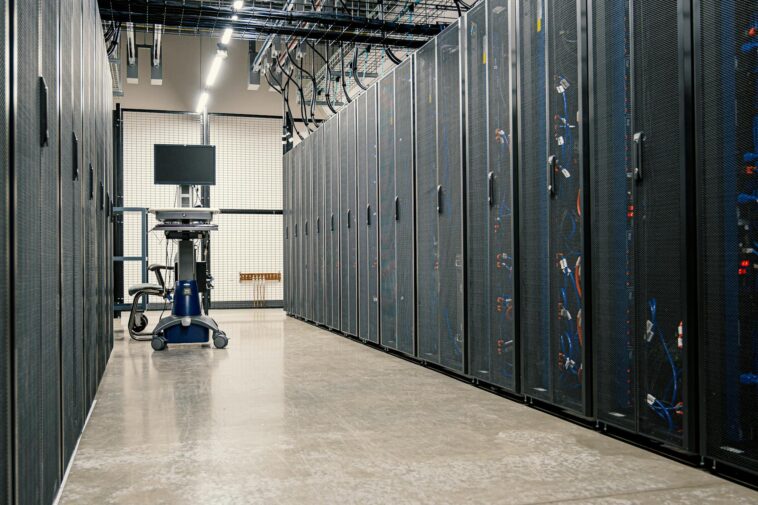
The exponential growth of Artificial Intelligence is placing unprecedented strain on global computing infrastructure, driving up costs and energy consumption at an alarming rate. As organizations race to leverage AI, the demand for more efficient, sustainable, and cost-effective computing solutions has never been higher. It’s against this backdrop that ScaleOps, a leading innovator in cloud resource optimization, recently announced it has successfully raised an impressive $130 million in its latest funding round. This substantial investment is earmarked to significantly improve computing efficiency amid AI demand, signaling a critical push towards smarter resource management in the era of AI-driven innovation. This article will delve into what this funding means for ScaleOps, the tech industry, and how it aims to tackle one of AI’s biggest challenges.
📋 In This Article
- The Landmark Funding Round: $130M for ScaleOps
- Understanding ScaleOps: The Efficiency Enabler
- The Problem: AI’s Insatiable Computing Demand
- How ScaleOps Delivers Enhanced Computing Efficiency
- Impact on the Tech Industry and Future of AI
- What’s Next for ScaleOps and the Cloud Optimization Market?
- ⭐ Pro Tips
- ❓ FAQ
The Landmark Funding Round: $130M for ScaleOps
In a move that underscores the urgent need for optimized computing, ScaleOps announced its Series C funding round, securing a massive $130 million. This capital infusion, led by prominent venture capital firms such as Lightspeed Venture Partners and Andreessen Horowitz, with participation from existing investors like Sequoia Capital, propels ScaleOps into a new league of well-funded tech innovators. The round reportedly values the company at over $1.5 billion, reflecting investor confidence in its proprietary technology and market vision. This significant financial backing is not just a testament to ScaleOps’ past achievements but a strategic investment in its future capacity to scale operations, accelerate R&D, and expand its global footprint, particularly as the AI landscape continues its rapid expansion. The funds are specifically targeted at enhancing their platform’s capabilities to meet the escalating demands for computing efficiency driven by AI workloads, which are notoriously resource-intensive.
Who are the Key Investors?
The Series C round saw strong participation from top-tier venture capital firms. Lightspeed Venture Partners, known for backing disruptive technologies, co-led the round alongside Andreessen Horowitz (a16z), a powerhouse in Silicon Valley. Existing investors, including Sequoia Capital and Insight Partners, also significantly increased their stakes. This diverse investor base brings not only substantial capital but also strategic guidance and industry connections, crucial for ScaleOps’ ambitious growth plans. The involvement of such high-profile investors signals a clear endorsement of ScaleOps’ technology and its potential to become a critical player in the AI infrastructure ecosystem.
What Does a $130M Raise Signify?
A $130 million funding round is a significant milestone, particularly in the current economic climate where investment in tech has tightened. It signifies strong investor confidence in ScaleOps’ business model, its proprietary technology, and its leadership team. More importantly, it highlights the perceived market opportunity in addressing computing efficiency, especially as AI adoption accelerates. This capital will allow ScaleOps to significantly expand its engineering teams, invest heavily in research and development to refine its AI-driven optimization algorithms, and scale its sales and marketing efforts to reach a broader enterprise customer base globally. It’s a clear indicator that the market recognizes the critical pain point ScaleOps is solving.
Understanding ScaleOps: The Efficiency Enabler
At its core, ScaleOps is a cloud optimization platform designed to help organizations manage and reduce their cloud infrastructure costs while improving performance. Their technology leverages advanced machine learning and predictive analytics to autonomously identify and implement efficiency improvements across various cloud environments, including AWS, Azure, and Google Cloud Platform. Unlike traditional cloud cost management tools that primarily focus on reporting, ScaleOps actively optimizes resource allocation, workload placement, and auto-scaling configurations in real-time. This proactive approach is particularly vital for dynamic and unpredictable AI workloads, which can lead to massive overprovisioning and wasted expenditure if not managed meticulously. The platform provides granular visibility into cloud spend and resource utilization, empowering DevOps and engineering teams to make data-driven decisions while offloading the complexity of continuous optimization.
How ScaleOps Tackles Cloud Sprawl and Waste
Cloud sprawl, the uncontrolled proliferation of cloud resources, is a common issue for many enterprises, leading to significant financial waste. ScaleOps combats this by continuously monitoring resource utilization patterns and identifying idle or underutilized instances. Its intelligent algorithms recommend right-sizing opportunities, automatically scaling down resources when demand is low and scaling up efficiently during peak times. This dynamic adjustment ensures that organizations only pay for the resources they genuinely need, eliminating the common problem of overprovisioning. For AI workloads, which often have bursty or highly variable compute needs, this capability is a game-changer for cost control.
Key Features of the ScaleOps Platform
The ScaleOps platform boasts a suite of features designed for comprehensive cloud optimization. These include real-time cost visibility and forecasting, anomaly detection for unexpected spend spikes, intelligent auto-scaling for Kubernetes and other containerized environments, and rightsizing recommendations for virtual machines and databases. Crucially, it offers policy-driven automation, allowing teams to set specific optimization goals and constraints, ensuring compliance and operational consistency. The platform integrates seamlessly with existing CI/CD pipelines and cloud management tools, providing a holistic view and control over cloud spend and performance across multi-cloud deployments.
The Problem: AI’s Insatiable Computing Demand
The rise of Artificial Intelligence, particularly large language models (LLMs) and complex machine learning algorithms, has created an unprecedented demand for computing power. Training a single state-of-the-art AI model can consume vast amounts of energy, equivalent to the lifetime carbon emissions of several cars. This computational intensity translates directly into astronomical operational costs for businesses, with cloud bills skyrocketing as AI initiatives scale. Beyond the financial burden, the environmental impact of these energy-intensive processes is a growing concern, pushing sustainability to the forefront of tech discussions. Companies are grappling with how to innovate with AI without breaking the bank or contributing excessively to climate change. This challenge is precisely where ScaleOps aims to make a significant difference, offering a pathway to more responsible and cost-effective AI development and deployment.
The Soaring Cost of AI Infrastructure
Developing and deploying AI models, especially generative AI, requires immense computational resources, primarily high-performance GPUs. These resources are expensive, whether provisioned on-premises or, more commonly, through cloud providers. The cost often scales disproportionately with model complexity and data volume, leading to unpredictable and often exorbitant cloud bills. Many organizations find themselves overprovisioning out of fear of performance bottlenecks, leading to significant waste. The ‘AI tax’ on cloud infrastructure is a very real and growing concern for CIOs and CFOs, making efficient resource management a top strategic priority.
AI’s Environmental Footprint and Energy Consumption
The environmental impact of AI is a burgeoning ethical and practical concern. Training large AI models, like GPT-3, can involve millions of kilowatt-hours of electricity, resulting in substantial carbon emissions. As AI becomes more ubiquitous, this energy consumption will only escalate. Addressing computing efficiency is not just about cost savings; it’s also about reducing the carbon footprint of digital technologies. ScaleOps’ focus on optimizing resource utilization directly contributes to lowering energy consumption, aligning with global sustainability goals and offering businesses a more eco-conscious path to AI innovation.
How ScaleOps Delivers Enhanced Computing Efficiency
ScaleOps differentiates itself by moving beyond simple cost reporting to active, intelligent optimization. Its platform employs proprietary machine learning algorithms that analyze historical usage patterns, real-time demand, and application performance metrics to predict future resource needs. This predictive capability allows ScaleOps to dynamically adjust cloud resource allocations, ensuring that workloads receive precisely the compute, memory, and storage they require at any given moment, and no more. For AI workloads, which often exhibit unpredictable spikes and troughs in demand, this real-time, adaptive optimization is invaluable. By integrating directly with cloud providers’ APIs and orchestration tools like Kubernetes, ScaleOps can automate scaling, rightsizing, and even workload placement across different instance types or regions to achieve optimal performance and cost efficiency. This level of granular control and automation is key to unlocking significant savings and performance gains.
AI-Powered Predictive Analytics for Resource Allocation
The core of ScaleOps’ efficiency model lies in its AI-powered predictive analytics. The platform ingests vast amounts of operational data, including CPU utilization, memory consumption, network I/O, and application-specific metrics. Machine learning models then analyze this data to forecast future resource requirements with high accuracy. This allows ScaleOps to proactively scale resources up or down before bottlenecks occur or idle capacity accumulates. For complex AI training jobs or inference services, this means optimized GPU allocation and efficient cluster management, preventing both performance degradation and unnecessary expenditure.
Automated Optimization for Kubernetes and Multi-Cloud
ScaleOps offers robust automated optimization specifically for Kubernetes, the de facto standard for container orchestration. It intelligently adjusts Horizontal Pod Autoscalers (HPAs) and Vertical Pod Autoscalers (VPAs), ensuring that Kubernetes pods are always running with the optimal amount of resources. Furthermore, its multi-cloud capabilities allow organizations to apply these optimization strategies consistently across AWS, Azure, and GCP environments. This is crucial for enterprises with hybrid or multi-cloud strategies, as it provides a unified platform for managing efficiency, reducing complexity, and maximizing savings regardless of the underlying cloud provider.
Impact on the Tech Industry and Future of AI
ScaleOps’ significant funding and focus on computing efficiency amid AI demand has profound implications for the broader tech industry. It signals a shift from simply consuming cloud resources to actively optimizing them, especially as AI becomes a central pillar of enterprise strategy. This move will likely spur further innovation in the FinOps (Cloud Financial Operations) and MLOps (Machine Learning Operations) spaces, encouraging other vendors to develop more intelligent, automated, and AI-driven optimization tools. For companies leveraging AI, ScaleOps offers a pathway to sustainable growth, allowing them to scale their AI initiatives without facing prohibitive costs or environmental backlash. It also puts pressure on cloud providers to offer more granular and flexible pricing models, as customers become more sophisticated in their resource management. Ultimately, this investment could accelerate AI adoption by making it more accessible and economically viable for a wider range of businesses.
Democratizing AI Through Cost Efficiency
One of the most significant impacts of improved computing efficiency is the democratization of AI. High infrastructure costs have historically been a barrier for smaller businesses, startups, and even academic institutions looking to experiment with or deploy advanced AI models. By making AI infrastructure more affordable and predictable, ScaleOps could enable a broader range of organizations to leverage powerful AI capabilities, fostering innovation and competition. This shift could lead to a more diverse landscape of AI applications and solutions, moving beyond the current dominance of a few tech giants.
The Push Towards Sustainable AI and Green Computing
The investment in ScaleOps also underscores the growing industry-wide commitment to sustainable AI and green computing. As the environmental impact of large-scale AI becomes more apparent, solutions that reduce energy consumption and carbon footprint are becoming increasingly attractive. ScaleOps’ focus on efficiency directly contributes to these sustainability goals. This trend will likely continue, with more enterprises prioritizing vendors that can demonstrate tangible environmental benefits alongside cost savings. It’s a win-win for both the planet and the profit margins.
What’s Next for ScaleOps and the Cloud Optimization Market?
With $130 million in fresh capital, ScaleOps is poised for aggressive expansion and product development. The company has indicated plans to significantly grow its engineering and data science teams to further refine its AI-driven optimization engine, potentially exploring new frontiers in serverless computing optimization and edge AI resource management. Market expansion into new geographies, particularly in Europe and Asia where cloud adoption and AI investment are rapidly increasing, is also on the horizon. Furthermore, expect ScaleOps to forge deeper strategic partnerships with major cloud providers and enterprise technology vendors, integrating its platform more tightly into the broader cloud ecosystem. The cloud optimization market itself is heating up, with increasing competition from both established players and emerging startups. ScaleOps’ substantial funding positions it strongly to maintain its leadership and innovate at a rapid pace.
Expanding Product Capabilities and R&D
A significant portion of the new funding will be directed towards enhancing ScaleOps’ core platform. This includes investing heavily in R&D to develop more sophisticated AI and machine learning algorithms for predictive optimization, potentially expanding into new areas like serverless function cost management or specialized GPU optimization for specific AI frameworks. We can expect new features that offer even finer-grained control over resource allocation, improved anomaly detection, and more intuitive dashboards for FinOps teams. The goal is to make cloud resource management even more autonomous and intelligent.
Global Market Expansion and Strategic Partnerships
ScaleOps is set to accelerate its global market penetration. Currently strong in North America, the company will likely prioritize expansion into key European and Asian markets where cloud spending is growing rapidly. This will involve building out local sales and support teams. Additionally, expect to see ScaleOps forge strategic partnerships with other cloud-native technology providers, system integrators, and perhaps even directly with hyperscale cloud providers. These alliances will be crucial for broadening its reach and ensuring seamless integration with diverse enterprise IT environments.
⭐ Pro Tips
- Implement a FinOps culture early: Assign clear responsibilities for cloud cost management and make it a shared goal across engineering, finance, and operations teams.
- Target your largest cloud spend areas first: Focus optimization efforts on the services consuming 70-80% of your cloud budget; often compute (EC2, GKE) and databases (RDS, Cloud SQL).
- Leverage cloud-native cost tools as a baseline: Use AWS Cost Explorer, Azure Cost Management, or Google Cloud Billing Reports to get initial visibility before deploying advanced optimization platforms.
- Don’t solely rely on manual optimization: Cloud environments are too dynamic. Automate rightsizing, scaling, and scheduling with tools like ScaleOps to ensure continuous efficiency.
- Avoid ‘lift-and-shift’ without re-evaluation: Migrating on-premise workloads to the cloud without optimizing their architecture for cloud-native paradigms often leads to higher costs, not lower.
Frequently Asked Questions
What specifically does ScaleOps do to improve computing efficiency?
ScaleOps uses AI-powered predictive analytics to dynamically adjust cloud resources (compute, memory, storage) in real-time. It identifies idle resources, right-sizes instances, and automates scaling for workloads like Kubernetes, ensuring optimal performance with minimal waste, especially crucial for AI’s variable demands.
How much does ScaleOps typically cost for an enterprise?
ScaleOps’ pricing typically follows a consumption-based model, often a percentage of the cloud spend it manages or optimizes. While specific figures vary based on scale and features, enterprises often see ROI within months, with reported savings ranging from 20% to 60% on their cloud infrastructure costs, making the investment worthwhile.
Is ScaleOps worth it for small to medium-sized businesses (SMBs)?
Yes, ScaleOps can be highly beneficial for SMBs, especially those with growing cloud footprints or AI initiatives. While the initial investment might seem significant, the potential for substantial cost savings and performance improvements can free up budget for further innovation, making it a valuable tool for scaling efficiently.
Who are ScaleOps’ main competitors in cloud optimization?
ScaleOps competes with other cloud cost management and optimization platforms like CloudHealth (VMware), Spot by NetApp, Apptio Cloudability, and Harness. Cloud providers’ native tools also offer some optimization, but ScaleOps aims for more autonomous, AI-driven, and multi-cloud capabilities.
How long does it take to implement ScaleOps and see cost savings?
Implementation time for ScaleOps can range from a few days to a few weeks, depending on the complexity of your cloud environment and integrations. Users typically start seeing noticeable cost savings and efficiency improvements within the first 30 to 60 days post-implementation, with savings growing over time as the AI learns.
Final Thoughts
The $130 million funding round for ScaleOps marks a pivotal moment in the ongoing quest for computing efficiency, particularly as the demands of Artificial Intelligence continue to escalate. This substantial investment not only validates ScaleOps’ innovative approach to cloud optimization but also underscores the critical need for solutions that can tame the escalating costs and environmental impact of AI infrastructure. By leveraging advanced AI and machine learning, ScaleOps empowers businesses to achieve significant cost savings, improve performance, and build more sustainable AI initiatives. For any organization grappling with high cloud bills or seeking to scale their AI ambitions responsibly, understanding ScaleOps’ capabilities is paramount. This move by ScaleOps to improve computing efficiency amid AI demand: what you need to know is that intelligent cloud optimization is no longer a luxury but a necessity for future-proof growth in the AI era. It’s time to evaluate how such platforms can transform your cloud strategy.


GIPHY App Key not set. Please check settings