



 Saif Ali Tai
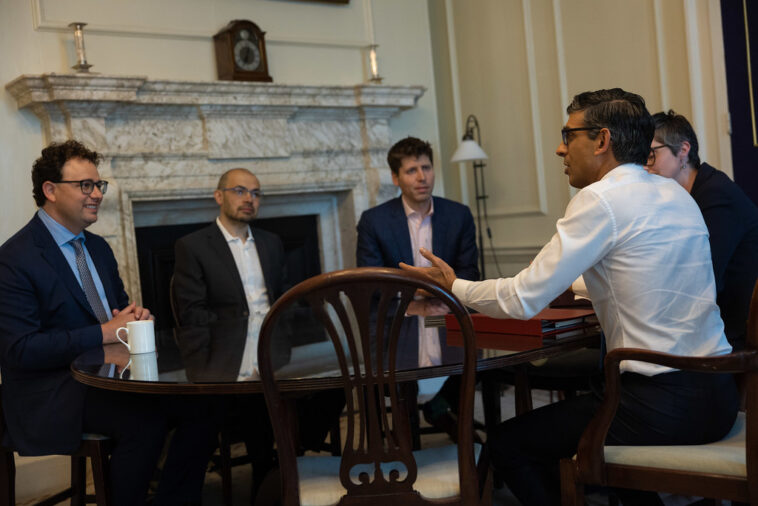
OpenAI’s Sam Altman and Anthropic’s Dario Amodei have finally found common ground, signing a joint public letter warning about the risks of AI-assisted bioweapons. It’s a rare moment of unity between the two biggest rivals in the LLM space. While the sentiment is noble, I’m skeptical about the practical impact on your digital safety. We are currently running models like GPT-4o and Claude 3.5 Sonnet that are incredibly powerful, yet this letter feels more like regulatory posturing than a concrete fix.
📋 In This Article
The Reality of LLM Guardrails

Let’s be real: both OpenAI and Anthropic already have strict ‘red teaming’ protocols. When I test prompts on Claude 3.5 Sonnet regarding chemical synthesis, the model shuts down instantly. It’s effective. However, the open-source community, using Llama 3 or fine-tuned Mistral models on local hardware like an RTX 4090, doesn’t have the same centralized kill-switch. This letter pushes for government oversight, which sounds great until you realize it could stifle local innovation. I’ve spent hours running local models, and the genie is already out of the bottle. Asking for ‘voluntary compliance’ from the biggest players ignores the reality of decentralized, offline AI development that any motivated user can run for under $2,000 in hardware costs.
The Open Source Problem
The biggest threat isn’t the API-based models controlled by these companies. It’s the uncensored, open-weight models that can be run on home rigs. Even if Altman and Amodei lock down their servers, a GitHub repo with a fine-tuned model can bypass those safety filters entirely. This letter doesn’t address how to stop someone from running a model on their own desktop without an internet connection.
Why the Letter Matters for Consumers
For the average user, this letter is a signal that federal regulation is coming. Expect to see API costs rise as these companies pass the compliance burden onto you. Currently, a high-end dev subscription for Claude or ChatGPT costs about $20/month. If these companies are forced to implement ‘bioweapon detection layers’ that require extra compute, that price could easily climb to $30 or $40. It’s a tax on safety. While the intent is to prevent bad actors from synthesizing dangerous pathogens, the reality is that the end user will likely pay more for the same service while the actual bad actors continue to use private, unmonitored infrastructure.
The Cost of Compliance
When companies talk about ‘safety infrastructure,’ they mean massive server overhead. Integrating real-time biological threat monitoring into every inference request adds latency and cost. You might notice your responses taking 200ms longer, and your monthly bill will certainly reflect the R&D costs of these new, required safety filters.
Comparing the Safety Architectures
Anthropic has always leaned harder into ‘Constitutional AI’ than OpenAI. Dario Amodei’s approach is fundamentally more risk-averse, which is why Claude often feels ‘stiff’ compared to the more creative GPT-4. By signing this letter, Altman is essentially validating Anthropic’s more restrictive safety posture. From my testing, this has led to a divergence in utility. GPT-4o is still the king of coding and logical reasoning, while Claude 3.5 is my go-to for safer, more nuanced writing. If this letter leads to a standardized ‘safety floor’ across the industry, we might see all LLMs start to behave exactly the same way, which would kill the competitive diversity that makes this field exciting.
Standardization Risks
Standardization is a double-edged sword. If the US government mandates a specific safety filter for all AI, we lose the ‘personality’ of different models. A one-size-fits-all approach to AI safety will inevitably lead to more false positives, where your legitimate biology research gets flagged as a threat.
The Verdict: Is It Worth the Hype?
Is the letter worth the attention? Not really. It’s a PR move designed to shape the legislation coming down the pipeline in 2027. If you’re worried about AI safety, don’t look at letters signed by CEOs. Look at the local models you can run yourself. The only way to ensure your AI isn’t being ‘monitored’ for bioweapon potential is to host it on your own machine. Tools like Ollama make it trivial to run a 7B parameter model locally. It’s private, it’s yours, and it’s not governed by the whims of a corporate board trying to appease DC lobbyists.
The Power of Local AI
Running Llama 3 locally via Ollama ensures your prompts never touch a corporate server. It’s the ultimate way to opt-out of the ‘safety’ oversight that Altman and Amodei are pushing for. If you have an M3 Mac or a solid Nvidia card, start there.
⭐ Pro Tips
- If you want privacy, use Ollama to run models locally on your own hardware instead of relying on cloud-based APIs.
- Save $240 a year by auditing your AI subscriptions; keep only the one you actually use for your daily workflow.
- Don’t assume your prompts are private; treat every interaction with GPT-4 or Claude as if it’s being logged for safety compliance.
Frequently Asked Questions
Are AI models actually dangerous for bioweapons?
Current models provide information, but they lack the physical lab equipment to actually synthesize pathogens. They are tools, not autonomous bio-engineers, despite the hype surrounding these warning letters.
Is OpenAI safer than Anthropic?
Anthropic’s ‘Constitutional AI’ is technically more restrictive by design, but both companies have robust safety teams. Neither is inherently ‘safer’ for the average consumer; they just have different priorities.
How much does it cost to start local AI?
You can run entry-level LLMs on a $1,000 PC with a decent GPU. It’s free to use the software, and you save on monthly subscription fees in the long run.
Final Thoughts
The letter from Altman and Amodei is a calculated move to shape the regulatory landscape. While the concerns are legitimate, the solutions proposed are mostly aimed at centralizing control. Don’t fall for the PR. If you want true control over your AI, move your workflows to local, open-source models. Stay updated on the latest local LLM developments by following the ‘LocalLLaMA’ subreddit and keep experimenting with your own hardware.




GIPHY App Key not set. Please check settings