



 Saif Ali Tai
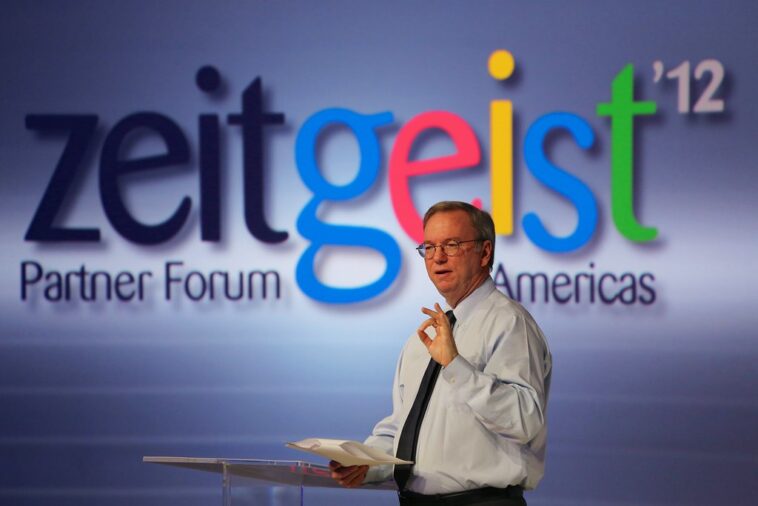
University of Arizona graduates booed former Google CEO Eric Schmidt during his commencement speech on Saturday, May 16th, 2026, when he heavily promoted artificial intelligence. The audible discontent from students suggests a growing weariness with the relentless AI hype, even from prominent tech figures. This moment underscores a potential disconnect between tech industry optimism and public perception, particularly among a generation entering a job market increasingly shaped by AI.
📋 In This Article
The AI Gospel According to Schmidt

Schmidt, a long-time evangelist for AI, took to the podium at the University of Arizona’s 2026 commencement ceremony to extol the virtues of artificial intelligence. He painted a picture of AI as an unstoppable force for progress, capable of solving humanity’s biggest challenges. Sources close to the event reported Schmidt emphasized AI’s potential in fields like medicine and climate science, echoing sentiments he’s shared in numerous interviews and his book, ‘The Age of AI’. He reportedly mentioned specific advancements in generative AI, like the latest GPT-5 models, and their ability to create complex content. However, the enthusiastic reception he clearly expected was met with a chorus of boos and jeers from a significant portion of the graduating class.
Schmidt’s AI Advocacy History
Eric Schmidt has been a vocal proponent of AI for years. His involvement with the field predates the current generative AI boom, having co-authored ‘The Age of AI: And Our Human Future’ with Henry Kissinger and Daniel Huttenlocher back in 2021. His continued focus on AI, even as public opinion shifts, shows his unwavering belief in its transformative power, despite the backlash he faced.
Student Skepticism: Beyond the Hype
The boos weren’t just random noise; they represented a tangible pushback against what many students perceive as an overblown narrative surrounding AI. In a world where AI tools like Claude 3.5 and Gemini 2.0 are becoming commonplace, students are increasingly aware of AI’s limitations, ethical quandaries, and potential to disrupt job markets. Many are graduating into industries already feeling the pressure of AI automation. The sentiment seemed to be: ‘We hear the hype, but what about the real-world implications for our careers and society?’ This isn’t about rejecting AI, but about questioning the uncritical optimism often presented by tech leaders.
Job Market Anxiety and AI
A recent survey by the National Association of Colleges and Employers found that 65% of graduating seniors are concerned about AI’s impact on their future job prospects. With AI capable of tasks previously thought to be exclusively human, like coding assistance and creative content generation, graduates are understandably anxious about their place in the evolving workforce. The price of entry for many new tech roles is also shifting, with a greater emphasis on prompt engineering and AI oversight.
This incident serves as a crucial reminder that the tech industry’s narrative doesn’t always align with public sentiment. For consumers and professionals alike, it’s important to approach AI with a balanced perspective. While tools like the new iPhone 16’s AI-powered features and Samsung’s Galaxy S25’s integrated AI capabilities are impressive, understanding their real-world impact, ethical considerations, and potential downsides is vital. Don’t just accept the hype; critically evaluate how AI is affecting your life, your job, and society. This critical thinking is what the graduating students were demanding.
AI’s Real-World Costs and Benefits
While AI promises efficiency, the costs of developing and deploying advanced AI systems are substantial. Companies are investing billions, as seen with the ongoing AI chip wars between NVIDIA and AMD. For consumers, the benefits often come through improved services or new devices, but the societal costs related to job displacement and data privacy are still being actively debated. It’s a complex equation that isn’t always presented clearly.
The Future of AI Discourse
The University of Arizona incident is likely a preview of future public reactions. As AI becomes more integrated into daily life, the conversations need to mature beyond simplistic cheerleading. We need nuanced discussions about regulation, ethics, and equitable access. Tech leaders need to acknowledge the concerns of those most affected by AI’s rapid advance, including students entering the workforce. Expect more moments like this as AI’s influence grows, forcing a more realistic and grounded dialogue about its role in our future.
Beyond Buzzwords: Practical AI Applications
Instead of just talking about AI’s potential, the focus should shift to tangible, practical applications. For instance, AI in the Pixel 9 is helping with photography in ways that genuinely improve user experience. However, the conversation needs to move towards how these tools are genuinely enhancing lives without creating new problems, rather than just celebrating their existence.
⭐ Pro Tips
- When considering new AI-powered gadgets, like the upcoming Samsung Galaxy S25 Ultra (estimated starting price $1,299), look for reviews that discuss real-world utility, not just feature lists.
- Don’t get caught up in the hype cycle. Wait for AI features to mature and be tested in the wild; often, the first-generation implementations have significant kinks.
- Be wary of AI solutions promising to ‘revolutionize’ your life. Focus on tools that solve specific problems you actually have, whether it’s the $29/month ChatGPT Plus subscription or a new AI writing assistant.
Frequently Asked Questions
Why did students boo Eric Schmidt at the University of Arizona?
Students booed Eric Schmidt because they were apparently tired of his strong promotion of artificial intelligence during his commencement speech, viewing it as out-of-touch hype.
Is Eric Schmidt’s AI cheerleading bad for the tech industry?
While Schmidt’s enthusiasm is genuine, the backlash suggests that uncritical AI promotion can alienate the public and create skepticism, potentially harming broader adoption.
How much does AI cost students entering the job market?
The ‘cost’ is largely in potential job displacement and the need for new skills. While advanced AI tools are often subscription-based ($20-$50/month), the real cost is adapting to an AI-driven economy.
Final Thoughts
The boos directed at Eric Schmidt at the University of Arizona commencement are a clear signal: the era of unquestioning AI adoration is fading. Students and the public are demanding a more grounded, realistic conversation about AI’s impact. So, before you buy into the next AI craze, ask the tough questions. Look for genuine utility and ethical considerations, not just buzzwords. Stay informed, stay critical, and demand substance over speculative promises.




GIPHY App Key not set. Please check settings