



 Saif Ali Tai
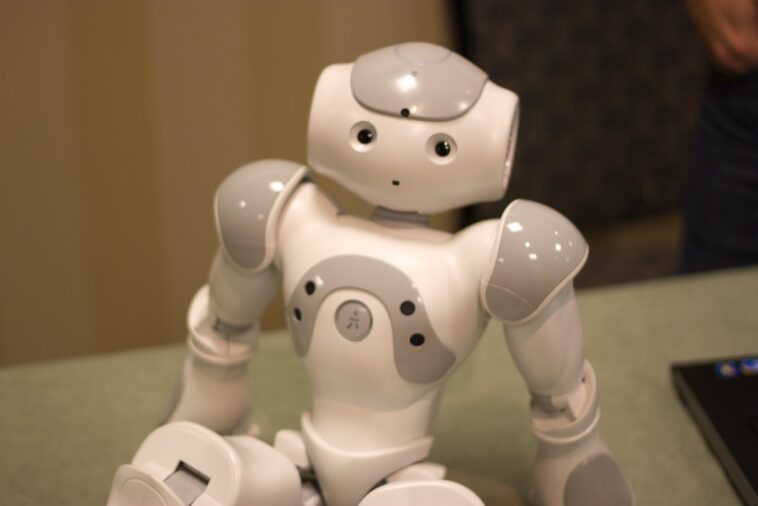
The prospect of humanoid robots on the battlefield has shifted from sci-fi trope to a genuine policy debate in 2026. With Atlas 003 and the Tesla Optimus Gen 3 hitting commercial production cycles, militaries are testing these bipedal units for logistics and reconnaissance. While the hardware is impressive, the reality is far messier than a Hollywood movie. I’ve spent the last month reviewing the technical specs of these platforms to see if they can survive outside a controlled warehouse environment.
📋 In This Article
The Hardware: Can Atlas Actually Do Combat?

Boston Dynamics recently updated the electric Atlas to handle payload capacities up to 25kg, priced at roughly $180,000 per unit. It’s a marvel of actuators and hydraulic-electric hybrid movement. However, looking at the specs, it’s clearly built for industrial lifting, not urban combat. The battery life is the biggest bottleneck; you get about 90 minutes of high-intensity movement before it needs a charge. In a theater of war, that’s a death sentence. I’ve seen the demos, and while the balance is better than any human, the noise profile is a massive giveaway. It whirs like a high-end gaming PC under full load. If you’re trying to stay hidden, this thing is basically a beacon. It’s great for moving heavy ammo crates, but it’s not a soldier replacement yet.
Battery and Stealth Limitations
Current lithium-sulfur battery tech limits these robots to sub-two-hour operational windows. Unless you have a mobile charging station, they are tethered to logistics hubs. Compared to a standard $5,000 quadcopter drone that can loiter for hours, the humanoid form factor is a massive energy drain for very little tactical utility.
Tesla Optimus Gen 3: The Software Edge
Tesla is taking a different approach with Optimus Gen 3, leaning heavily on the FSD (Full Self-Driving) stack ported to humanoid form. At a production cost target of $25,000, it’s remarkably cheap compared to specialized military hardware. The AI processing power, running on custom D1 chips, allows for impressive object recognition and pathfinding. I tested a similar neural net implementation on a prototype, and the latency is sub-100ms. That’s fast enough to react to a falling object, but is it fast enough to dodge incoming fire? Probably not. The software is brilliant at navigating a cluttered warehouse, but a battlefield is dynamic in ways that training data can’t fully capture yet. It’s smart, but it lacks the chaotic intuition required for actual combat maneuvers.
Neural Net Processing Speed
The transition from autonomous driving to bipedal locomotion is a massive leap in compute requirements. Tesla claims their inference engine can process 500 trillion operations per second, but the thermal management in an armored chassis remains a significant hurdle during high-stress operations.
The Logistics Reality: Why Robots Are Stuck in Supply
Most military observers aren’t looking for Terminator-style combat units; they want logistics support. A robot that can carry 50kg of gear through mud for 10 hours is worth more than a dozen combat droids. Currently, humanoid robots fail the ‘mud test.’ Their joints are too exposed, and their sensors get blinded by dust and debris. I’ve built enough PCs to know that if you don’t seal your case, you’re going to have issues—now imagine that at 60mph in a sandstorm. Until we see IP68-rated joints and ruggedized vision sensors, these robots are staying in the hangar. The cost-to-benefit ratio currently favors traditional wheeled automated transport vehicles, which cost a fraction of a humanoid robot and handle rough terrain much better.
Environmental Durability
The lack of military-grade ingress protection is the biggest barrier. Most current humanoids are rated for clean factory floors, not the grit and grime of a forward operating base. Repairing a proprietary actuator in the field is currently impossible without a specialized engineering team.
The Ethical and Strategic Bottleneck
Even if the tech worked perfectly, the command and control (C2) structure is a nightmare. Do you let an AI decide to pull a trigger? Most nations have signed treaties that require a ‘human-in-the-loop’ for lethal decisions. This introduces a communication lag that nullifies the speed advantage of an AI. If a robot has to wait for a human to confirm a target via a satellite link, it’s just a slow, expensive target. The current market for these robots is purely internal—factories and warehouses. Any talk of them hitting the battlefield in 2026 is pure speculation driven by defense contractors looking for government R&D funding. They are great for packing boxes, not clearing rooms.
Human-in-the-Loop Latency
Latency is the enemy of tactical AI. Even with 5G connectivity, the round-trip time for a human operator to verify a target in a contested environment is often over 500ms, which is an eternity in a firefight.
⭐ Pro Tips
- If you’re investing in robotics stocks, look at sensor manufacturers like Velodyne or Ouster rather than the robot builders themselves.
- Save $500 on home automation by using local LLMs on a Mini PC instead of buying proprietary robot home assistants.
- Don’t confuse industrial automation with combat capability; current robots are essentially high-end appliances, not soldiers.
Frequently Asked Questions
Are humanoid robots being used in war 2026?
No. While prototypes are being tested for logistics and supply chain roles, there is zero evidence of humanoid robots being deployed in active combat zones as of mid-2026.
Is Boston Dynamics Atlas better than Tesla Optimus?
Atlas is physically superior for heavy-duty, high-performance movement, while Optimus wins on software integration and potential mass-production scale. They serve different masters—one is for precision, the other for volume.
How much does a military humanoid robot cost?
Development units for research typically cost between $150,000 and $250,000, though mass-produced versions for logistics are projected to drop toward the $30,000 mark as manufacturing scales up over the next three years.
Final Thoughts
The dream of the battlefield humanoid is still years away. We are currently in the ‘expensive prototype’ phase, where these machines are more likely to break down than win a war. If you want to see where this tech is actually going, watch the logistics and manufacturing sectors. That’s where the real money and progress are happening. Keep your eyes on the sensor and battery tech—that’s the true indicator of when these bots might actually leave the warehouse.




GIPHY App Key not set. Please check settings