



 Saif Ali Tai
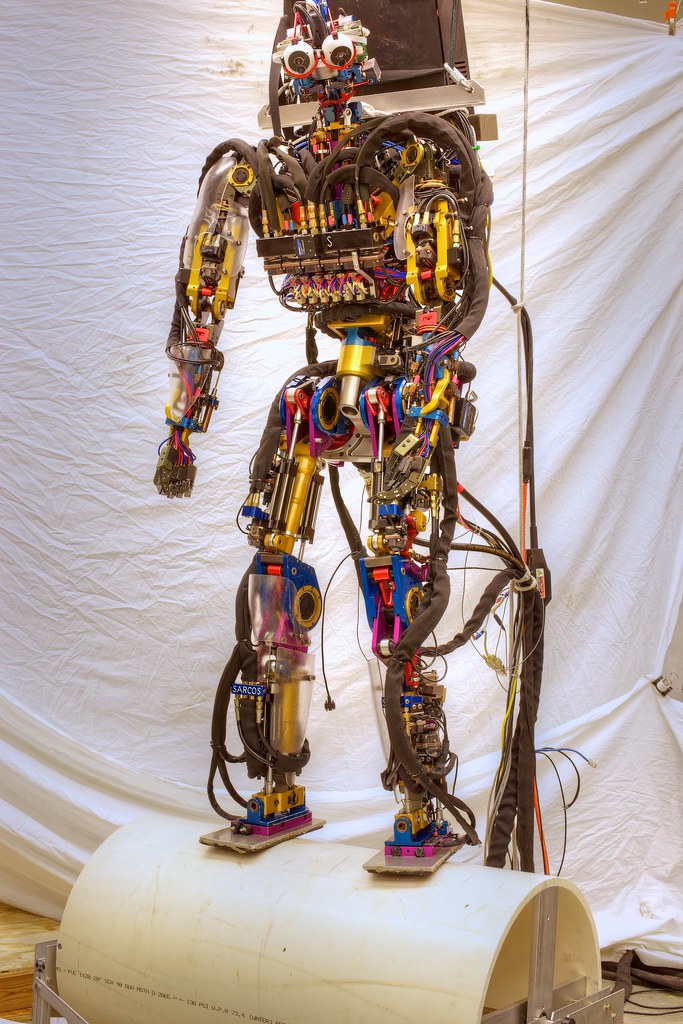
Humanoid robots on the battlefield are currently more science fiction than military doctrine. While companies like Figure AI and Boston Dynamics are making massive strides with Gemini 2.0-powered mobility, the reality is that current hardware isn’t ready for active combat. Batteries fail in three hours, and high-tensile actuators cost upwards of $150,000 per unit. For now, the military is focusing on cheaper, specialized autonomous systems. Here is the breakdown of why your local infantry isn’t being replaced by metal clones just yet.
📋 In This Article
Why Humanoid Hardware Struggles in Combat

The biggest bottleneck for humanoid robots is power density and environmental resilience. A Figure 02 robot can handle warehouse tasks, but put it in a muddy trench in Ukraine or a humid jungle, and the precision gearboxes will seize. These machines require clean-room calibration. Military gear needs to survive a drop from a truck or a blast wave. Currently, the industry is struggling to make a chassis that costs less than a small house but can survive a direct impact. I’ve seen the specs on the latest Atlas units; they are agile, but they are fragile. They aren’t built to take a 5.56mm round or operate in sub-zero temperatures without massive power drain. Unless we solve solid-state battery energy density, these bots stay in the lab.
The Power Problem
Most humanoid robots rely on lithium-ion packs that offer roughly 2-4 hours of active use. In a combat scenario, that is a liability. A drone can land and recharge or be swapped out, but a 150lb humanoid robot requires complex logistics just to keep its joints moving. Until we see a 5x increase in energy density, these bots are tethered to charging stations.
Defense Spending and Actual Robotics Priorities
The Pentagon isn’t pouring billions into humanoid shapes. They are pouring money into Replicator-style drone swarms. For the price of one $200,000 humanoid prototype, the military can buy 500 FPV drones equipped with high-res optical sensors and AI-guided targeting. I track defense contracts, and the shift is clearly toward ‘disposable’ autonomy. Humanoid robots are too expensive to lose. If a $250,000 robot gets destroyed by a $500 drone, that’s a failed mission. Industry observers agree: the future of war is small, cheap, and networked, not big, expensive, and anthropomorphic. The humanoid form factor is great for IKEA warehouses, but it’s a massive target in an open field.
The Cost-Efficiency Gap
Defense budgets favor attrition-resistant tech. A humanoid robot has too many failure points—fingers, knees, and neck motors. One hit to the central processing unit and you have a very expensive piece of scrap metal. Drones are modular and cheap to manufacture at scale.
Software Intelligence: The Real Leap
The only reason we are talking about this is because of AI models like Gemini 2.0 and Claude 3.5. These models have solved the navigation and object recognition problems that plagued robotics for years. A robot can now ‘see’ a room, identify a tool, and use it without manual scripting. This is huge for logistics. Using a robot to move ammo crates or repair vehicles at a forward operating base makes sense. Replacing a soldier with a robot that can shoot back is a different, much harder problem. I think we will see robots doing the heavy lifting in the supply chain long before we see them in the front lines.
Logistics over Combat
The real military application for humanoid robots is ‘backend’ support. Loading trucks, clearing debris, and moving heavy gear in safe zones is the immediate future. This prevents human fatigue and keeps personnel out of the most dangerous, repetitive logistics tasks.
What This Means for You: The Consumer Tech Angle
Why should you care? Because the tech trickling down from these R&D projects will eventually hit your home. The same actuators developed for military-grade durability will show up in domestic assistant robots. If you are looking to get into robotics, don’t look at the military side. Look at the open-source ROS (Robot Operating System) community. You can build a basic mobile platform for under $1,000 using a Raspberry Pi 5 and some off-the-shelf servos. It won’t be a soldier, but it will teach you more about inverse kinematics and SLAM than reading military white papers ever will. Keep an eye on companies like Unitree; their consumer-grade walkers are getting scary good for the price.
Getting Started with Robotics
Start by learning Python and ROS 2. Buy a basic wheeled chassis kit for $300 to learn sensor fusion with LiDAR. It’s the same logic used in the big bots, just without the $100k price tag or the military industrial complex overhead.
⭐ Pro Tips
- If you want to learn robotics, buy a Unitree Go2 for around $1,600 to get a real-world look at advanced locomotion.
- Save money by using open-source simulation tools like Gazebo; you can test your code without breaking expensive hardware.
- Don’t fall for the ‘killer robot’ hype; most of these platforms are barely capable of walking over uneven gravel without tripping.
Frequently Asked Questions
Are humanoid robots used in the military?
Not for combat. Currently, they are used for research, logistics testing, and bomb disposal simulation. The military prefers cheaper, specialized autonomous ground vehicles (AGVs) over fragile humanoid forms.
Is Boston Dynamics better than Figure AI?
It depends on your goal. Boston Dynamics has decades of experience in pure mobility, while Figure AI is ahead in integrating LLMs for task-based intelligence. Both are leading in different ways.
How much does a humanoid robot cost?
Commercial humanoid robots like those from Figure or Tesla (Optimus) aren’t publicly sold, but industrial versions cost between $100,000 and $250,000. Consumer-grade quadruped robots start at roughly $1,600.
Final Thoughts
The idea of humanoid robots on the battlefield is a sensationalist headline that ignores the reality of cost, durability, and tactical efficiency. We are years away from seeing these machines in a combat role. However, the software powering them is evolving at an incredible pace. If you want to stay ahead, focus on learning the software stack rather than worrying about the hardware. Keep building, keep coding, and don’t believe the hype until you see it in the field.




GIPHY App Key not set. Please check settings