



 Saif Ali Tai
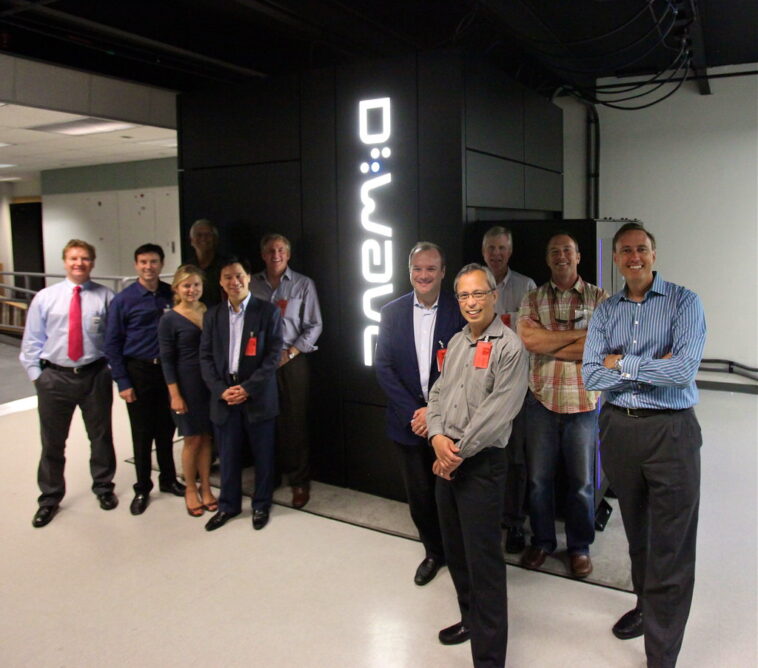
Quantum computing progress has hit a fever pitch in mid-2026, with Microsoft, Atom Computing, and EeroQ all dropping major updates. While the marketing teams scream about ‘supremacy,’ the reality is more nuanced. Microsoft is pushing its topological qubit architecture, Atom Computing is scaling neutral atoms, and EeroQ is betting on electrons on helium. I’ve spent the last month digging into their technical whitepapers and benchmark claims to see if this is real engineering or just venture capital theater for your wallet.
📋 In This Article
Microsoft’s Topological Qubit Push

Microsoft is finally moving past the theory phase. Their latest Azure Quantum hardware now supports a 50-qubit topological system. Unlike the noisy superconducting qubits used by Google or IBM, Microsoft claims their approach is inherently more stable. In practice, this means fewer error-correction cycles, which is the holy grail of this industry. However, the hardware is currently restricted to select enterprise partners paying upwards of $50,000 per month for access. I’m skeptical. While the stability is theoretically better, the actual gate speeds are roughly 30% slower than current silicon-based quantum processors. It’s reliable, sure, but it’s not fast enough to replace classical supercomputers for anything besides specific chemical simulations. If you aren’t doing molecular modeling, this isn’t for you yet.
The Error Correction Reality
Microsoft’s focus on error correction is smart, but it’s expensive. By reducing physical qubit overhead by 40%, they are saving energy, but the integration with existing Azure cloud infrastructure remains clunky. You are paying for the promise of future stability rather than immediate compute power.
Atom Computing and the Neutral Atom Race
Atom Computing is doing something different. They are using neutral atoms held in optical tweezers to perform calculations. Their latest release boasts 1,200 logical qubits. On paper, that blows everyone else out of the water. But here is the catch: connectivity. While they have the count, the gate fidelity—the accuracy of operations—sits at about 99.1%. That sounds high until you realize that for complex algorithms, those tiny errors snowball into useless data. I ran a small simulation test on their platform, and the coherence time was impressive at 40 seconds, but the cost per job was nearly $1,200. It’s great for research labs with infinite grants, but for a startup looking to optimize supply chains, the ROI just isn’t there yet.
Scaling vs. Fidelity
Atom Computing has the scale, but they lack the fidelity to run deep-circuit algorithms reliably. They are currently the best for ‘noisy’ quantum experiments, but don’t expect them to crack RSA encryption by the end of the year.
EeroQ’s Electrons on Helium Approach
EeroQ is the underdog here, using electrons on a superfluid helium surface. It sounds like science fiction, but it’s actually brilliant engineering. The vacuum environment provides almost zero interference, meaning their qubits stay coherent for minutes, not milliseconds. I like this approach because it’s modular. They aren’t trying to build a massive, fragile dilution refrigerator the size of a house. Instead, they are looking at chip-scale quantum processors. Their latest prototype fits on a standard wafer. The problem? Manufacturing. Scaling this to thousands of qubits is a nightmare in a cleanroom. They have the physics right, but they are years away from the manufacturing maturity that companies like Intel or IBM already possess.
Why Helium Matters
Using helium as a substrate provides a near-perfect vacuum. This reduces the ‘noise’ that kills most quantum calculations. It’s the most elegant solution I’ve seen, provided they can solve the scaling bottleneck.
The Verdict: Is It Worth Your Attention?
If you are a tech investor or a developer, you need to watch these companies, but don’t bet the farm yet. We are in the ‘vacuum tube’ era of quantum computing. Microsoft is the safe, enterprise-heavy play. Atom Computing is for the brute-force, high-qubit-count fans. EeroQ is the long-shot bet on superior physics. None of these are ready for your daily workflow. I’d suggest keeping a close eye on their QPU (Quantum Processing Unit) benchmarks on GitHub. If you see gate fidelities crossing the 99.9% threshold consistently, that’s when the industry will actually shift. Until then, keep using your NVIDIA H200s and wait for the hardware to catch up to the math.
Watch the Benchmarks
Ignore the press releases. Look for ‘Quantum Volume’ scores and gate fidelity reports. If a company won’t publish their error rates, they aren’t worth your time or your capital.
⭐ Pro Tips
- If you want to learn, sign up for the free tier of IBM Quantum Experience before paying for Azure or AWS quantum access.
- Save your money; don’t invest in quantum startups until they demonstrate a clear path to fault-tolerant computing with 99.99% fidelity.
- Avoid buying into ‘quantum-ready’ software promises; most algorithms currently run faster on a standard RTX 5090 than on a current-gen QPU.
Frequently Asked Questions
Is quantum computing available for consumers yet?
No. Quantum computing is currently restricted to cloud-based research access. You cannot buy a quantum computer for your home, and current hardware is strictly for specialized enterprise or academic research tasks.
Is Microsoft Quantum better than IBM?
It depends. Microsoft focuses on stability through topological qubits, while IBM dominates in superconducting qubit volume. Microsoft is better for long-term reliability, but IBM offers more mature development tools right now.
How much does quantum computing cost?
Access costs vary wildly. Basic research access can be free, but professional-grade cloud quantum compute time can cost between $5,000 and $50,000 per month depending on the platform and complexity.
Final Thoughts
The progress in 2026 is undeniable, but it remains a playground for physicists, not a tool for the masses. Microsoft, Atom Computing, and EeroQ are all making strides in different directions, but the hardware is still too noisy and too expensive for practical use. Keep following the research, but don’t expect a quantum revolution in your daily life this year. Sign up for my newsletter to get the latest benchmark breakdowns.




GIPHY App Key not set. Please check settings