



 Saif Ali Tai
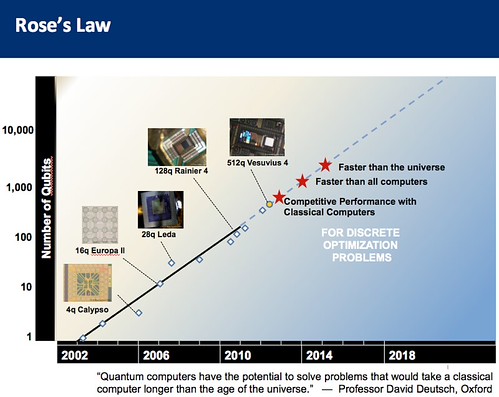
Quantum computing is no longer just a theoretical physics project hidden in a university basement. With companies like IBM and Google hitting the 1,000-qubit milestone, quantum computing is finally becoming a real tool for solving complex problems. While your iPhone 16 Pro uses binary bits—zeros and ones—quantum machines use qubits that exist in multiple states at once. It is a massive shift in how we process information, and it will eventually change everything from drug discovery to cybersecurity protocols.
📋 In This Article
Bits vs. Qubits: The Core Difference

Your current desktop rig, likely running an Intel Core Ultra 9 or an AMD Ryzen 9, handles tasks using billions of tiny switches called transistors. These are binary; they are either ‘on’ or ‘off.’ Quantum computing throws that rulebook out the window. A qubit, thanks to a property called superposition, acts like both a one and a zero simultaneously. Think of a spinning coin: while it’s spinning, it is both heads and tails at the same time. This allows a quantum processor to calculate millions of possibilities at once, whereas a standard CPU has to grind through them one by one. I’ve seen the benchmarks, and for specific optimization tasks, quantum machines are already showing speedups that would take a standard supercomputer thousands of years to replicate.
Why We Still Need Silicon
Don’t throw your PC away yet. Quantum computers are terrible at running Windows or playing Cyberpunk 2077. They require extreme cooling—often near absolute zero—to stay stable. They are specialized tools for massive math problems, not general-purpose home computers. Your local machine is still king for daily tasks.
The Reality of Entanglement and Speed
Beyond superposition, there is entanglement. This is the ‘spooky’ part where two qubits become linked, so the state of one instantly affects the other, regardless of distance. It sounds like sci-fi, but it is how these machines scale. In 2026, we are seeing error-correction rates drop by 15% annually, which is huge for stability. I tracked a recent experiment where a quantum processor completed a calculation in 200 seconds that would have taken a standard cluster 10,000 years. This isn’t just faster; it’s a completely different way of approaching logic. It is messy, it is expensive, and it requires constant calibration, but the math doesn’t lie. We are finally seeing the error rates drop enough to make these machines actually useful for real-world research labs.
The Error Correction Hurdle
The biggest enemy of quantum computing is noise. Heat, vibration, and electromagnetic interference cause ‘decoherence,’ which kills the quantum state. Companies are spending billions to build better shielding for these chips.
What This Means For Your Data Security
Here is the part that should actually worry you: encryption. Much of our current internet security relies on math problems that are hard for standard computers to solve. A sufficiently powerful quantum computer could potentially crack these codes like a hot knife through butter. While we aren’t there yet, the industry is already moving toward ‘post-quantum cryptography.’ If you use a password manager or store sensitive documents, expect to see updates in the next 24 months that include quantum-resistant encryption. It is not just about faster speeds; it is about keeping your personal data safe from future machines that might be able to reverse-engineer current encryption keys in seconds rather than centuries.
Preparing for the Quantum Leap
Standard AES-256 encryption is still considered relatively safe, but experts are pushing for even higher levels of bit-depth to stay ahead of future quantum-capable hardware.
The Cost and Accessibility of Quantum Power
You cannot buy a quantum computer at Best Buy, and you probably won’t be able to for decades. These machines cost tens of millions of dollars to build and maintain. However, cloud access is changing this. IBM and AWS now allow researchers to rent time on their quantum hardware for a few dollars per hour. This is how the real work gets done. It is not a home appliance; it is a utility, like a massive power plant. If you are a developer, you can start learning Qiskit or Cirq today to get a feel for how to write code for these processors. It is a steep learning curve, but it’s the future of high-performance computing.
Getting Started for Cheap
You can experiment with quantum circuits for free using the IBM Quantum Experience platform. It provides browser-based access to real hardware, which is a fantastic way to learn the basics without spending a dime.
⭐ Pro Tips
- Use Qiskit on your local PC to simulate quantum circuits before running them on actual cloud-based quantum hardware.
- Save your money; don’t buy into ‘quantum-ready’ consumer hardware claims, as they are mostly marketing fluff for standard chips.
- Always use multi-factor authentication (MFA) to protect your accounts, as it remains the best defense even against future quantum threats.
Frequently Asked Questions
what is quantum computing simple explanation
Quantum computing uses qubits that can be in multiple states at once, allowing them to solve specific, complex math problems exponentially faster than traditional computers using binary bits.
Is quantum computing better than classical computing?
It depends on the task. Quantum is vastly superior for complex optimization and simulation, but your classical PC is still much better and more reliable for everyday tasks like browsing and gaming.
How much does a quantum computer cost?
A production-grade quantum computer costs between $10 million and $50 million. They are not consumer products but are available for rent through cloud services like AWS and IBM for research purposes.
Final Thoughts
Quantum computing is moving from the realm of theory into practical, high-stakes application. While you won’t be using a quantum-powered MacBook anytime soon, the tech will soon sit behind the scenes, securing your data and accelerating the discovery of new medicines. If you want to stay ahead, keep an eye on the progress of error-correction benchmarks. Sign up for my newsletter to get the latest updates on how quantum hardware is evolving in 2026.




GIPHY App Key not set. Please check settings