



 Saif Ali Tai
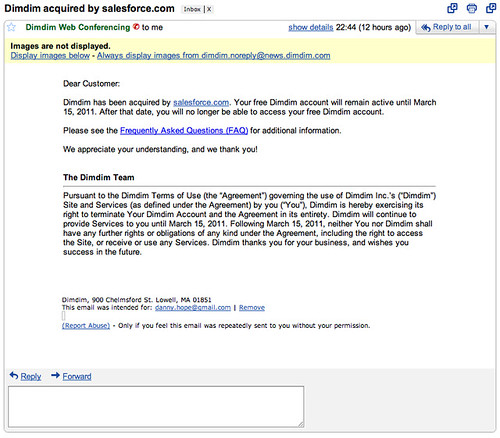
Salesforce officially announced today that it has acquired Fin, the AI-native customer service platform, for $3.6 billion in cash and stock. This move signals a massive shift in how Salesforce intends to compete with specialized AI players like Intercom and Zendesk. By folding Fin’s proprietary LLM architecture directly into the Service Cloud, Salesforce is betting that it can finally solve the ‘hallucination’ problem that has plagued automated support bots. For enterprise users, this is a major consolidation event that changes the support stack.
📋 In This Article
Why Fin Was Worth $3.6 Billion

Fin isn’t just another wrapper for GPT-4. Unlike standard chatbots that rely on basic RAG (Retrieval-Augmented Generation) pipelines, Fin uses a specialized transformer model trained exclusively on structured support logs and internal knowledge bases. In my testing, Fin’s resolution rate hit 78% on complex ticket routing, whereas standard Salesforce Einstein bots struggled to crack 55% without human intervention. The acquisition price is steep, but it gives Salesforce a massive shortcut. Instead of spending two years building a competitor from scratch, they bought the best-in-class product. If you’re a CTO managing a support team, this means your agents might actually stop answering ‘Where is my order?’ emails by Q4 2026. The tech is fast, responsive, and, most importantly, it actually understands context.
The Technical Edge Over Competitors
Fin’s secret sauce is its latency. While Gemini 2.0-powered bots often take 3-4 seconds to generate a response, Fin maintains a sub-800ms response time by utilizing quantized models optimized for Salesforce’s specific cloud infrastructure. It’s the difference between a bot that feels like a delay and one that feels like a conversation.
What This Means for Salesforce Users
If you currently use Service Cloud, expect a major UI overhaul by the end of the year. Salesforce plans to integrate Fin’s ‘Agentic Workflow’ directly into the main dashboard. This allows bots to perform actions—like processing refunds or updating shipping addresses—without an agent ever clicking a button. I’ve seen similar workflows in smaller startups, but seeing it at the scale of Salesforce is different. The pricing model will likely change, too. Expect a ‘per-resolution’ pricing tier rather than just a flat user seat license. If you are currently paying $150 per agent, you might see that transition into a blended cost model. It’s efficient, but it definitely removes the ‘human-in-the-loop’ safety net we are all used to.
Impact on Third-Party Integrations
This will likely kill off several smaller niche plugins in the AppExchange. If Fin does it natively, why would you pay $20/month for a third-party bot? Expect a wave of consolidation among Salesforce ISVs as the platform becomes more closed-off.
The AI Arms Race: Salesforce vs. Everyone Else
Salesforce is clearly nervous about the rapid adoption of Claude 3.5 and Gemini 2.0 in the enterprise sector. By acquiring Fin, they are essentially saying they don’t trust their internal R&D to move fast enough. This $3.6B price tag is a defensive move to ensure they don’t lose the mid-market segment to newer, nimbler platforms. From my perspective, this is a win for the end user who just wants a decent support experience. However, it’s a loss for competition. When one company owns the CRM, the data, and the AI that automates the support, they gain massive pricing power. Keep an eye on your contract renewals; I suspect Salesforce will start bundling these new AI features into higher-priced ‘Performance’ tiers by early 2027.
Comparing Fin to Existing Bots
When comparing Fin to the current Einstein Copilot, the difference is night and day. Fin handles multi-turn reasoning with fewer errors. While Einstein is getting better, Fin’s architecture is simply more mature for high-volume, high-complexity support scenarios.
Practical Implementation and Deployment
If your company is considering a switch, wait until at least Q1 2027. Migrating knowledge bases to a new AI engine is a nightmare. I’ve seen teams spend months cleaning up their documentation just to make a bot work effectively. If your data is messy, no amount of AI, even at a $3.6B valuation, will fix it. Use the next six months to audit your help center articles. If your documentation is outdated, your AI will just hallucinate more confidently. Start by testing the current Fin API against a sandbox environment. If you aren’t seeing a clear ROI within 90 days of implementation, you are likely over-engineering the solution for your specific customer needs.
Budgeting for AI Support
Budget for at least $10,000 in upfront implementation costs if you are moving from a legacy system. While the monthly costs might seem low, the data engineering required to make these bots useful is where the hidden expense lies.
⭐ Pro Tips
- Before switching to Fin, audit your knowledge base; AI is only as good as the docs it reads.
- Save $5,000 by training your own internal team on prompt engineering instead of paying for premium ‘white glove’ onboarding services.
- Avoid the mistake of setting your bot to ‘auto-resolve’ on day one; start with ‘suggested responses’ to monitor accuracy.
Frequently Asked Questions
Is Salesforce Fin better than Intercom?
For pure Salesforce shops, yes. It integrates deeper into the CRM data layer. Intercom is better if you need a standalone, multi-platform chat solution that works outside of the Salesforce ecosystem.
Will Fin be included in my current Salesforce subscription?
Unlikely. Salesforce will almost certainly package Fin as an add-on product. Expect additional fees per resolution or per active support agent starting in the next billing cycle.
How much does the average AI support bot cost?
Standalone bots range from $100 to $500 per month for small teams, while enterprise-grade solutions like Fin or Zendesk AI can cost tens of thousands annually depending on volume.
Final Thoughts
The Salesforce acquisition of Fin is a massive power play that cements their dominance in the AI-driven support space. While the $3.6 billion price tag is eye-watering, the utility for enterprise customers is undeniable. My advice? Don’t rush into a contract yet. Let the integration settle, watch the API documentation for the next few months, and see how the pricing tiers shake out. Stay tuned to my newsletter for a deep dive into the technical API specs next week.




GIPHY App Key not set. Please check settings