



 Saif Ali Tai
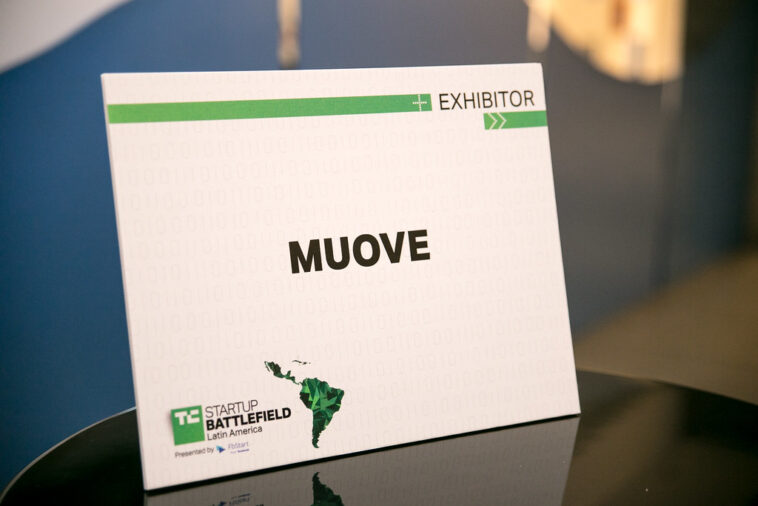
The clock is ticking on Startup Battlefield 200 applications, with the portal shutting down in exactly 3 days on June 9, 2026. For founders building the next wave of AI-driven SaaS or hardware, this is the premier stage to gain investor attention and grab that $100,000 equity-free prize. If you want a shot at the Disrupt stage, you need to stop tweaking your deck and hit submit. This is your final chance to get in front of top-tier VCs.
📋 In This Article
What Judges Look For in Your Application

I have seen hundreds of pitches, and most fail because they focus on features rather than market fit. The judges at TechCrunch aren’t looking for a list of specs; they want to see a clear path to a $100 million ARR. You need to articulate your TAM (Total Addressable Market) with data, not guesses. If you are using Gemini 2.0 or Claude 3.5 to build your backend, emphasize the efficiency gains. Be honest about your churn rate and customer acquisition cost (CAC). If your CAC is $500 but your LTV is only $600, you are going to get shredded. Keep the deck under 15 slides. Use high-contrast visuals, avoid jargon, and focus on the specific problem your product solves for a real user.
The Power of Concrete Metrics
Stop saying you have ‘thousands of users.’ Say you have 4,200 active monthly users with a 15% month-over-month growth rate. Investors want to see the velocity of your business. If you aren’t tracking your cohort retention, start doing it today. A slide showing a positive trend in retention is worth more than ten slides about your mission statement. Be prepared to back up every number with a verified dashboard screenshot.
Refining Your Pitch for the Disrupt Stage
The transition from an application to the actual stage requires a different set of skills. You aren’t just pitching to a screen; you are pitching to a room full of skeptical investors who have seen every gimmick in the book. If your product is a piece of consumer hardware like a new smart ring or a high-end mechanical keyboard, bring a working prototype. Don’t rely on 3D renders. I have seen founders get laughed off stage for bringing a non-functional ‘dummy’ unit. If you are a software startup, focus on a live demo that highlights a single, killer workflow. If it takes more than 30 seconds to show the core value, your product is too complex. Cut the bloat and focus on the ‘wow’ factor that makes the audience reach for their phones.
Hardware vs Software Presentation
Hardware founders should emphasize supply chain resilience and unit economics. If your bill of materials (BOM) is $200 and you plan to sell for $299, you better have a plan for scale. Software founders need to highlight why their architecture is superior. If you are running on AWS, show your cost efficiency. Investors care about margins above all else in this economic climate.
Common Mistakes That Get You Rejected
The most common mistake is failing to answer the ‘Why now?’ question. If your startup is just another AI wrapper around GPT-4, you will get rejected immediately. You need a proprietary data set or a unique distribution channel that competitors can’t easily replicate. Another mistake is ignoring the competition. Telling judges ‘we have no competitors’ is a death sentence. It shows you haven’t done your research or the market isn’t big enough to support a business. Acknowledge your rivals like OpenAI, Anthropic, or even incumbents like Microsoft, and clearly explain why your approach is fundamentally different. It is okay to be smaller; it is not okay to be blind to the reality of the market you are entering.
The Competitive Analysis Trap
Do not create a feature comparison table with 20 checkmarks. It looks desperate. Instead, create a ‘value proposition’ map. Show where you sit in the market relative to speed, cost, and reliability. If you are cheaper but less reliable, own it. If you are the premium, high-performance option, prove it with benchmark data that beats the current market leaders.
Logistics and Deadlines: The Final Countdown
You have until June 9, 2026, at 11:59 PM PT to hit that submit button. Don’t wait until the final hour. Server load on the application portal is real, and you don’t want to miss out because of a network timeout. Make sure your video pitch is high quality. You don’t need a $5,000 RED camera; a modern iPhone 16 Pro recording in 4K at 60fps with a decent $50 lapel mic will do just fine. Ensure your audio is crisp. If the judges can’t hear you clearly, they will move to the next application in seconds. Double-check your contact details and founder bios. It sounds obvious, but I have seen perfectly good startups get disqualified because they linked to a broken website or a dead LinkedIn profile.
Technical Checklist Before You Submit
Check your links. Use a tool like Bitly to track if judges are actually clicking your deck. Ensure your pitch video is uploaded to a platform like YouTube or Vimeo with public access settings. If the link is private, the judges won’t email you to ask for a password. They will just skip you. Test the links on a separate device to be 100% sure.
⭐ Pro Tips
- Use a $50 lapel mic like the Boya BY-M1 for your pitch video; bad audio is an instant disqualification.
- Save $500 on professional deck design by using high-quality templates from Canva or Pitch.com rather than hiring an expensive agency.
- The biggest mistake is over-explaining the tech; focus on the business model and the customer pain point.
Frequently Asked Questions
How do I apply for Startup Battlefield 200?
Visit the official TechCrunch Disrupt portal, create a founder profile, upload your pitch deck, and submit your 2-minute video pitch before the June 9, 2026, deadline. Ensure all links are public.
Is Startup Battlefield 200 worth the effort?
Yes. The exposure to top-tier VCs and the potential for a $100,000 equity-free prize makes it a high-value opportunity. Even if you don’t win, the feedback and networking are invaluable for early-stage founders.
Does it cost money to apply for Startup Battlefield 200?
No, the application process for the Startup Battlefield 200 is free. However, if you are selected to exhibit, you will need to manage your own travel and accommodation costs for the event.
Final Thoughts
You have 3 days left to polish your story and prove your startup deserves a spot on the main stage. Don’t overthink it. Get your metrics clean, your video audio loud, and your value proposition sharp. The Startup Battlefield 200 is a massive signal to the venture capital world. Submit your application now, and keep your eyes on your inbox. Good luck to everyone grinding to make it happen.




GIPHY App Key not set. Please check settings