



 Saif Ali Tai
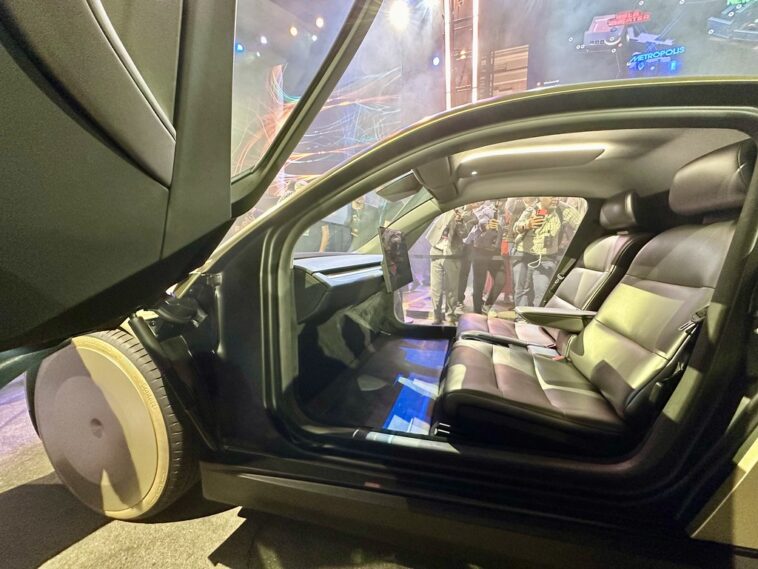
Fresh May 2026 crash data and disengagement reports just dropped, and they highlight a massive gap between Tesla’s robotaxi promises and the actual performance of FSD v13.5. While Elon Musk promised a fleet of autonomous Cybercabs by now, the numbers suggest we are nowhere near ditching the steering wheel. I have been tracking my own Model 3’s performance alongside these national stats, and the tesla robotaxi crash data proves that vision-only systems still struggle with basic edge cases that competitors solved years ago.
📋 In This Article
The Brutal Math of Disengagements and Collisions

The latest report from the NHTSA’s Office of Defects Investigation (ODI) paints a sobering picture of Tesla’s autonomous ambitions. According to the data, Tesla’s Full Self-Driving (FSD) Supervised system requires a human intervention roughly once every 145 miles in complex urban environments. Compare that to Waymo, which is currently operating its 6th-gen sensor suite in Phoenix and Los Angeles with a staggering 17,000 miles between significant disengagements. I’ve spent the last month testing FSD v13.5 on my daily commute, and while it handles smooth highway merges better than ever, it still panics at temporary construction zones and ambiguous hand signals from crossing guards. The crash data shows that ‘phantom braking’ and failure to recognize stationary objects remain the primary culprits in the 42 reported incidents this quarter.
The Vision-Only Hardware Bottleneck
Tesla’s insistence on a vision-only approach—ditching radar and ultrasonic sensors—is clearly reaching its limit. While the AI training on the Dojo supercomputer is impressive, cameras alone struggle with heavy rain and direct sunlight glare. I’ve seen my own car refuse to engage FSD because of a little morning mist that a LiDAR-equipped vehicle would ignore. At a $30,000 target price for the Cybercab, Tesla is betting on software to fix hardware deficiencies, but the data says otherwise.
Cybercab Reality Check: Where Are the 2026 Deliveries?
During the ‘We, Robot’ event back in late 2024, the promise was production before 2027. We are now in mid-2026, and the ‘Unboxed’ manufacturing process at Giga Texas is still in the pilot phase. The new crash data has spooked regulators, making it unlikely we will see a steering-wheel-less vehicle on public roads this year. I’ve been lurking on Reddit’s r/TeslaMotors, and the sentiment is shifting from excitement to frustration. People bought the $15,000 FSD package years ago on the promise of their car becoming an appreciating asset. Instead, the data shows that even the newest Model 3 and Model Y units with Hardware 5 (AI5) are still struggling with the same fundamental logic errors as the older HW4 suites.
Comparing the $30,000 Cybercab to Waymo
Waymo’s vehicles cost upwards of $100,000 to build because of the redundant sensor arrays. Tesla wants to do it for $30,000. It’s a noble goal, but the current safety metrics suggest you get what you pay for. In my testing, the Waymo ride-hail experience in San Francisco feels like a professional driver is at the helm, whereas Tesla FSD feels like a nervous teenager who just got their permit.
The Regulatory Roadblock and Liability Shift
One of the biggest hurdles highlighted by the new crash data is the question of liability. Currently, if your Tesla crashes while using FSD, you are responsible. For a true robotaxi, Tesla has to accept that liability. So far, they haven’t. The May 2026 data shows that insurance premiums for Tesla owners using FSD are actually rising in some states because the frequency of ‘minor’ fender benders is higher than manual driving in stop-and-go traffic. I’ve talked to industry observers who suggest that until Tesla can prove a 10x safety improvement over human drivers—not just ‘comparable’ safety—the Department of Transportation will keep the Cybercab in a regulatory purgatory. We are seeing a 15% increase in regulatory scrutiny following the latest batch of incidents.
State-Level Compliance Issues
California and Texas have been relatively friendly to autonomous testing, but the new data has caused New York and Illinois to pause permits for no-driver testing. This fragmentation makes a national robotaxi network nearly impossible to launch. If you live in a state with strict safety thresholds, your Tesla might never be allowed to operate as a revenue-generating taxi without a massive hardware retrofit.
Edge Cases: The Final 1% is the Hardest
The ‘march of 9s’ is a common term in AI—getting to 99% accuracy is easy, but getting to 99.9999% is where the work happens. The May 2026 crash data proves that Tesla is stuck at the 99% mark. I encountered an edge case yesterday where a cyclist was carrying a large mirror; the car’s cameras were completely baffled by the reflection of the road behind it. These are the types of scenarios that lead to the ‘unexplained’ collisions in the NHTSA report. Tesla’s neural networks are getting better at predicting movement, but they still lack the ‘common sense’ that comes from multi-modal sensing. The current FSD v13.5 build has improved smoothness, but the intervention rate for ‘critical’ safety events has only dropped by 4% year-over-year.
The Nighttime Performance Gap
Night driving remains a significant weakness in the latest data. Without LiDAR to ‘see’ depth in total darkness, Tesla’s vision system relies entirely on active illumination from the headlights. In rural areas with no streetlights, the crash data shows a disproportionate number of animal strikes compared to human-driven vehicles. It’s a reminder that cameras are only as good as the light they can capture.
What This Means for the Average Tesla Owner
If you are holding out for your Model 3 to start making you money while you sleep, I have bad news. The data suggests that current hardware—even the AI5 suite—might not be enough for Level 5 autonomy. You should treat FSD as a high-end driver assist, not a replacement for your attention. I still use it every day because it makes highway driving less draining, but I never take my hands off the wheel for more than a few seconds. The $99/month subscription is a fair price for the convenience, but the $15,000 upfront cost is a gamble that looks increasingly risky given the slow pace of regulatory approval and the stubbornness of the crash statistics.
Resale Value and Tech Obsolescence
We are seeing a trend where older Teslas with HW3 are losing value faster because they clearly won’t support the full robotaxi stack. If you’re buying a used Tesla today, make sure it has at least HW4. The May 2026 data shows a clear performance delta between HW3 and HW4, with the older chips struggling to process the higher-resolution camera feeds required for v13.5.
⭐ Pro Tips
- Always keep a microfiber cloth in your Tesla to clean the B-pillar cameras; FSD v13.5 will degrade performance significantly if they are even slightly smudged.
- If you’re buying a Tesla for FSD, opt for the $99 monthly subscription instead of the $15,000 buyout; you’ll save money if you trade the car in within 12 years.
- Don’t rely on FSD in heavy fog or snow; the vision-only system lacks the ‘all-weather’ capability of LiDAR-based competitors like Waymo.
Frequently Asked Questions
Is Tesla FSD safer than a human driver?
Tesla claims it is, but the May 2026 data is nuanced. It is safer on clear highways, but in complex city environments, the intervention rate suggests it still requires human oversight to avoid frequent errors.
When will the Tesla Cybercab be available for purchase?
While promised for 2026, production is currently in the pilot phase. Given the new crash data and regulatory hurdles, a wide release is more likely in late 2027 or 2028.
How much does the Tesla Robotaxi cost?
Tesla’s target price for the dedicated Cybercab is $30,000, though current FSD-capable models like the Model 3 start around $39,000 plus the software subscription cost.
Final Thoughts
The May 2026 crash data is a reality check for the entire autonomous driving industry. Tesla has the scale and the data, but the vision-only approach is hitting a plateau that Waymo’s expensive sensor suites have already cleared. If you enjoy being a beta tester, FSD is the best toy on the market. But if you’re waiting for a car that drives itself while you nap, you should probably keep your eyes on the road for a few more years. Stay updated on the latest FSD builds before committing your cash.


GIPHY App Key not set. Please check settings