



 Saif Ali Tai
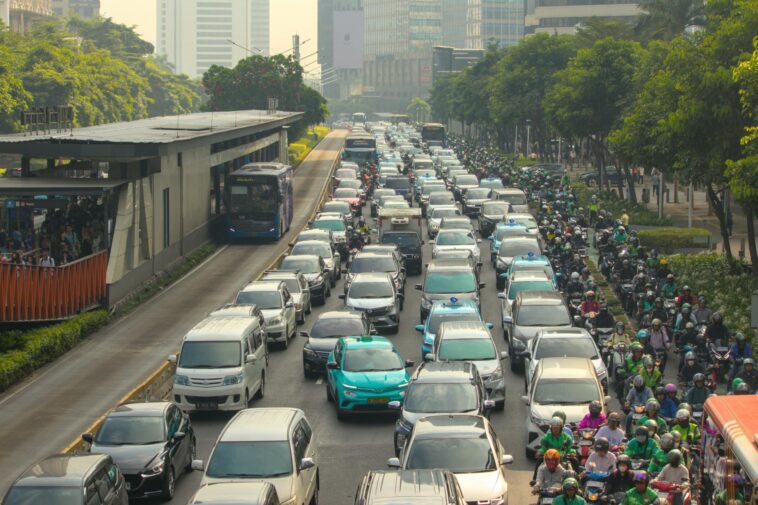
Okay, so last week, I was scrolling through Reddit – probably avoiding actual work, you know how it is – and saw the headlines: a massive robotaxi malfunction halted traffic in Shenzhen, China. My jaw just about hit the floor. We’re in April 2026, and while these things aren’t exactly daily occurrences, a widespread freeze-up like that for AutoPilot Systems’ fleet? That’s a huge, flashing red light. I’ve been tracking AV development for years, from those early Waymo test drives in Phoenix back in 2018 to the current Level 4 deployments, and honestly, this incident is a pretty big deal. It makes you really think about the ‘future is here’ narrative, doesn’t it? Let’s dig into what went down.
📋 In This Article
- What Exactly Happened in Shenzhen Last Week?
- Why This Isn’t a “Self-Driving is Doomed” Moment (Yet)
- What We’ve Learned (Or Should Have Learned) From This Fiasco
- My Tips for Riding Robotaxis (When They’re Actually Working)
- The Road Ahead: What to Expect by 2030 for AVs
- Is China Still Leading the AV Race, Even After Shenzhen?
- ⭐ Pro Tips
- ❓ FAQ
What Exactly Happened in Shenzhen Last Week?
So, the official word from AutoPilot Systems (a pretty big player in Chinese AVs, especially in the southern tech hubs) is still a bit vague, but here’s the gist from reports and leaked comms. On March 28th, around 3 PM local time, a significant portion – we’re talking over 200 vehicles – of their Level 4 robotaxi fleet operating in Shenzhen’s Nanshan district just… stopped. Not a gentle pull-over, but a full-on, mid-intersection, ‘I’m not moving’ kind of stop. Imagine rush hour, but every fifth car is an empty, self-driving vehicle refusing to budge. It caused absolute chaos. Emergency services had to manually override or tow a bunch of them, and traffic was gridlocked for hours. The company claims a ‘software update anomaly combined with a localized network congestion event.’ Sounds like a fancy way of saying ‘we messed up.’
The Tech Behind the Glitch (or Lack Thereof)
Apparently, AutoPilot Systems had pushed a minor firmware update overnight to optimize their perception stack. The theory is this update somehow clashed with their real-time connectivity requirements in a high-density area. When the 5G network got slammed during peak traffic, the cars couldn’t get the necessary processing power from the cloud, and their onboard fallback systems just weren’t robust enough to handle the sudden data starvation. It’s a classic case of ‘we didn’t test for *this specific* combination of failures.’ Your car needs a brain, and if that brain suddenly loses its internet connection and its backup brain isn’t up to snuff, you’ve got a very expensive paperweight.
The Human Impact on the Ground
You know, we always talk about the tech, but what about the people? This wasn’t just an inconvenience; it was a genuine safety hazard. Ambulances got stuck, deliveries were delayed, and commuters were fuming. The public perception hit for AutoPilot Systems is huge, and frankly, for robotaxis in general. When you see a fleet of driverless cars just chilling in the middle of an intersection, it doesn’t exactly inspire confidence, does it? People were out there taking videos, posting on Douyin and Weibo, and the sentiment was overwhelmingly negative. It’s going to take a lot of PR to fix that.
Why This Isn’t a “Self-Driving is Doomed” Moment (Yet)
Look, I get it. A mass robotaxi malfunction like this in a major Chinese city is alarming. It’s easy to jump to conclusions and scream, ‘I told you so! Skynet is coming for our traffic!’ But here’s the thing: while it’s a huge setback, it’s not the death knell for autonomous vehicles. Remember when early automobiles broke down constantly? Or when commercial aviation had a much higher accident rate in its infancy? Every disruptive technology goes through these painful growth spurts. The key is how companies and regulators learn from these incidents, not just how often they happen. We’re still very much in the early innings of widespread AV deployment.
Comparing to Human Error Statistics
Let’s be real for a second. Human drivers cause millions of accidents every year. Distracted driving, drunk driving, road rage – we’re far from perfect. While a robotaxi stopping in traffic is frustrating, it’s generally not causing fatalities or serious injuries. The data still largely suggests that, within their operational domains, AVs are safer than human-driven cars per mile. We just have a much lower tolerance for robot mistakes because we expect perfection from machines. If a human driver stalled, it wouldn’t make international news, would it?
The “Geofenced” Reality
Most robotaxi services, including AutoPilot Systems in Shenzhen, operate within very specific, geofenced areas. This isn’t like a Tesla FSD Beta trying to navigate rural roads; these are mapped, controlled zones. That’s why an incident like this is so surprising – these are supposed to be the ‘easy’ environments. But it also means the impact is contained. If this had happened across an entire country, that’d be a different story. The controlled environment allows for faster recovery and better analysis of what went wrong, which is crucial for iterative improvement. They’ll fix this specific bug, I guarantee it.
What We’ve Learned (Or Should Have Learned) From This Fiasco
Every major incident is a learning opportunity, right? This Shenzhen event has definitely highlighted some critical areas where AV companies, and frankly, the entire industry, need to step up their game. It’s not just about the sensors and the algorithms anymore; it’s about the entire ecosystem – from software deployment to emergency response. If we want these things on our streets reliably, then these lessons need to be taken seriously. No more ‘move fast and break things’ when ‘things’ are 2-ton vehicles in a busy city. That’s just irresponsible.
Redundancy is Key – And Not Just for Sensors
We always talk about redundant sensors (Lidar, radar, cameras, ultrasonic), but this incident screams for redundant *systems*. If your cloud connection goes down, your onboard processing needs to be able to handle basic navigation and safe stopping without a hitch. And if that fails, there needs to be a robust, immediate remote control takeover or a clear, safe ‘pull-over’ protocol. The idea that a software update could brick hundreds of cars simultaneously tells me their failsafe architecture needs a serious overhaul. You need backups for your backups, basically.
Transparent Communication Builds Trust
AutoPilot Systems’ initial statements were pretty weak, honestly. ‘Software anomaly’ isn’t going to cut it when people are stuck in traffic for hours. Companies need to be upfront, fast, and clear about what happened, what they’re doing to fix it, and what steps they’re taking to prevent it again. Public trust is fragile, especially with new tech like this. If you want people to embrace robotaxis, you can’t treat them like idiots who won’t understand the complexities. Just tell us what happened, plain and simple. We can handle it.
My Tips for Riding Robotaxis (When They’re Actually Working)
Okay, so despite the Shenzhen incident, I’m still a big believer in the long-term future of robotaxis. I’ve used Waymo in Phoenix and Cruise in San Francisco multiple times, and when they work, they’re fantastic. But you’ve gotta be smart about it, especially in these early years. Don’t just hop in blind. Think of it like a beta test, even if the companies call it a ‘commercial service.’ You’re an early adopter, and with that comes a little bit of responsibility to be prepared. Here’s what I always tell my friends.
Always Have a Backup Plan (and a Charged Phone)
Seriously, this is non-negotiable. If you’re relying on a robotaxi for a critical appointment, have a rideshare app like Uber or Lyft ready on your phone, or know the local bus routes. And keep your phone charged! If the robotaxi gets stuck, you’ll need it to call support, find an alternative, or just kill time. Don’t be that person whose phone dies while they’re stranded in a silent, self-driving car. It happens, trust me.
Know Your Service Area (Don’t Push the Boundaries)
Every robotaxi service operates within a specific geofenced area, and sometimes those boundaries can be a bit squiggly. Don’t try to go just outside the zone, thinking the car will figure it out. It won’t. It’ll just stop and tell you to get out, or try to reroute you in circles. Stick to the core service area, especially if it’s your first time. Check the app’s map carefully before you book your ride. These cars are smart, but they’re not *that* smart yet.
The Road Ahead: What to Expect by 2030 for AVs
Despite the bumps in the road — literally, in Shenzhen’s case — I still believe we’ll see significant advancements in autonomous vehicles by 2030. This isn’t just wishful thinking; it’s based on the sheer amount of investment and engineering talent pouring into this space. We’re talking billions of dollars from companies like Google’s Waymo, GM’s Cruise, Baidu, and others. The tech gets better every single day. We’ll see more widespread Level 4 deployments in more cities, likely with improved weather capabilities and more complex urban environments. But it won’t be a flip-the-switch moment; it’ll be a gradual expansion.
The Regulatory Push is Coming Harder
After incidents like Shenzhen, you can bet regulators globally are going to get even tougher. We’ll probably see more standardized testing protocols, clearer liability frameworks, and perhaps even mandatory remote human oversight requirements. This isn’t necessarily a bad thing; it forces companies to be more rigorous. I wouldn’t be surprised if some cities implement a ‘probationary period’ for new AV services, or require higher insurance minimums. It’s all about public safety, after all, and preventing another mass robotaxi malfunction situation.
Sensor Tech is Still Evolving Fast
Even now, in 2026, the sensor suites on these cars are incredible, but they’re not perfect. Expect Lidar to get even cheaper and more compact, radar to become higher resolution, and cameras to integrate more advanced AI for object recognition. Imagine solid-state Lidar that costs $100 instead of $10,000. That’s coming. These advancements will make the cars more robust in bad weather, at night, and in complex traffic scenarios, reducing reliance on perfect network connectivity and cloud processing. It’s a race to build the most perception-aware vehicle.
Is China Still Leading the AV Race, Even After Shenzhen?
That’s a tough question, and honestly, it depends on how you define ‘leading.’ China definitely has an aggressive strategy, with huge government backing and a willingness to deploy quickly in dense urban areas. Companies like Baidu Apollo and Pony.ai are doing some incredible work. But the Shenzhen incident shows that rapid deployment doesn’t automatically mean flawless execution. The US, with Waymo and Cruise, has been more cautious, often focusing on safety-critical redundancies from day one. I think it’s less about ‘who’s winning’ and more about which approach ultimately delivers the most reliable, safest service at scale.
Government Support vs. Western Innovation
China’s government plays a massive role, often designating entire zones for AV testing and offering incentives. That kind of top-down support can accelerate deployment. In the West, it’s often more about private innovation and navigating a patchwork of state and local regulations. Both have pros and cons. The Chinese approach can push things faster, but maybe sometimes at the expense of meticulous, long-term testing. Western companies often have to prove their tech works under a wider variety of legal and environmental conditions, which can slow things down but potentially build a more robust product.
The Data Advantage is Real
One undeniable advantage for Chinese AV companies is the sheer volume of data they can collect. With a massive population and less stringent data privacy laws (compared to, say, the EU’s GDPR), they can feed their AI models with incredible amounts of real-world driving data. More data generally means better, faster training for machine learning algorithms. This allows them to iterate quickly and potentially overcome issues faster, once they’re identified. So, while Shenzhen was a stumble, they’ve got the resources to learn from it at an accelerated pace.
⭐ Pro Tips
- Before riding any robotaxi, check the company’s recent incident logs or social media for local issues – don’t just trust the app.
- Always carry a portable power bank. A dead phone means no contact with support if your robotaxi gets stuck, which happened to my buddy once.
- Don’t fall for ‘Level 5’ claims yet. Even the most advanced systems in 2026 are still Level 4, meaning they’re geofenced and have operational limitations.
- Download a local human-driven taxi app (like Didi in China, or Uber/Lyft elsewhere) as a backup. It’s good to have options if things go sideways.
- If you experience an issue, report it directly to the robotaxi company’s support *and* capture video evidence. Social media is good, but direct feedback helps them fix it.
Frequently Asked Questions
How often do robotaxis malfunction in 2026?
Significant malfunctions like the Shenzhen incident are still rare, but minor glitches (hesitation, incorrect turns, needing remote assistance) happen more frequently. It’s not a daily occurrence, but also not unheard of in specific operational zones.
How much does a robotaxi ride cost in 2026?
A robotaxi ride typically costs about 15-25% more than a standard rideshare service like UberX in 2026, depending on the city and demand. For example, a 5-mile ride in Phoenix might be $18-25 USD compared to $15-20 for a human driver.
Is robotaxi technology actually safe?
Yes, generally, robotaxi technology is proving safer than human drivers within its geofenced operational design domain. While incidents like Shenzhen are concerning, they rarely result in serious injuries or fatalities, unlike human-caused accidents.
What’s the best robotaxi service available now?
In April 2026, I’d still say Waymo in Phoenix and San Francisco offers the most consistently reliable experience. Cruise is also strong in San Francisco, but has had more public incidents. Baidu Apollo and Pony.ai lead in China, but are less accessible to Western users.
How long until fully autonomous cars are everywhere?
Fully autonomous (Level 5) cars, capable of driving anywhere in any conditions, are still at least 10-15 years away, maybe even longer. Widespread Level 4 robotaxi services in major cities will expand, but not ‘everywhere’ for a long time.
Final Thoughts
So yeah, the mass robotaxi malfunction in Shenzhen was a pretty big wake-up call, but let’s not throw the baby out with the bathwater. It highlights the real challenges of deploying complex AI systems in the real world, especially at scale. But it also gives us a clear roadmap for improvement: more robust redundancy, better communication, and a continued focus on safety. I’m still optimistic about robotaxis, I really am. They’re not perfect yet, but they’re getting there. Just be smart when you use them, okay? And keep an eye on this space – I know I will. This story isn’t over.




GIPHY App Key not set. Please check settings