
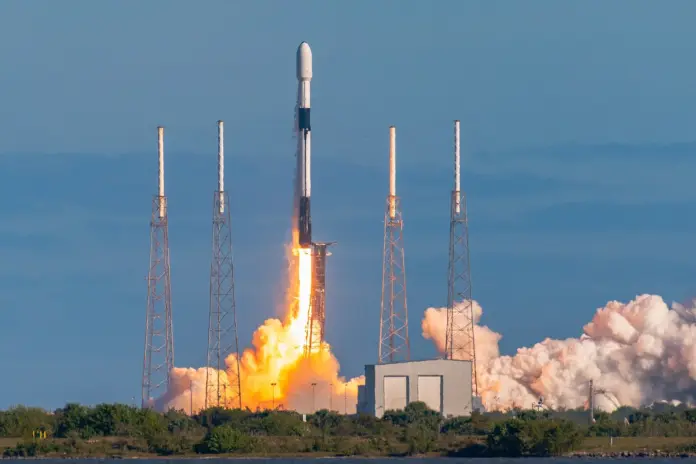
Google says a prototype satellite in its Project Suncatcher research effort has returned an AI response generated in orbit: a haiku from the Gemma 4 model, running on a data-center-class Tensor Processing Unit (TPU). Google announced it on October 30. It is a small first step in a long research project, not a product.
What happened
- The satellite was built with Planet and launched on October 1 on SpaceX’s Transporter-18 rideshare mission.
- Google asked the onboard Gemma 4 model for a haiku about being in space, and the reply was sent down as the satellite passed over Svalbard, Norway (ShiftDelete).
- Google calls it the first response from a data-center-class TPU in orbit. That is a narrow claim, not “the first AI in space”, and it has not been independently verified (Unite.AI).
Hardware and limits
ShiftDelete reports that the spacecraft carries four TPUs and generates up to 1 kW, so only one TPU can run at a time, for about 20 minutes per session. It attributes that detail to TechCrunch. Unite.AI’s article does not give a power figure, and other coverage describes the hardware differently, so treat the exact TPU count as unconfirmed.
Why radiation is the real test
Google has said initial tests of its TPUs withstood radiation exposure beyond a five-year mission dose, and the radiation work used Trillium TPUs. ShiftDelete adds that lab tests showed memory irregularities at about 2 kilorads, well above the roughly 750 rads expected over a shielded five-year mission. Google describes these results as initial. Real orbital data is needed, and the next phase will look at how the chips cope with thermal stress and radiation, which can cause silent data corruption.
What comes next
- Two more satellites are planned for 2027, to test spreading AI computation across several spacecraft linked by lasers, with more power generation.
- Project Suncatcher was first announced on November 4, 2025 as a long-term research moonshot.
The caveats
A single haiku shows that the chip can boot, run a model and talk to the ground. It says nothing yet about cost, cooling, reliability over years or whether space-based compute can compete with data centers on Earth. Power also limits contact scheduling with ground stations. Google’s own research blog is the primary source for the technical detail.

