
CISA added a Cisco Expressway flaw, CVE-2026-76466, to its Known Exploited Vulnerabilities (KEV) catalog on November 20, 2026, and gave federal agencies until Monday, November 23 to fix it. The bug is a hard-coded credential in the Expressway cluster database that can let an unauthenticated attacker run commands as root. Cisco fixed it on October 21, but the first reported attack came on November 19. Here is who is affected, what the attackers did and what to check.
What is CVE-2026-76466?
Cisco’s advisory (cisco-sa-vcs-static-cred-hr7EWZ8t) describes a remote code execution flaw in Cisco Expressway Series, covering both Expressway-C and Expressway-E, physical or virtual. It scores 9.8 out of 10 (CVSS 3.1, critical) and is classed as use of hard-coded credentials (CWE-798). The advisory says clients are not properly validated in clustered setups, including when “TLS Verify Mode” is set to Enabled for clustering.
Ostorlab’s analysis explains the mechanics. The cluster database service listens on TCP 4372 (with related traffic on 4371), and a maintenance identity and cookie are built into the software and identical on every install. Anyone who can reach that port can pose as a cluster member and run operating-system commands as root.
Which Expressway systems are affected?
- Only clustered devices. Cisco says a device is affected if it runs a vulnerable release and is configured in a cluster. A standalone Expressway is outside the vulnerable set.
- Release X15.5.3 and earlier are affected. The first fixed release on that line is X15.5.20.
- Release X14 and earlier have no fix on their own branch. Cisco says to migrate to a fixed release.
- No workaround. Cisco lists none.
To see what you run, check the version under System > Status in the Expressway web interface.
Timeline
- October 21, 2026: Cisco publishes the advisory and the fix. Its revision history still shows only that first version, and it says Cisco was not aware of malicious use at the time.
- November 5: exploit code is posted publicly, according to Ostorlab and Secure.com.
- November 19: the security firm F6 reports the first attack it has seen, against a Russian organisation.
- November 20: CISA adds the flaw to KEV with a federal due date of November 23.
That is about four weeks between the patch and the first reported breach, which is a typical window for a flaw with public exploit code.
What did the attackers do?
As summarised by Secure.com from F6’s report, the attackers took over two internet-facing Expressway devices running X15.5.3. Because cluster members trust each other, they then reached two internal cluster nodes that were not exposed to the internet, for four compromised devices in total. They ran custom Python scripts to scan for SMB shares, probe SQL Server and WinRM, and pull credentials from internal GitLab repositories, and they edited the scripts during the intrusion. F6 did not tie the activity to a known group. No source we read names the attackers, and CISA does not say who is exploiting the flaw.
What to do now
- Find your clusters. List every Expressway-C and Expressway-E and note which are clustered and which release each runs.
- Upgrade every node to X15.5.20 or later, following Cisco’s cluster upgrade order. If you are on X14 or older, plan a migration to a fixed release.
- Limit the cluster ports. Until you are patched, allow TCP 4371 and 4372 only from your known cluster peers. This is the interim step suggested in the F6-based reporting, not a Cisco workaround.
- Check for signs of compromise. Reporting based on F6’s findings points to the node name
wombat@127.0.0.1in erlang.log, Python files staged under/mnt/harddisk/, connections to TCP 4371 or 4372 from hosts that are not cluster peers, and cluster peers on the System > Status page that you do not recognise. - Treat a hit as a breach. Isolate the device, rotate secrets that were stored on or reachable from it, and look for lateral movement before rebuilding.
Patching does not remove an intruder who is already inside. If a clustered Expressway was internet-reachable on an affected release at any point after November 5, review it even if the upgrade is done.
What else CISA added on November 20?
The same four-flaw batch included the VMware vCenter authentication bypass we covered in VMware vCenter Zero-Day CVE-2026-123890, plus two others, according to Security Affairs and CISA’s alert:
- SAP NetWeaver Enterprise Portal, CVE-2025-42884 (CVSS 6.5): improper neutralisation of special elements in data query logic, which an unauthenticated attacker can use to inject JNDI properties.
- Apache Roller, CVE-2026-129448 (CVSS 9.8): unsafe deserialisation in the XML-RPC endpoint in versions 4.0.0 through 6.1.4, which lets an unauthenticated attacker run code. Maintainers confirmed it is being exploited.
All four carry the November 23 federal deadline. CISA’s alert points to its binding operational directive BOD 26-04 and encourages every organisation, not only federal agencies, to prioritise KEV flaws on internet-facing systems. For the previous week’s additions, see Exploited This Week: 7 Vulnerabilities CISA Added to Its KEV List.
What is still unknown?
- Who is behind the attacks, and whether anyone other than the F6 victim has been hit.
- Whether Cisco will ship a fix for X14 and earlier, or only point customers to a migration.
- How many internet-facing Expressway clusters remain on X15.5.3 or older.
Sources
- Cisco Security Advisory: Cisco Expressway Series Remote Code Execution Vulnerability (October 21, 2026)
- CISA: Adds Four Known Exploited Vulnerabilities to Catalog (November 20, 2026)
- Secure.com: Cisco Expressway vulnerability exploited after PoC release
- Ostorlab: Cisco Expressway root RCE exploited in the wild
- Security Affairs: CISA adds Cisco Expressway, SAP NetWeaver, VMware vCenter and Apache Roller flaws to KEV
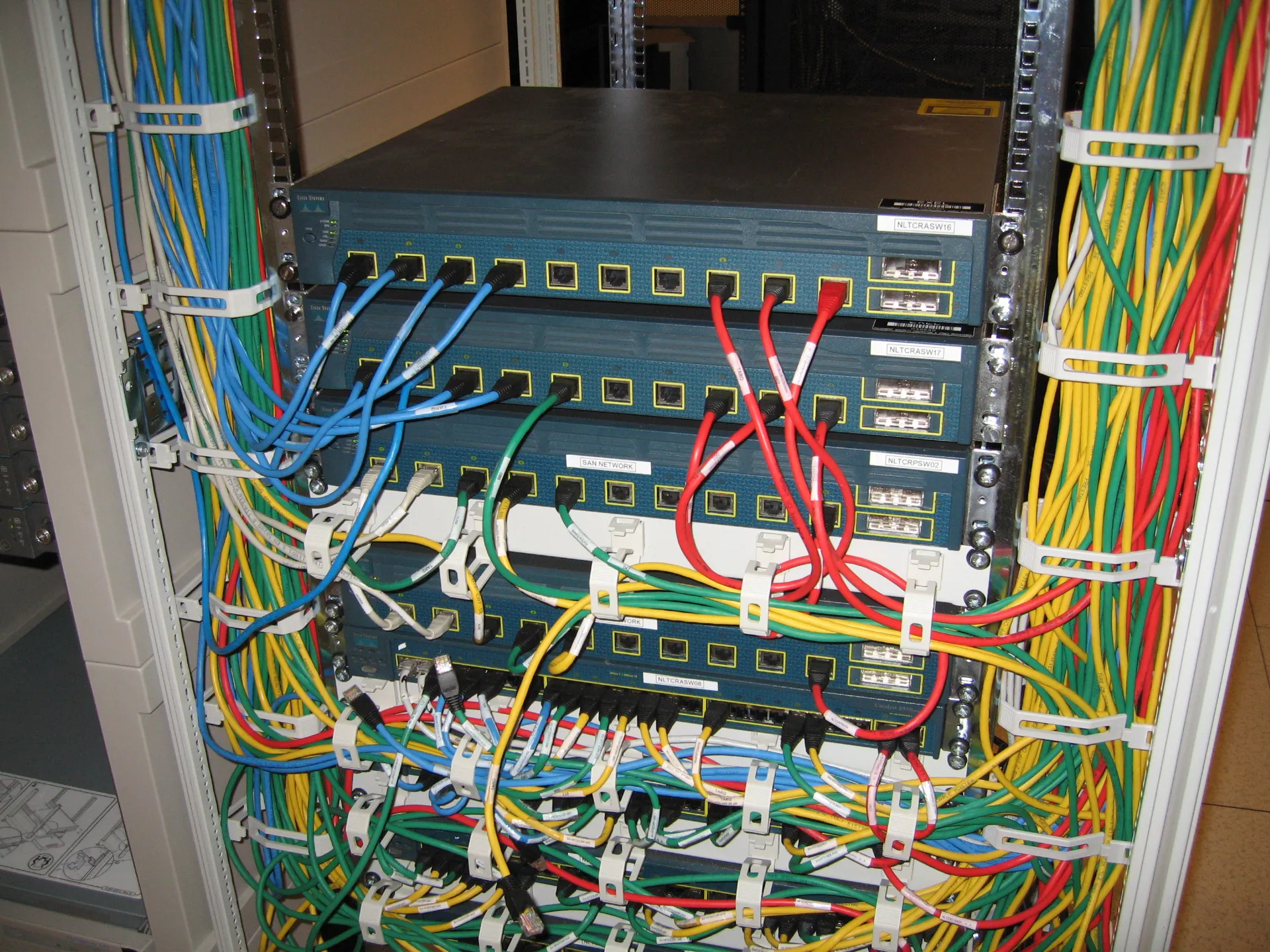
Image: Cisco distribution switches by Jemimus, CC BY 2.0, via Wikimedia Commons.
Like our coverage? Add stepphase.com as a preferred source on Google to see more of our stories in Top Stories.

