
Broadcom patched a critical VMware vCenter flaw, CVE-2026-123890, on November 19, 2026, and on November 20 Google’s threat teams said a suspected China-linked group had been exploiting it as a zero-day since early September, more than two months before a fix existed. The bug lets someone who can reach vCenter over the network bypass authentication. Broadcom lists no workaround, so the fix is the patch. Here is what is affected, which builds fix it, what Google found and what to check if you run vCenter.
What is CVE-2026-123890?
It is an authentication bypass in the VMware Directory Service inside vCenter Server, rated 9.8 on the CVSS 3.1 scale and published in Broadcom advisory VMSA-2026-0009. Google describes the mechanism as an unauthenticated disclosure of an SRP-6a session key over DCE/RPC on TCP port 2012, which gives the attacker a session as administrator@vsphere.local. The advisory also covers four lower-profile issues: three in SDDC Manager (CVE-2026-123891, -123892 and -123893) and a SAML token signature bypass in VMware Tools for Windows (CVE-2026-123894).
Who is affected and which builds fix it?
- vCenter 9.1: fixed in 9.1.1.0200.
- vCenter 9.0: fixed in 9.0.2.0200.
- vCenter 8.0: fixed in 8.0 U3m.
- VMware Cloud Foundation 5.x: 5.2.5 is listed as the fix by the security sites we read, but Broadcom’s own FAQ points to applying vCenter 8.0 U3m through asynchronous patching, so confirm which applies with Broadcom support.
- vCenter 7.0: no fix has been published. Broadcom says vSphere 7 is affected (general support ended on October 2, 2025) and that vSphere 6.5 and 6.7, which were not evaluated, should be presumed affected. Customers with extended support should contact Broadcom.
- Not affected: ESX hosts, NSX, VCF Operations, VCF Automation, and VMware Workstation and Fusion, according to the advisory.
The build numbers above are from Broadcom’s advisory as relayed by Cyber Kendra and Rescana. The copy of the advisory we could open did not list the vCenter 9.x builds itself, so check the table on Broadcom’s support portal before you patch. The SDDC Manager and VMware Tools fixes are in the same advisory: SDDC Manager 9.1.1.0200, 9.0.2.0100 or 5.2.5, and VMware Tools for Windows 13.1.5.0 or 12.5.5.
What did Google find?
Google Threat Intelligence Group and Mandiant attribute the activity to ARMORY CASTLE, a suspected PRC-nexus espionage actor formerly tracked as UNC5221. Their November 20 report says:
- The group ran a Go-based exploit tool, which Google calls BONESAW, against a vCenter appliance in early September 2026. That server had already been patched for an earlier July bug, CVE-2026-59309.
- BONESAW copies the vCenter directory database, extracts the SAML signing material and creates a new administrator in single sign-on. A second utility, SAWSNAKE, then forges SAML tokens, a technique known as Golden SAML.
- The way in was a different zero-day: a BeyondTrust Remote Support flaw, CVE-2026-102764, which Google wrote about on October 15. From there the attackers moved to an internal Linux appliance and scanned for VMware services.
- Google lists new malware and web shells it calls SLIMSAVAGE, CAGEMATCH, BEARBONES and LAZYBONES, with detection rules and indicators in its post.
Broadcom’s advisory credits Mandiant with reporting the flaw, but its FAQ does not say whether the bugs are exploited in the wild. CISA’s own entry, as Rescana read it on November 19, rated exploitation as “none”, which conflicts with Google’s report. The vCenter flaw is not in CISA’s Known Exploited Vulnerabilities catalog yet: the feed we checked on November 20 was still at version 2026.11.18. We will cover it in our weekly KEV roundups if it is added.
What should you do?
- Patch vCenter. Broadcom calls this an emergency change under ITIL practice. Plan a window, because vCenter updates do not stop running VMs, but some key-management encryption operations are unavailable while vCenter is offline.
- Mind the upgrade trap. Broadcom says vCenter 8.0 U3m and 9.0.2.0200 block later upgrades to VCF 9.1.1 (the “back-in-time” issue). If you are mid-upgrade, read Broadcom KB 67077 and consider waiting for VCF 9.1.2.
- Cut network reach. Keep vCenter off the internet and limit who can reach it, including TCP 2012 and the appliance management port 5480, to admin networks and systems that need it. Google recommends a default-deny inbound policy and points to Mandiant’s VCSA hardening tool. Broadcom does not endorse such controls as a substitute for patching.
- Hunt for signs of compromise. Google suggests looking for unexpected SSO administrator accounts, a
PUT /rest/appliance/access/sshcall that switches SSH on in the appliance management interface, nmap-style scans of ports 9080, 5480 and 2012, and an SSH banner ofSSH-2.0-pulsesecure_23345on high ports. - Assume the patch does not evict an intruder. If an attacker already took the SAML signing key, patching does not invalidate it. If you suspect compromise, rotate the vCenter signing certificate and SSO credentials and involve incident response before rebuilding. That is guidance from the security write-ups, not a Broadcom requirement.
- Check the entry point. Confirm any BeyondTrust Remote Support appliance has the fix for CVE-2026-102764, which CISA added to KEV on October 16.
What is still unknown?
- How many organisations were hit. Google’s post gives no victim count.
- Whether the SDDC Manager and VMware Tools bugs are being used. Nothing we read says so.
- When, or whether, vCenter 7.0 will get a patch.
- Whether CISA will add the flaw to KEV and with what deadline.
Sources
- Google Cloud, GTIG and Mandiant: ARMORY CASTLE Exploits vSphere (November 20, 2026)
- Broadcom VMSA-2026-0009 (published copy in the VMware security-advisories repository)
- Cyber Kendra: Chinese hackers exploited vCenter zero-day CVE-2026-123890
- Rescana: VMware vCenter auth bypass exploited per Google
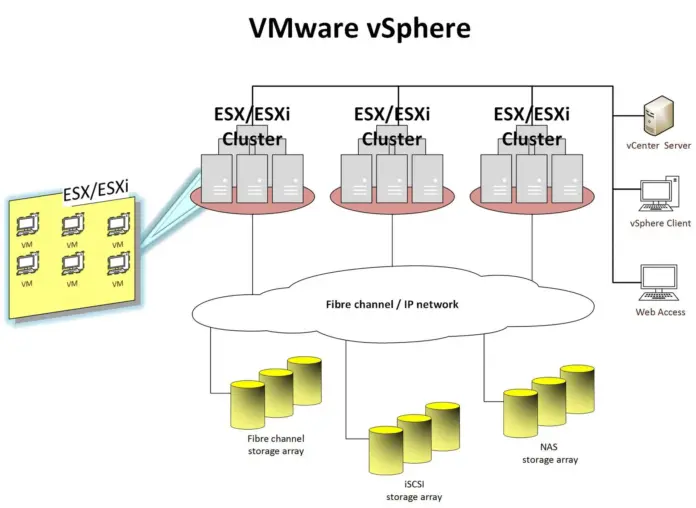
Image: VMware vSphere architecture diagram by TimeWaitsForNobody, CC BY-SA 3.0, via Wikimedia Commons.
Like our coverage? Add stepphase.com as a preferred source on Google to see more of our stories in Top Stories.

