
Google released Gemini 4 Neon on November 18, 2026, and priced it at $3 per million input tokens and $15 per million output tokens, with a 1 million-token context window. It sits between the cheaper Hydrogen and the larger Carbon in the Gemini 4 family, and its page shows no scheduled price change, unlike Carbon and Argon. Carbon and Argon go from $2 and $10 to $4 and $20 on December 1. Here are the prices side by side, what Google says Neon does, and what the claims do and do not prove.
How much does Gemini 4 Neon cost?
These are the paid-tier prices per million tokens on Google’s Gemini API pricing page, which we opened on November 19. Output prices include thinking tokens, and context caching is implicit only (explicit caching is not supported).
- Gemini 4 Neon: $3.00 input, $15.00 output, $0.15 cached input. Batch: $1.50 and $7.50. No free tier.
- Gemini 4 Hydrogen: $1.50 input, $7.50 output, $0.075 cached. Batch: $0.75 and $3.75. A free tier exists for standard requests only, and Google says free-tier inputs and outputs may be used to improve its products.
- Gemini 4 Carbon and Argon: $2.00 input, $10.00 output, $0.10 cached through November 30, then $4.00, $20.00 and $0.20 from December 1. Batch: half of those rates.
The page lists no separate prompt-size pricing tiers for these models. We covered Carbon’s launch pricing in our Carbon guide and the wider comparison in our API price table.
What would a real workload cost?
A simple example makes the December change concrete. Take a job that sends 10 million input tokens and gets 2 million output tokens back, billed at standard rates and ignoring caching:
- Neon: 10 x $3 + 2 x $15 = $60.
- Hydrogen: 10 x $1.50 + 2 x $7.50 = $30.
- Carbon through November 30: 10 x $2 + 2 x $10 = $40. From December 1: 10 x $4 + 2 x $20 = $80.
That is our arithmetic from the list prices, not a Google figure. Because output includes thinking tokens, the output count on a high-thinking request will be larger than the visible answer, so real bills depend on how much a model thinks.
What does Google say Gemini 4 Neon can do?
In its announcement, Google makes these claims. They are Google’s own, and several are measured on benchmarks run or reported by third parties:
- Cost per task: at the default “high” thinking level, Neon is 32% cheaper per task than Carbon, and roughly 50% to 80% cheaper per task than top competing frontier models. That is a per-task comparison, not a cut to the rate card.
- Rankings: an Artificial Analysis Intelligence Index score of 61 at the highest thinking level, third overall; second on the Vals Index at 70.9%; and first on the Artificial Analysis Coding Agent Index at 58.6.
- Thinking levels: four, with “high” as the default and “xhigh” at the top.
- Safety: Google lists a 0.09% misaligned-action rate on its agentic safety suite and a 99.2% agent honesty pass rate.
Where can you use it?
- Gemini API: in Google AI Studio on the paid tier, with the model ID
gemini-4-neon. The announcement does not mention Vertex AI. - Gemini for business: through the API and the model dropdown.
- Consumer and developer tools: paid Google AI Pro and Ultra subscribers can pick it in the Gemini app and in Google Antigravity.
- Cyber: a “Gemini 4 Neon for cyber” version is rolling out to trusted defenders in Google’s Fairwind Program.
What should teams check before switching?
- Test on your own tasks. The rankings come from public benchmarks and Google’s own testing. Run a sample of your real prompts at “high” and compare cost and quality against what you use now.
- Watch the thinking tokens. Output pricing covers them, so a cheaper rate per token can still cost more if a model thinks longer.
- Plan for December 1. If you are on Carbon or Argon, the price doubles, and Neon is 25% cheaper than Carbon at the new list price ($3 and $15 against $4 and $20).
- Mind the free tier. Only Hydrogen has one, and it allows Google to use your data.
What is still unknown?
The pricing page we opened shows no last-updated date, and Google has not said whether Neon’s price is introductory the way Carbon’s was. The benchmark numbers are as Google reports them and we have not re-run any of them. Check the pricing page again before you commit a budget.
Sources
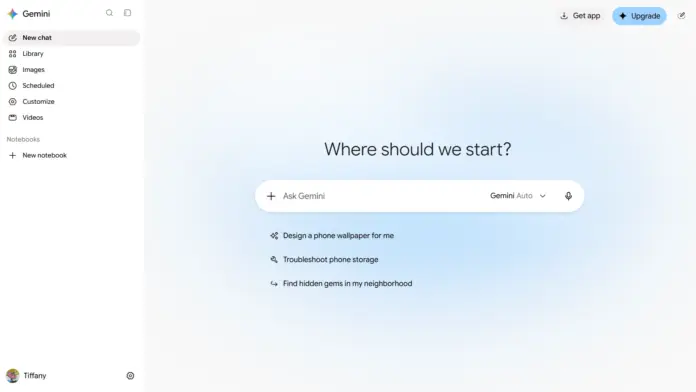
Image: Google Gemini web app screenshot, public domain, via Wikimedia Commons.
Like our coverage? Add stepphase.com as a preferred source on Google to see more of our stories in Top Stories.

