



 Saif Ali Tai
Ukraine is making a significant push into autonomous ground vehicles, rapidly deploying a new generation of military robots to the front lines. This surge aims squarely at mitigating the escalating threat posed by cheap, pervasive FPV (First-Person View) drones, which have made direct human exposure incredibly risky. These new robotic systems are taking on roles from reconnaissance to logistics, fundamentally altering battlefield dynamics. I’ll break down the specific technologies involved, the strategic implications for the conflict, and what this means for the future of robotic warfare, especially in congested, contested environments.
📋 In This Article
The New Front Line: Ground Robots and Autonomy
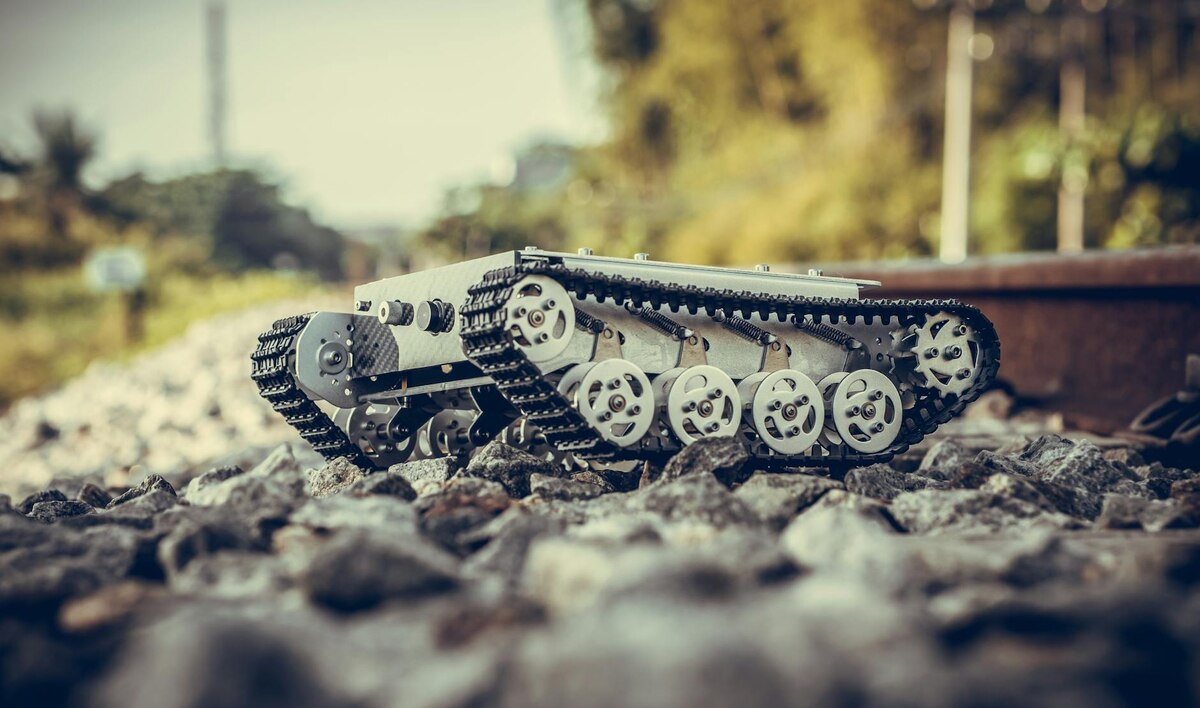
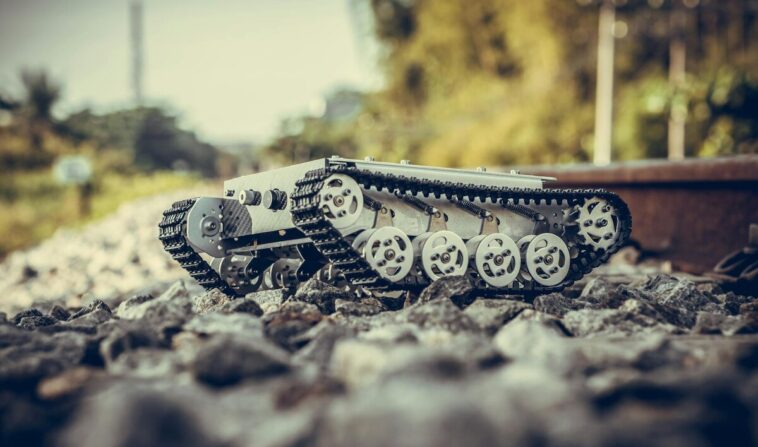
The deployment of Unmanned Ground Vehicles (UGVs) by Ukraine isn’t just about adding more machines; it’s a strategic shift. These robots are designed to perform the ‘3 D’s’: dull, dirty, and dangerous tasks, keeping soldiers out of harm’s way. We’re seeing a mix of purpose-built combat robots, logistics platforms, and even demining units. They’re essentially mobile, networked sensors and effectors, operating in environments too perilous for human scouts. This approach reduces casualties and allows human operators to focus on higher-level tactical decisions, rather than direct engagement in high-risk zones. It’s a smart move, given the sheer volume of drone threats.
From Recon to Resupply: Diverse Robotic Roles
Ukrainian forces are fielding UGVs in a variety of roles. Reconnaissance robots, often small and agile, provide real-time intelligence on enemy positions without risking human scouts. Logistics bots, like the ‘Rat’ UGV, can carry up to 300 kg of supplies, ammunition, or even evacuate wounded personnel from hazardous areas, significantly reducing the risks associated with resupply under fire. Direct fire support variants, though less common for full autonomy, are being tested for remote-controlled suppressive fire, acting as forward observers or even bait to draw enemy fire.
Autonomy Levels and Ethical Concerns
Most of Ukraine’s current battlefield robots operate under varying degrees of human supervision, often with ‘human-in-the-loop’ or ‘human-on-the-loop’ control. Full lethal autonomy, where a machine independently identifies and engages targets, remains a contentious ethical debate globally. While some systems can navigate autonomously, target recognition and engagement decisions are typically still made by a human operator, often miles away. This balances operational efficiency with maintaining accountability and adherence to the laws of armed conflict, a crucial distinction in the public eye.
Why Now? The Escalating Drone Threat
The urgent push for military robots stems directly from the overwhelming and persistent threat of FPV drones. These small, relatively inexpensive drones, often costing as little as $500, have revolutionized close-quarters combat. They allow operators to conduct precise strikes, often against individual soldiers or vehicles, with devastating effectiveness. This has created a battlefield where any exposed human is a potential target, making traditional tactics incredibly costly in terms of lives. Robotic systems, while not invulnerable, offer a disposable asset that can absorb hits or operate in contested airspace without human loss, profoundly changing the risk calculation for commanders.
FPV Drones: Cheap, Deadly, and Everywhere
The proliferation of FPV drones has been a defining characteristic of the conflict since late 2023. These drones, guided by skilled operators wearing goggles, provide a direct, high-fidelity view, enabling pinpoint accuracy against moving targets. Their low cost means they can be deployed in swarms, overwhelming defenses. This has made traditional infantry advances extremely dangerous, forcing forces to rethink every movement. The ability of a single FPV drone to disable a multi-million-dollar tank or kill a soldier with a $50 munition is a stark reminder of asymmetric warfare’s evolution.
Human Cost vs. Robotic Resilience
The calculus is grim but clear: losing a robot, even an advanced one costing tens of thousands of dollars, is preferable to losing a human life. Robots can be replaced, repaired, or even cannibalized for parts. A human casualty, however, has an immeasurable cost, both to families and to unit morale and experience. This stark difference in value drives the rapid adoption of UGVs. They act as sacrificial lambs, drawing fire, revealing positions, or clearing paths that would otherwise be fatal for human soldiers, fundamentally preserving invaluable human resources.
Key Players and Emerging Platforms

Ukraine’s Ministry of Defense and various private initiatives have been instrumental in this robotic acceleration. Platforms like the ‘Lut’ (Rage) and ‘Rat’ UGVs are at the forefront, developed rapidly to meet immediate battlefield needs. These aren’t just off-the-shelf solutions; they’re often bespoke, iterative designs, incorporating direct feedback from frontline units. This agile development cycle, bypassing traditional military procurement bureaucracy, has allowed for unprecedented speed in deployment. While specific numbers are classified, industry observers estimate Ukraine has increased its UGV deployment by over 400% in the past 12 months, signaling a massive scale-up.
“Rat” and “Lut”: Ukraine’s Indigenous Solutions
The ‘Rat’ UGV, for instance, is a tracked logistics and evacuation platform, robust enough to traverse challenging terrain and carry significant payloads. Its modular design allows for quick adaptation, from carrying stretchers to mounting different sensor packages. The ‘Lut’ UGV, developed by the Ukrainian company Roboneers, is a more compact, six-wheeled reconnaissance and combat support robot, capable of operating for up to 6 hours on a single battery charge. These systems highlight Ukraine’s impressive capacity for innovation under extreme pressure, leveraging local talent and a startup-like mentality to solve critical military challenges.
Western Tech Integration: Robotics from Allies
While Ukraine develops its own impressive fleet, integration with Western robotic technologies is also happening. Allied nations are supplying specialized demining robots, like the THeMIS UGV from Milrem Robotics (Estonia), which costs around $450,000 per unit. These systems, while expensive, provide advanced capabilities for clearing minefields, a critical and dangerous task. Furthermore, Western software and AI components are likely being integrated into Ukrainian-designed hardware, enhancing navigation, target recognition, and swarm coordination capabilities, pushing the envelope of what’s possible in autonomous battlefield operations.
Technical Hurdles and Rapid Iteration
Deploying robots in a high-intensity conflict zone isn’t easy. The battlefield is a chaotic, electronically contested environment. Maintaining reliable communication links, ensuring sufficient power for extended operations, and developing robust AI for navigation and threat avoidance are constant challenges. These systems operate in mud, snow, and under constant electronic warfare (EW) attack. Ukrainian engineers are working literally round the clock, iterating designs based on immediate feedback from the front, fixing bugs, and improving resilience. This rapid prototyping cycle is unprecedented in military tech, often seeing updates deployed weekly rather than annually.
Connectivity and Jamming: The EW Battlefield
One of the biggest hurdles is maintaining reliable communication. Both sides heavily employ electronic warfare systems to jam GPS signals, drone control links, and radio communications. This necessitates robust, jam-resistant communication protocols and redundant systems for UGVs. Many robots now incorporate multiple communication frequencies, satellite uplinks, and even optical communication methods to ensure command and control aren’t lost. When jamming is too intense, some systems are programmed for limited autonomous fallback modes, like returning to a last known safe point or continuing a pre-programmed path for a set duration.
Power and Payload: Endurance Limits
Battery life remains a significant constraint for many ground robots. While some can operate for 4-8 hours, depending on their mission and payload, this is often insufficient for extended operations without frequent recharging or battery swaps. Logistics robots, especially, need substantial power to carry heavy loads over long distances. Advances in battery technology, like solid-state batteries, are still largely in the R&D phase for large-scale military use, so current solutions involve efficient power management, hybrid power systems, and modular battery packs that can be quickly swapped in the field to maximize uptime.
The Future of War: A Glimpse into Robotic Warfare

Ukraine’s experience provides a grim but invaluable look into the future of warfare. The rapid integration of military robots and AI isn’t just a temporary measure; it’s a permanent shift. This conflict is accelerating the development and adoption of autonomous systems faster than any previous conflict, setting precedents for military doctrine globally. Nations are watching closely, absorbing lessons on how to integrate human and machine teams effectively. We’re seeing a move towards ‘robot swarms’ for reconnaissance and even offensive operations, fundamentally changing how ground forces will operate in the next decade. This is no longer science fiction; it’s today’s reality.
Rethinking Soldier Roles: From Trigger-Puller to Operator
As robots take on more direct combat and support roles, the role of the human soldier is evolving. Instead of being solely a direct combatant, soldiers are becoming operators, maintainers, and tactical decision-makers overseeing multiple robotic assets. This demands new skill sets: proficiency in robotics control, data analysis, and understanding AI limitations. Training academies are already adapting, focusing on human-machine teaming and complex systems management. This shift frees up soldiers for more strategic roles, increasing their survivability and allowing for more efficient use of highly trained personnel.
The Global Robotics Arms Race
The lessons from Ukraine are reverberating through defense ministries worldwide. Every major power is now accelerating its own UGV and drone development programs. The race isn’t just about building better robots, but about developing the doctrines, training, and logistical support to integrate them effectively into existing forces. Expect to see significant increases in defense spending allocated to AI and robotics over the next five years, as nations scramble to catch up or maintain their edge in this rapidly evolving domain. The battlefield of 2030 will look drastically different from today’s, defined by autonomous systems.
⭐ Pro Tips
- Invest in high-capacity portable power banks (like the Anker Prime 27,600mAh, ~$179) for any field tech, as robot endurance is still a bottleneck.
- Before deploying any AI-powered system, rigorously test its decision-making parameters in diverse, real-world scenarios to prevent unintended consequences.
- For remote operations, ensure you’re using a VPN like NordVPN ($89/year for 2-year plan) on control devices to secure command links from interception.
- Regularly update firmware on all connected devices, especially those with network access, to patch vulnerabilities and improve performance.
- When evaluating robotic systems, prioritize modularity and ease of repair in the field, as damage and maintenance are inevitable in harsh environments.
Frequently Asked Questions
How do military robots protect soldiers from drones?
Military robots protect soldiers by taking on high-risk tasks like reconnaissance, logistics, and direct observation in areas heavily targeted by FPV drones. They act as disposable assets, absorbing enemy fire or revealing positions that would otherwise endanger human lives, thereby reducing casualties and allowing human forces to operate more safely.
What types of robots is Ukraine using in combat?
Ukraine is using a variety of UGVs including small reconnaissance robots, larger logistics and evacuation platforms like the ‘Rat’ UGV capable of carrying 300 kg, and combat support robots such as the ‘Lut’ UGV. They also integrate specialized demining robots from allies, like the Estonian THeMIS, to clear hazardous areas.
Are these military robots fully autonomous?
Most military robots currently deployed by Ukraine operate with significant human oversight. They typically use ‘human-in-the-loop’ or ‘human-on-the-loop’ control, meaning a human operator makes the final decision for critical actions, especially lethal engagements. Full lethal autonomy is still largely in testing and subject to ethical debates.
How much do military robots cost to deploy?
The cost varies wildly. Small, locally produced reconnaissance robots might cost a few thousand dollars, while larger, more sophisticated logistics or demining UGVs like the THeMIS can cost upwards of $450,000 per unit. The overall deployment cost also includes training, maintenance, and communication infrastructure.
What are the biggest challenges for battlefield robots?
Key challenges include maintaining reliable communication links in electronically jammed environments, ensuring sufficient battery life for extended missions (many current systems operate 4-8 hours), developing robust AI for navigation in unpredictable terrain, and making robots durable enough to withstand combat damage and harsh weather conditions.
Final Thoughts
Ukraine’s rapid adoption of military robots isn’t just an interesting tech story; it’s a critical strategic response to a brutal, evolving conflict. These UGVs are proving indispensable for saving lives and maintaining operational tempo in an environment saturated with drone threats. The shift to human-machine teaming is permanent, fundamentally altering military doctrine and soldier training globally. If you’re interested in the future of warfare and robotics, keep a close eye on the innovations coming out of Ukraine. This isn’t just about battlefield tech; it’s about the future of AI and autonomy in the real world. Stay informed, because these developments will shape defense industries for decades to come.




GIPHY App Key not set. Please check settings