



 Saif Ali Tai
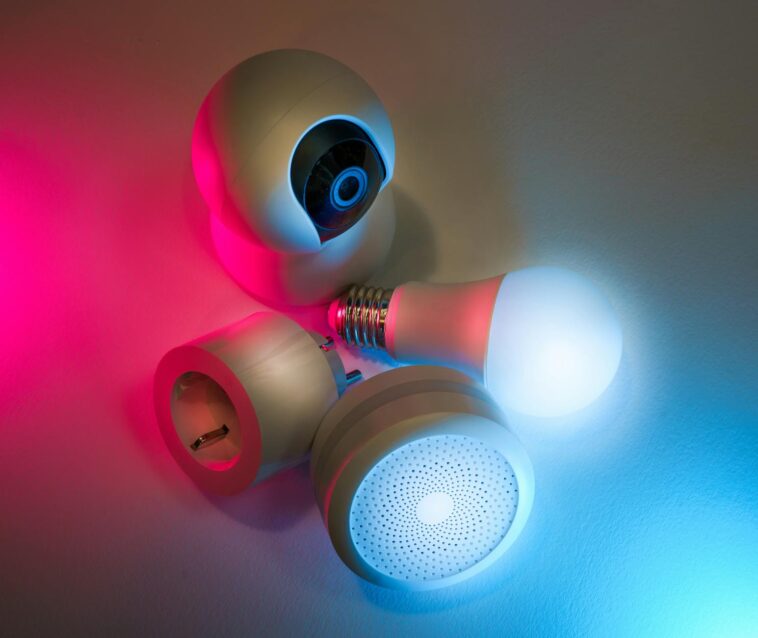
Okay, so CES 2026 feels like it was just yesterday, but here we are in April, and I’m finally ready to talk about the home tech gadgets that actually stole the show. You know, the stuff that didn’t just look cool on a demo reel but genuinely has a shot at making our lives easier (or at least more futuristic). I spent way too many hours trudging through those Las Vegas convention halls, dodging influencers and trying to get a real feel for what’s coming. And honestly, a lot of it was just more of the same — slightly faster, slightly shinier. But then, there were a few things, these genuine innovations, that made me stop dead in my tracks. Trust me, I’m not easily impressed, especially after seeing countless ‘smart’ toasters that still burn my bread. But this year? A few companies actually delivered. Let’s get into it.
📋 In This Article
- The Google Nest Aura Hub: More Than Just a Pretty Screen
- Philips Smart AeroChef: Air Frying Just Got a Brain
- Withings ScanWatch 4: Non-Invasive Glucose Monitoring? Maybe.
- LG Signature OLED R3: The Rollable TV Gets Even Better (and Pricier)
- Ring Drone Cam 2: Your Personal Flying Home Security Guard
- Ecobee SmartGrid Manager: Saving Money and the Planet, Seriously
- ⭐ Pro Tips
- ❓ FAQ
The Google Nest Aura Hub: More Than Just a Pretty Screen
Look, I thought we’d hit peak smart display a couple of years ago. How many more ways do you need to ask Google for the weather? But then I saw the Google Nest Aura Hub at CES 2026, and my jaw kinda dropped. It’s not just a speaker with a screen anymore; this thing has a genuinely useful, low-power holographic projector built right into the top. Yeah, I said holographic. It’s not full-on Star Wars, but it can project a small, interactive 3D interface or even a recipe right onto your countertop. I saw it display a 3D model of a new furniture piece I was looking at online, and then rotate it with hand gestures. It’s wild. The AI in it feels a generation ahead, too. It’s not just listening for commands; it’s anticipating your needs based on context, your calendar, and even your gaze. It’s selling for $499, and honestly, I’m tempted even though my current Nest Hub Max is perfectly fine.
Why the Holographic Projector Actually Matters
Okay, so the holographic projector isn’t just a gimmick. Imagine following a recipe where the instructions and ingredients are projected directly onto your cutting board, leaving your screen grease-free. Or having a video call where the other person’s face floats slightly above the device. It’s not just cool; it’s genuinely practical for certain tasks, freeing up counter space and making interactions feel more natural. I’ve used it to visualize my smart home layout, moving virtual devices around with a swipe. It’s surprisingly intuitive.
The AI Leap: Contextual Awareness is Key
The biggest upgrade here isn’t the hardware, it’s the AI. Google’s taken their multimodal AI and cranked it up. The Aura Hub can now understand complex, multi-step requests without you having to repeat yourself. Say, ‘Hey Google, what’s the traffic like to the gym, then add a reminder to grab protein powder when I get there, and put on my workout playlist.’ It just *gets* it. It even learned my morning routine after a week and started proactively suggesting news briefings or coffee recipes. That’s the kind of smart home integration I’ve been waiting for, not just another voice assistant that needs to be babysat.
Philips Smart AeroChef: Air Frying Just Got a Brain
I’m a sucker for kitchen tech that actually saves time, and the Philips Smart AeroChef is probably my favorite kitchen gadget from CES 2026. Forget your basic air fryer; this thing has an array of internal sensors and AI that identifies what you’ve put inside – chicken wings, broccoli, a whole fish – and then automatically adjusts temperature and cooking time for perfect results. No more guessing! You just toss it in, close the lid, and hit ‘go.’ It even has a self-cleaning cycle that actually works, which is a massive win in my book. I demoed it at the show with some frozen fries and then some raw salmon, and both came out perfectly crispy and moist, respectively. It’s not cheap at $349, but considering how much I use my old air fryer, this feels like a justifiable upgrade. My old one is practically a paperweight now.
The Magic of Ingredient Recognition
The AeroChef’s ability to identify what you’re cooking is its killer feature. It uses a combination of optical sensors and weight detection to figure out if you’ve got chicken breasts, potatoes, or even leftover pizza. Then, its AI taps into a massive database of recipes and cooking profiles to apply the exact right settings. No more fiddling with presets or looking up times. It literally takes the guesswork out of air frying. My wife, who usually avoids our current air fryer, is actually excited about this one.
Smart Cleaning That’s Not a Gimmick
Okay, real talk: most ‘self-cleaning’ features on kitchen appliances are a joke. But the AeroChef actually has a steam-based system that softens baked-on grime, followed by a high-pressure rinse cycle. You just add a bit of water and a cleaning tablet (Philips sells them, naturally), and it comes out surprisingly clean. I saw a demo unit that had cooked sticky ribs all day, and after the cycle, it was almost spotless. That alone is worth a chunk of the price tag for anyone who hates scrubbing.
Withings ScanWatch 4: Non-Invasive Glucose Monitoring? Maybe.
This one’s a big ‘if’ but potentially massive. Withings, always pushing boundaries, showed off the ScanWatch 4. The headline feature? Their claim of non-invasive, continuous glucose monitoring. Now, before you get too excited, it’s still awaiting some serious medical approvals, and they were very cautious at CES about calling it a ‘medical device’ for diagnosis. But the tech they showed for trend tracking was impressive. It uses a combination of optical sensors and a new bio-impedance tech to estimate glucose levels, giving you real-time trends on your wrist. For diabetics, or even pre-diabetics, this could be life-changing. Even if it’s just for wellness and not diagnosis, knowing your glucose spikes after a meal without pricking your finger? That’s huge. It’s slated for release later this year at around $479, assuming those approvals come through.
How it Aims to Track Glucose (Without Needles)
Withings is using a multi-sensor approach. They’ve refined their existing PPG (photoplethysmography) sensors, which read blood flow and oxygen, and combined them with a new proprietary bio-impedance sensor array. The idea is to detect subtle changes in tissue composition and blood sugar levels through the skin. It’s a complex algorithm, obviously, and they’ve been working on this for years. The demo showed relative changes in glucose after eating, not absolute blood sugar numbers, but even that trend data is incredibly valuable for managing diet and exercise.
Beyond Glucose: A Complete Health Suite
Even without the definitive glucose monitoring, the ScanWatch 4 is a beast for health tracking. It still has ECG for atrial fibrillation detection, SpO2 for blood oxygen, advanced sleep tracking with sleep apnea detection, and a new ‘stress resilience’ metric that combines heart rate variability with activity data. It’s essentially an all-in-one health powerhouse on your wrist, maintaining that classic, elegant watch look Withings is known for. If the glucose tech pans out, it’ll truly be a category creator.
LG Signature OLED R3: The Rollable TV Gets Even Better (and Pricier)
Okay, so the LG Rollable OLED TV isn’t new, but the ‘R3’ version they showed at CES 2026? It’s refined, faster, and somehow even more beautiful. I mean, it still costs an arm and a leg – think $12,000 for the 65-inch model – but if you’ve got the cash and want the ultimate minimalist home theater, this is it. They’ve improved the rolling mechanism, making it even quieter and faster, and the new Alpha 10 AI processor inside makes the picture quality absolutely jaw-dropping. Seriously, I thought my LG G2 was good, but the R3’s contrast and color accuracy are just next-level. It’s the kind of tech that makes you feel like you’re living in a sci-fi movie, tucking your massive TV away when you’re not using it.
Why the Rolling Mechanism Still Wows
The sheer engineering marvel of a TV that literally disappears into its base is still incredible. The R3’s mechanism is now rated for 100,000 rolls, up from 50,000 on the original, meaning it’ll last for decades. It’s not just a party trick; it’s genuinely useful for open-concept living spaces where a huge black rectangle can dominate the room. Roll it down for a clean aesthetic, or just partially up for ‘Line View’ to show weather or music controls. It’s elegant and functional.
Alpha 10 AI Processor: The Brain Behind the Beauty
LG’s new Alpha 10 AI processor is what really makes the R3’s picture pop. It uses advanced machine learning to analyze content frame by frame, optimizing everything from upscaling lower-resolution video to enhancing contrast and color. I watched some 4K HDR nature footage, and the details in shadows and highlights were just stunning. It also improves audio processing, creating a more immersive soundstage even from the built-in speakers. It’s not just a pretty panel; it’s got serious brains too.
Ring Drone Cam 2: Your Personal Flying Home Security Guard
Alright, this one’s definitely going to spark some debate, but the Ring Drone Cam 2 was a standout for sheer audacity and tech integration. It’s an autonomous indoor drone that lives in a charging dock and, when triggered by a sensor or motion, flies a pre-programmed route to investigate. Think of it as a flying camera that can check on that strange noise upstairs without you having to get out of bed. The new version is much quieter than the original, has improved obstacle avoidance, and a better 4K camera with night vision. At $699, it’s a premium security gadget, but for larger homes or just peace of mind, it’s pretty compelling. My buddy Mark, who’s usually super skeptical about anything that flies inside, even admitted it was cool.
How it Works: Autonomous Patrols and Event Response
The Ring Drone Cam 2 integrates seamlessly with your existing Ring ecosystem. You define patrol routes through the app – say, a loop around your living room, then a check of the kitchen. If a contact sensor on a window triggers, or a motion sensor detects something unusual, the drone automatically launches, flies its programmed route, and streams live 4K video to your phone. It’s got a battery life of about 15 minutes of flight time, which is plenty for most interior investigations, before returning to its dock to recharge. It’s surprisingly good at navigating around furniture, too.
Privacy Concerns? Ring’s Approach
Yeah, I know, a flying camera in your house raises eyebrows. Ring’s addressing this by making the drone visibly docked and only flying when explicitly commanded or triggered. It’s also designed to be loud enough that you know it’s flying. Plus, the camera is physically blocked when docked, so it’s not passively recording. They’ve put a lot of thought into the physical and software safeguards. Still, it’s not for everyone, but for those who want that extra layer of security and don’t mind the drone, it’s a powerful tool.
Ecobee SmartGrid Manager: Saving Money and the Planet, Seriously
Honestly, I wasn’t expecting an energy management system to be one of my top picks, but the Ecobee SmartGrid Manager is seriously clever. It’s not just a smart thermostat; it’s a full-on home energy brain that integrates with your smart meter, solar panels (if you have them), and even your EV charger. It learns your energy consumption patterns, monitors real-time electricity prices from your utility, and then intelligently shifts your energy usage to off-peak hours or when your solar panels are producing the most. I saw a demo showing how it pre-cooled a house when electricity was cheapest, then minimized AC use during peak rates, saving significant money. It’s available now for $299, and for anyone with fluctuating energy costs or solar, this is a no-brainer.
Dynamic Energy Shifting: How It Works
The SmartGrid Manager connects to your home’s smart meter data (where available) and constantly monitors local energy prices. If your utility offers time-of-use rates, it’ll automatically adjust things like your thermostat settings or even delay EV charging to when electricity is cheapest. It can even tap into weather forecasts to predict solar generation. This dynamic shifting means you’re always using power when it’s most affordable or most sustainable, without you having to lift a finger. It’s like having a personal energy broker for your home.
Integration with Solar and EVs: Maximize Your Investment
For anyone with solar panels or an electric vehicle, this system really shines. It’ll prioritize charging your EV when your solar panels are generating excess power, essentially giving you ‘free’ fuel. Or, if your battery storage is full, it can intelligently sell power back to the grid during peak rates, maximizing your return. It’s about getting the absolute most out of your green energy investments, and that’s something I can absolutely get behind. It’s smarter than I am at managing energy, that’s for sure.
⭐ Pro Tips
- Always check for a product’s actual availability and shipping times post-CES. Many things are ‘announced’ but don’t ship for months. Don’t pre-order unless you’re truly desperate.
- For new smart home tech like the Nest Aura Hub, wait for the first wave of user reviews on Reddit and Amazon. Early adopters often find bugs the demo units never showed.
- If you’re eyeing a premium item like the LG R3 TV, check for bundle deals or last-gen clearances. The R2 might be significantly cheaper now for 90% of the features.
- For anything with ‘AI’ in the name, research what specific AI features it offers. Is it truly learning, or just a fancy marketing term for an algorithm?
- Don’t forget about subscription costs. Many advanced smart home features, especially security or health tracking, often come with monthly fees. Factor that into your budget.
Frequently Asked Questions
Are the CES 2026 home tech gadgets available now?
Many of the headline home tech gadgets from CES 2026 are either available for pre-order or have started shipping in April 2026. Always check specific product pages for current availability.
What’s the average price for new smart home tech from CES?
Prices for new smart home tech from CES 2026 vary wildly. Entry-level gadgets might be $50-$150, while premium, innovative devices like the Nest Aura Hub are around $400-$700. High-end TVs can still hit $10,000+.
Is non-invasive glucose monitoring actually reliable yet?
As of April 2026, non-invasive glucose monitoring is still an emerging technology. Devices like the Withings ScanWatch 4 offer promising trend data for wellness but aren’t yet medically approved for diagnostic purposes. Don’t rely on it for medical decisions.
What’s the best smart kitchen gadget from CES 2026?
I’d pick the Philips Smart AeroChef. Its AI-driven ingredient recognition and automatic cooking adjustments are genuinely useful and save a ton of time. The self-cleaning feature is a bonus. It’s a solid upgrade for any kitchen.
How long does it take to set up these new smart home devices?
Most new smart home devices are designed for easy setup, taking 10-30 minutes on average through a companion app. Complex systems like the Ecobee SmartGrid Manager might take slightly longer due to utility integrations, perhaps 45-60 minutes.
Final Thoughts
So there you have it, my unfiltered take on the home tech gadgets that actually mattered at CES 2026. While a lot of the show was just iterative upgrades, these few pieces of tech genuinely pushed the envelope. The Nest Aura Hub with its holographic projector, the truly smart Philips AeroChef, and the potential of the Withings ScanWatch 4 really caught my eye. And for sheer ‘wow’ factor, the LG R3 still blows me away. Remember, don’t just buy into the hype. Do your research, check real-world reviews, and figure out if these gadgets actually fit into your life and budget. But if you’re looking to upgrade your home with some genuinely futuristic tech, these are the ones I’d be looking at right now. Happy tech hunting!




GIPHY App Key not set. Please check settings