



 Saif Ali Tai
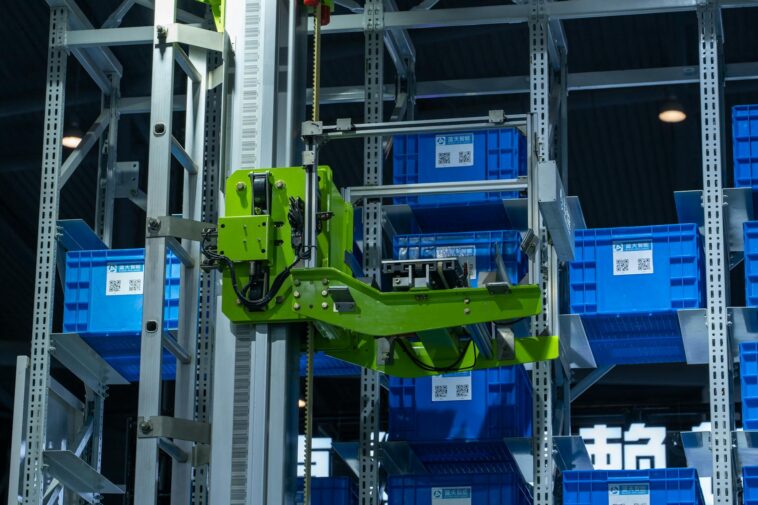
Okay, so I just read the latest whispers from the logistics world, and FedEx is making some seriously interesting moves for its 2026 automation strategy. Instead of pouring billions into developing all their own robots and AI, they’re leaning hard on partnerships. Honestly, when I first heard that FedEx chooses partnerships over proprietary tech for its automation strategy, my immediate thought was, ‘Wait, is that smart or just cheap?’ We’ve seen Amazon drop a fortune on Kiva and build out a massive internal robotics division, right? And it works for them. But here’s the thing: the tech landscape, especially in robotics and AI, moves at a brutal pace. Trying to keep up with everything in-house can be a black hole for R&D cash. So, is FedEx’s approach a stroke of genius for agility, or are they just kicking the can down the road? Let’s dig in.
📋 In This Article
- Why Not Build It Yourself? The Amazon vs. FedEx Philosophy
- Who’s in the FedEx Automation Squad? Predicting 2026 Partners
- The Integration Headache: The Biggest Downside of Partnerships
- What This Means for You (and Your Packages) by 2026
- The Talent Equation: Upskilling vs. Layoffs?
- My Honest Take: Smart Move, But It’s All About Execution
- ⭐ Pro Tips
- ❓ FAQ
Why Not Build It Yourself? The Amazon vs. FedEx Philosophy
Look, Amazon’s success with Kiva Systems (now Amazon Robotics) is legendary. They bought the company for $775 million back in 2012 and have since integrated those orange robots into pretty much every fulfillment center. It gives them total control, deep customization, and a competitive edge that’s hard to beat. They own the IP, they dictate the roadmap. But that’s Amazon, a tech company that happens to do logistics. FedEx, on the other hand, is a logistics company that needs tech. It’s a subtle but crucial difference. Their core competency isn’t building industrial robots from scratch; it’s moving packages efficiently. Trying to match Amazon’s R&D spend and expertise in robotics would be an insane uphill battle, probably costing them tens of billions by 2026 for a fraction of the innovation.
The Cost of Cutting-Edge R&D
Developing a truly advanced, proprietary robotics platform today isn’t just expensive; it’s a never-ending money pit. You’re talking about hiring top-tier AI engineers, mechanical designers, software architects – people who command salaries upwards of $200,000 annually. Then there’s the hardware, the testing, the failures. A single, custom-built warehouse robot can easily cost over $500,000 in R&D before it even rolls out. Multiply that by hundreds of different solutions needed across their network, and you’re looking at a budget that could cripple even a giant like FedEx.
Speed to Market: The Partnership Advantage
Here’s where partnerships shine. Instead of spending years developing a new sorting robot, FedEx can partner with a company like Locus Robotics or Geek+ that already has proven Autonomous Mobile Robots (AMRs) ready to deploy. They can implement these solutions in months, not years. This agility means FedEx can react faster to market changes, adopt the latest tech from specialized vendors, and scale operations much quicker. It’s about buying off-the-shelf excellence, not trying to reinvent the wheel every time.
Who’s in the FedEx Automation Squad? Predicting 2026 Partners
So, if FedEx isn’t building it all, who are they teaming up with? We’re already seeing hints. I’d bet big money on some key players by 2026. Think Boston Dynamics for heavy-duty, complex tasks – maybe even some last-mile delivery concepts like their Spot robot adapted for specific delivery zones. Then there are the warehouse automation specialists: Locus Robotics, with their incredibly flexible AMRs, or even Exotec for high-density storage and retrieval systems. For AI vision and sorting, I’m looking at companies leveraging NVIDIA’s Jetson platform or similar specialized AI hardware for package recognition and routing. It’s about picking best-in-class for each specific problem, instead of a ‘one-size-fits-all’ internal solution that’s probably just ‘good enough’ across the board.
Robotics for the Warehouse Floor
For internal logistics, FedEx needs speed and reliability. I expect them to expand heavily with AMR providers. Companies like Locus Robotics, with their collaborative robots, are perfect for moving packages from inbound to outbound, reducing human walking time by up to 70%. We’ll see these systems, likely Generation 3 or 4 models by 2026, working alongside human sorters, not replacing them entirely, but dramatically boosting throughput in sortation centers. It’s smart, incremental automation.
AI and Vision Systems: The Brains of the Operation
This is where partnerships can offer truly cutting-edge advantages. Imagine AI vision systems from companies like Plus One Robotics, powered by NVIDIA GPUs, identifying package damage in real-time or optimizing loading patterns inside trailers. These systems can learn and adapt far faster than any internally developed solution. By 2026, these AI brains won’t just be identifying barcodes; they’ll be predicting optimal routes within a facility based on package type, destination, and even weather patterns, all thanks to specialized AI partners.
The Integration Headache: The Biggest Downside of Partnerships
Okay, let’s be real. It’s not all sunshine and perfectly sorted packages with this strategy. The biggest challenge for FedEx is going to be integration. When you’re stitching together solutions from half a dozen different vendors – say, Locus robots, Exotec AS/RS, Plus One vision systems, and a Siemens logistics software suite – you’re begging for compatibility issues. Each system has its own APIs, its own quirks, its own update schedule. Getting them all to talk seamlessly, without bottlenecks or data silos, is a monumental task. I’ve seen companies struggle with far simpler integrations. This isn’t just plug-and-play; it’s a massive orchestration effort that needs serious IT muscle. If they don’t get this right, the whole ‘agility’ advantage goes right out the window.
API Hell and Data Silos
You’ll have different vendors using different data formats, different communication protocols. Imagine trying to get a real-time inventory count when your AMRs report to one system, your AS/RS to another, and your human operators use a third. This creates data silos that prevent a holistic view of operations. FedEx will need a robust, standardized middleware layer, probably something like a unified IoT platform, to ensure all these disparate systems can communicate effectively. If they cheap out here, they’re toast.
Vendor Lock-in (Even Without Proprietary Tech)
While they avoid traditional proprietary tech lock-in, they could still face vendor lock-in of a different kind. Once you’ve invested millions in integrating a specific vendor’s AMRs into your facilities and trained your staff, swapping them out for a competitor’s system becomes incredibly costly and disruptive. You’re reliant on that partner’s continued innovation, support, and pricing. It’s a calculated risk, but a risk nonetheless. FedEx needs strong contracts and clear exit strategies built into these partnerships.
What This Means for You (and Your Packages) by 2026
For us, the end-users, FedEx’s partnership strategy should mean faster, more reliable deliveries by 2026. Think about it: if they can deploy cutting-edge sorting robots and AI vision systems quickly, that means fewer mis-sorts, faster processing times, and potentially even later cutoff times for next-day delivery. I’m talking about getting that new GPU you ordered at 8 PM and still seeing it arrive by noon tomorrow because the system is so efficient. It’s not about flashing fancy proprietary tech; it’s about leveraging the best available tech to improve the core service. And for a company like FedEx, that’s what truly matters to customers. Nobody cares if a robot is blue or orange, as long as the package arrives on time.
Faster, More Accurate Deliveries
By automating mundane, repetitive tasks with specialized robots, human workers can focus on more complex, problem-solving roles. This reduces errors. Faster sorting means less time packages spend sitting in a facility. By 2026, I anticipate a measurable reduction in transit times for ground shipping, maybe even shaving a full day off typical 3-5 day routes in some regions. Plus, fewer lost or damaged packages, which is always a win in my book.
Potentially Lower Shipping Costs (Eventually)
Automation’s ultimate goal is efficiency, and efficiency often translates to cost savings. While FedEx might initially invest heavily in these partnerships, the long-term goal is to reduce operational expenses, particularly labor costs for repetitive tasks. This could, *eventually*, lead to more competitive shipping rates for consumers and businesses. Don’t expect prices to drop overnight, but by 2026-2027, we might start seeing the benefits trickling down, especially for high-volume shippers.
The Talent Equation: Upskilling vs. Layoffs?
Here’s the elephant in the room: what about the workforce? When you bring in a ton of robots and AI, people naturally worry about job losses. FedEx isn’t stupid; they know this. Their strategy, I think, will be less about mass layoffs and more about upskilling. Instead of having someone manually sort packages for eight hours, they’ll be trained to monitor robot fleets, troubleshoot issues, or manage the complex software interfaces. It’s a shift from manual labor to oversight and technical support. This is a massive HR challenge, but it’s also an opportunity to create higher-skilled, better-paying jobs within the company. I’m hoping to see substantial investment in training programs by 2026, not just pink slips.
From Manual Labor to Robot Wrangler
The jobs won’t disappear; they’ll evolve. We’ll see roles like ‘Automation Technician,’ ‘Fleet Manager,’ or ‘AI System Monitor’ become commonplace. These jobs require different skill sets – more analytical, more tech-savvy. FedEx needs to invest heavily in internal training academies, perhaps partnering with community colleges or vocational schools, to prepare their existing workforce. It’s a huge undertaking, but essential for a smooth transition and maintaining employee morale.
The Impact on Seasonal Hires
Seasonal hiring, especially during peak holiday periods, might be where the biggest impact is felt first. Robots don’t need holidays or overtime pay. While human workers will still be crucial, especially for complex or customer-facing roles, the sheer volume of temporary manual labor might decrease. FedEx will likely optimize their automation to handle predictable surges, reserving human hires for truly unpredictable events or specialized tasks. This could mean fewer temporary jobs, but potentially more stable, higher-skilled permanent ones.
My Honest Take: Smart Move, But It’s All About Execution
Honestly, I’m cautiously optimistic about FedEx’s decision to embrace partnerships for its automation strategy by 2026. It’s a pragmatic, financially savvy move that recognizes their core strengths and the incredible pace of innovation outside their walls. Trying to out-innovate Boston Dynamics or Locus Robotics in their specific niches would be a fool’s errand. This strategy lets them stay agile, adopt best-in-class solutions, and avoid astronomical R&D costs. But – and this is a HUGE ‘but’ – the success hinges entirely on their ability to integrate these disparate systems flawlessly. It’s like building a high-performance PC: you can buy the best CPU, GPU, and RAM, but if your motherboard or power supply is crap, or you can’t get the drivers to play nice, the whole thing falls apart. FedEx needs world-class system integrators and a rock-solid IT backbone. If they nail that, they’ll be a force to reckon with. If not, it’ll be a very expensive mess.
The Future is Collaborative, Not Isolated
The days of a single company dominating every aspect of a complex technological stack are largely over. The future of logistics, especially with advanced automation, is collaborative. FedEx understands this. By partnering, they’re not just buying robots; they’re buying into ecosystems of innovation, benefiting from the collective R&D of multiple specialized firms. This allows them to stay at the forefront of automation without having to be the sole inventor, which is a powerful strategic advantage in a rapidly evolving market.
Agility is King in the 2026 Supply Chain
The last few years have shown us how unpredictable supply chains can be. Companies need to be able to pivot fast. Proprietary, deeply integrated systems can be rigid and slow to adapt. A modular, partnership-based approach allows FedEx to swap out or upgrade specific components of their automation infrastructure much more easily. If a new AMR tech emerges that’s 20% more efficient, they can integrate it without having to re-engineer their entire proprietary system. That flexibility is going to be invaluable in 2026 and beyond.
⭐ Pro Tips
- Always check a company’s financial reports for R&D spending trends; a sudden drop might signal a shift to partnerships, saving them hundreds of millions.
- For consumers, if FedEx’s tracking shows ‘In Transit’ for over 48 hours for ground, it’s often a manual bottleneck. Automated hubs should drastically reduce this by 2026.
- When investing in logistics stocks, look for companies that balance proprietary tech with smart partnerships; pure proprietary can be a huge risk.
- Keep an eye on regional FedEx hubs; they’re often testbeds for new automation. See a lot of new robots? That’s a good sign for future efficiency.
- The one thing that made the biggest difference for me in understanding logistics automation was visiting a highly automated Amazon fulfillment center – it totally changed my perspective on what’s possible.
Frequently Asked Questions
Will FedEx automation lead to job losses by 2026?
It’s more likely to lead to job evolution than mass losses. FedEx will need fewer manual sorters but more technicians, robot operators, and data analysts. Expect upskilling programs to be critical for their existing workforce through 2026.
How much does FedEx spend on automation partners annually?
While exact figures aren’t public, industry estimates suggest FedEx could be allocating $500 million to $1 billion annually to automation partnerships and deployments by 2026, a significant portion of its capital expenditures.
Is FedEx’s partnership strategy actually worth it?
Yes, I think it’s worth it. It allows FedEx to stay agile, access best-in-class tech without massive R&D overhead, and scale solutions faster. The key challenge will be seamless integration, but the potential benefits outweigh the risks.
What are the best alternatives to FedEx for automated shipping?
Amazon Logistics is a strong alternative if you’re an Amazon seller, with its deep proprietary automation. UPS also heavily invests in automation, often mixing in-house and partner solutions, offering similar capabilities for large-scale shipping by 2026.
How long will it take for FedEx’s automation to fully roll out?
Full rollout across their entire global network will be an ongoing process, likely taking 5-10 years from initial deployment. By 2026, we’ll see significant automation in major hubs and regional sortation centers, but not every single facility.
Final Thoughts
So, here’s my bottom line on FedEx’s automation play for 2026: it’s a smart, calculated move. They’re not trying to be a tech startup; they’re focusing on being the best logistics company, and that means buying the best tech, not building it all. The agility, cost savings on R&D, and access to specialized innovation are huge upsides. But, and I can’t stress this enough, the whole thing could fall apart if their integration strategy isn’t top-notch. It’s all about how well they can get a dozen different systems from different companies to talk to each other without glitches. Keep an eye on their quarterly earnings calls for mentions of IT infrastructure investments and integration successes. If you’re shipping or receiving, this should mean faster, more reliable service down the line. It’s an exciting time to watch logistics evolve, and FedEx is definitely trying to stay ahead of the curve.




GIPHY App Key not set. Please check settings