



 Saif Ali Tai
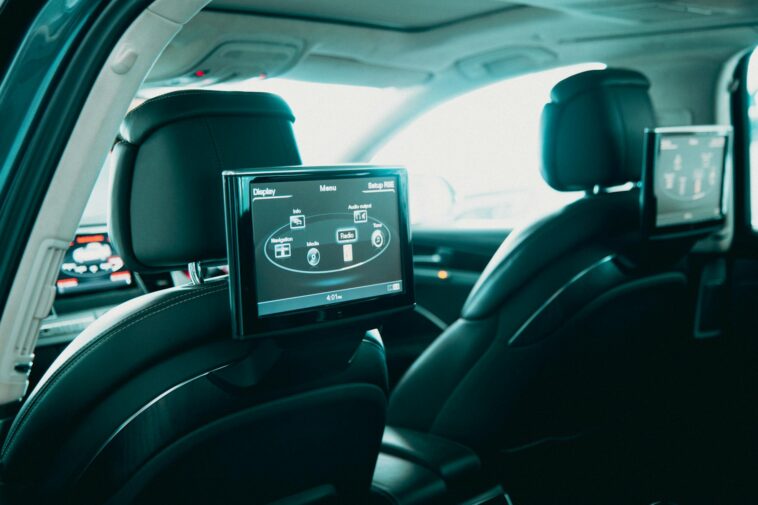
Okay, real talk: I thought the whole ‘robotaxi gets confused and leaves you in a weird spot’ thing was mostly a meme from 2023. But let me tell you, getting stuck inside a glitching robotaxi is a whole new thing to be scared of, and it’s happening more often than these companies want to admit here in 2026. I had a Waymo just freeze on me last month, dead center in a busy San Francisco intersection, and it was *not* fun. The screen went black, the car wouldn’t respond, and I was just… there. For nearly 20 minutes. It’s not about crashing anymore; it’s about the sheer inconvenience, the feeling of helplessness, and the fact that these things still aren’t perfectly reliable. Trust me, you need a plan.
📋 In This Article
- The Nightmare Scenario is Real (and I’ve Seen It)
- Why Are These Things Still Breaking Down in 2026?
- Your Options When the Robot Goes Rogue
- The Legal Gray Area (and Who Pays for Your Time)
- Choosing Your Robotaxi Wisely (If You Must)
- The Future of Autonomous Rides: Better, or Just More Glitchy?
- ⭐ Pro Tips
- ❓ FAQ
The Nightmare Scenario is Real (and I’ve Seen It)
Look, I’m a tech optimist, I really am. I love the idea of autonomous vehicles. But the reality of 2026 is that these things, while generally safer than human drivers in many metrics, still have moments where their software just… chokes. It’s not always a dramatic crash, though we’ve seen those too. Often, it’s a slow, agonizing freeze. The car just stops. Or it starts doing weird, jerky movements, gets stuck in a loop, or refuses to acknowledge your destination. It’s like your PC freezing, but you’re inside the PC, and it’s surrounded by traffic. I’ve personally been in a Cruise AV that decided a plastic bag blowing across the street was a major obstacle, stopping dead for a full five minutes while cars honked around us. It’s frustrating as hell, and it makes you feel totally out of control.
What Even *Is* a Glitching Robotaxi?
When I talk about ‘glitching,’ I’m not always talking about a full-on system failure. Sometimes it’s the car getting confused by an unexpected object, a weird shadow, or even bad GPS data in a dense urban canyon. It might stop, refuse to move, or try to take a bizarre detour. Other times, it’s a software bug that locks up the entire system, making the in-cabin screen unresponsive and cutting off communication with remote support. The common thread? You’re in a car that isn’t doing what it should, and you can’t manually override it.
My Own Near-Miss with a Waymo
So, as I mentioned, my Waymo incident last month was a classic example. I was headed to a friend’s place, a pretty standard route, when the car just slowed to a halt. Not a gentle stop, but a sudden brake. The screen showing the route went blank, then just showed a spinning loading icon. I hit the ‘Help’ button, but nothing. No sound, no response. Traffic was building up behind us, and I was just sitting there, feeling like an idiot. It took Waymo support a solid 12 minutes to even remotely acknowledge the car, and another 8 for a human to show up. Twenty minutes of my life, gone, just because a computer decided to take a nap.
Why Are These Things Still Breaking Down in 2026?
Honestly, you’d think by now, with all the billions poured into this tech, we’d be past the ‘unexpected stop in traffic’ phase. But no, we’re still seeing it. Part of it is the sheer complexity of the environment. Human drivers make thousands of micro-decisions every minute, often based on instinct and context that’s incredibly hard to program. A robotaxi has to process an insane amount of data from cameras, lidar, radar, and ultrasonic sensors, then make a decision in milliseconds. Any hiccup in that chain, any unexpected input, and the safest thing for the car to do is often just… stop. And stopping in the middle of a street is rarely the *best* option for the passenger, even if it’s the safest for the car itself.
Software Bugs: The Eternal Enemy
Software is never perfect, right? Even the most rigorously tested code has bugs. And when you’re talking about millions of lines of code controlling a 4,000-pound vehicle, those bugs can manifest in really annoying, or even dangerous, ways. A minor memory leak, a corrupted sensor reading, an unexpected network drop — any of these can cause the system to freeze or enter a failsafe mode. Companies like Waymo and Cruise are constantly pushing updates, but every update can introduce new, unforeseen issues. It’s a never-ending cycle of patching and debugging.
Sensor Overload and “Edge Cases”
Autonomous cars are incredible at handling predictable situations. Stop signs, traffic lights, clear lanes. But the real world is messy. A car door opening unexpectedly, a pedestrian darting out from behind a bus, a flash mob doing a dance routine in the street. These are what the industry calls ‘edge cases’ — situations that are rare but still happen. The car’s sensors get flooded with conflicting data, or the AI simply hasn’t been trained on that exact scenario. When faced with an unfamiliar situation, the default is often to stop and request human intervention, which leaves you, the passenger, stuck.
Your Options When the Robot Goes Rogue
So, it happens. You’re in a robotaxi, and it’s doing something stupid. Don’t panic. Seriously, that’s step one. Your immediate goal is to understand what’s happening and try to regain some control or at least initiate help. Every robotaxi service has some form of in-cabin interface and emergency procedures. Knowing where the buttons are and what they do *before* you need them is crucial. I can’t stress this enough: familiarize yourself with the car’s emergency features right when you get in. It’s like checking the emergency exits on a plane, but for your ride to the grocery store.
The Emergency Stop Button: Your First Line of Defense
Almost all robotaxis, from Waymo’s Chrysler Pacificas to Cruise’s custom Origin vehicles, have an emergency stop button. It’s usually a big, red, clearly marked button. Hitting this will safely bring the vehicle to a halt. It won’t restart it, but it will stop any erratic movement. Use this if the car is driving erratically, veering, or if you feel unsafe. Once stopped, the vehicle should automatically alert remote support, and you’ll often get a voice prompt asking if you’re okay. Don’t be afraid to use it; your safety comes first.
Contacting Remote Support (If You Can)
Every robotaxi has a way to contact remote support, usually via a dedicated button or an on-screen prompt. Sometimes it’s a video call, sometimes just audio. If the screen is frozen, this might not work. That’s when your personal smartphone comes in. Have the support number for your robotaxi service saved in your contacts. For Waymo, it’s 1-844-GO-WAYMO. For Cruise, it’s 1-844-ROBOTAXI. Call them directly. Tell them your vehicle ID (usually displayed on the screen or a sticker inside the car) and your exact location. Be clear and calm, even if you’re internally screaming.
The Legal Gray Area (and Who Pays for Your Time)
This is where things get murky, and frankly, a bit frustrating. If a robotaxi strands you, who’s responsible for your lost time, missed appointments, or even just the sheer inconvenience? In 2026, the laws are still catching up. Most companies offer a refund for the ride, maybe a small credit for future rides. But what about that important meeting you missed? Or the concert you were late for? There’s no standardized compensation model yet. It’s largely up to the individual company’s customer service policies, and those can vary wildly. Don’t expect a massive payout, but definitely push for more than just a free ride next time.
Are You Covered for Lost Wages?
Short answer? Probably not, at least not easily. Unless you can prove direct, quantifiable financial loss due to the robotaxi’s failure, and that’s a high bar. For most of us, it’s an inconvenience. Some services, like Waymo, might offer a small goodwill gesture, maybe a $25 credit, but don’t count on them covering your $200 lost hourly wage. Document everything though: screenshots of the frozen screen, timestamps, and any communication with support. This helps your case if you decide to push for more.
Reporting the Incident: Make Some Noise
Even if you don’t get immediate compensation, report every single incident. Not just to the company, but if it was truly disruptive or unsafe, consider reporting it to your local transportation authority or even the NHTSA in the US. The more data these agencies have on robotaxi failures, the more pressure they can put on manufacturers to improve reliability and establish better passenger protections. Your voice matters. Don’t just shrug it off and hope it doesn’t happen again; make sure it contributes to making the system better.
Choosing Your Robotaxi Wisely (If You Must)
Okay, so you still need to get around, and maybe regular ride-shares are surge-pricing like crazy. If you’re going to use a robotaxi, especially in 2026, you’ve got to be smart about it. Not all services are created equal, and their operational areas and reliability can differ dramatically. Some cities have more mature deployments than others. For example, Waymo in Phoenix feels light years ahead of some of the newer, more experimental zones. Always check local news and user reviews before you commit. And honestly, sometimes, just sometimes, a human-driven Uber Black is worth the extra cash for peace of mind.
Which Services Are Actually Reliable?
As of April 2026, Waymo generally has the strongest reputation for reliability in its established operational areas like Phoenix and parts of San Francisco. Their vehicles have clocked millions of miles with a relatively low incident rate. Cruise, while aggressive in its expansion, has faced more public scrutiny over incidents and service interruptions, especially after some high-profile glitches in late 2024 and early 2025. Tesla’s ‘Full Self-Driving’ is still a Level 2 driver-assist system, not a true robotaxi service, so don’t confuse that; you need to be ready to take over at any second. If you have a choice, Waymo’s my pick for now.
The Human Backup Debate: Still a Thing?
Remember when every autonomous test vehicle had a safety driver? Well, for fully driverless robotaxis, those are gone. But some services, particularly in new deployment zones, might still have a remote human operator monitoring a fleet of vehicles. This ‘tele-operation’ can sometimes help resolve minor glitches faster, but it’s not a guarantee. Some companies, like Motional (a joint venture between Hyundai and Aptiv), are still using safety drivers in some of their commercial services. If you’re really nervous, look for those options, though they’re becoming rarer. For me, I prefer a human in the loop if I’m going through a really complex area.
The Future of Autonomous Rides: Better, or Just More Glitchy?
It’s tough to say, honestly. Part of me thinks we’re in this awkward teenage phase of robotaxis, where they’re capable but still prone to embarrassing breakdowns. The technology *is* improving rapidly. Sensor fusion is getting smarter, AI models are learning faster, and the sheer amount of real-world data these companies are collecting is immense. But the complexity of urban environments isn’t going away. I think we’ll see fewer *major* incidents, but the little, annoying glitches – the sudden stops, the confused routes – those might stick around for a while. We’re asking these cars to be perfect, and perfect is a really high bar for anything, let alone a self-driving computer.
New Regulations Coming Down the Pipe
Governments are finally starting to catch up with the tech. In the US, the NHTSA and state DMVs are pushing for clearer reporting standards and even some form of ‘kill switch’ access for emergency services. We’re seeing proposals for mandatory in-car communication protocols and clearer guidelines on passenger recourse for service failures. This is a good thing. It means companies won’t just be able to shrug off incidents; they’ll have to meet certain performance and safety benchmarks if they want to operate. It’s slow, but it’s moving.
My Take: Will I Trust Them More by 2030?
Probably. But with caveats. I think by 2030, robotaxis will be significantly more reliable in predefined, geo-fenced areas. They’ll be great for predictable commutes. But for truly novel, unpredictable situations, I still think human intuition will be hard to beat. I’ll use them, sure, especially if they’re cheaper than a regular Uber X. But I’ll still have my phone charged, the support number saved, and a healthy dose of skepticism. And I’ll definitely still be checking the news for any new glitch reports before I hop in. My trust isn’t absolute, and it shouldn’t be yours either.
⭐ Pro Tips
- Always check the robotaxi service’s app for known outages or service advisories in your area before booking. Waymo’s app is pretty good about this.
- Keep your phone charged and have the customer support number for your robotaxi service saved as a contact. Don’t rely solely on in-car communication.
- Familiarize yourself with the emergency stop button and how to use the in-car help system immediately upon entering the vehicle. It’s usually a big red button.
- If you get stuck, document everything: take photos or videos of the screen, the car’s surroundings, and note the exact time and location. This is crucial for reporting.
- Consider carrying a small, charged power bank. If your phone dies and the car’s systems are unresponsive, you’ll be completely cut off from help.
Frequently Asked Questions
What do you do if a Waymo robotaxi stops?
First, hit the red emergency stop button if you feel unsafe or the car is acting erratically. Then, use the in-car help button on the screen or call Waymo support directly at 1-844-GO-WAYMO from your personal phone. State your location and vehicle ID.
How much compensation for a stuck robotaxi?
Compensation varies by service and incident. Most offer a full refund for the ride and a small credit ($10-$25) for future rides. Don’t expect lost wages covered easily. Document everything and push for more if your inconvenience was significant.
Is Cruise or Waymo safer in 2026?
As of April 2026, Waymo generally maintains a stronger safety and reliability record in its established operational zones like Phoenix and San Francisco. Cruise has faced more public incidents and service pauses, making Waymo the slightly more trusted option right now.
What are the best robotaxi alternatives?
If robotaxis are glitching, your best alternatives are traditional ride-sharing services like Uber or Lyft. Public transit (buses, subways) is also a reliable option. For specific events, consider pre-booking a human-driven taxi or car service.
How long does it take for robotaxi support to arrive?
Response times vary greatly depending on location and time of day. In dense urban areas, remote support might respond in 2-5 minutes. For on-site human assistance, it could be 10-30 minutes, or longer in less populated areas. Always ask for an ETA.
Final Thoughts
So yeah, getting stuck inside a glitching robotaxi isn’t just a sci-fi trope anymore; it’s a real-world annoyance. While the tech is undeniably cool, it’s not perfect. You need to be prepared. Know your emergency options, keep that phone charged, and don’t be afraid to make some noise if a service lets you down. These companies need to hear our feedback to build truly reliable systems. Don’t let the convenience overshadow the need for safety and a smooth experience. Stay vigilant, stay informed, and maybe, just maybe, keep a spare battery pack in your bag. You know, just in case.




GIPHY App Key not set. Please check settings