



 Saif Ali Tai
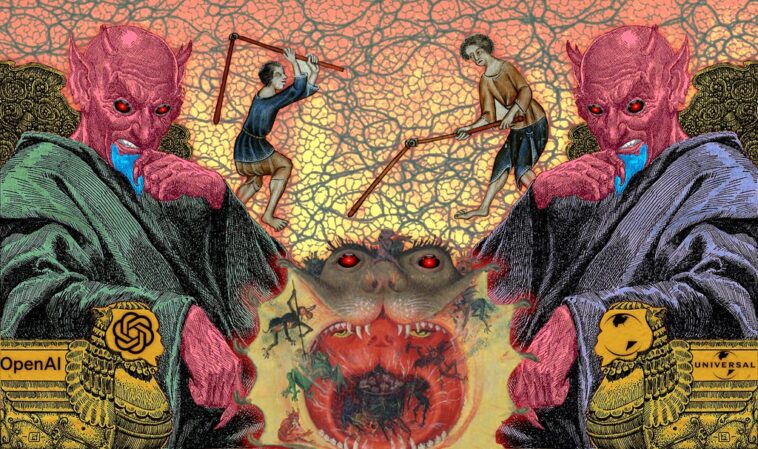
The dramatic legal battle between Elon Musk and Sam Altman over OpenAI’s soul is far from over in 2026. Musk’s lawsuit, filed in early 2025, continues to cast a long shadow, questioning OpenAI’s commitment to its founding principles of benefiting humanity. This ongoing saga is forcing a critical re-evaluation of AI governance and the very definition of ‘open’ in AI research, with significant implications for consumers and the industry alike.
📋 In This Article
The Core of the Conflict: Mission vs. Commercialization

At its heart, the Elon Musk Sam Altman OpenAI battle boils down to a fundamental disagreement over OpenAI’s direction. Musk alleges that Altman and the current leadership have abandoned the original mission of developing AGI for the benefit of all humanity, instead prioritizing commercial interests with Microsoft. He points to the aggressive product roadmap, including the GPT-5 series and the integration into Microsoft’s Azure cloud services, as evidence of this shift. While OpenAI maintains its commitment to safety and broad benefit, the sheer pace of commercialization, including their premium subscription tiers starting at $20/month for GPT-4 Turbo access, fuels Musk’s claims. Industry observers are watching closely to see if this legal precedent will impact other AI labs.
Musk’s Legal Arguments and Demands
Musk’s legal team is pushing for OpenAI to revert to a non-profit structure and release its most advanced models, like GPT-5, as open-source. He specifically cites internal documents from 2023 that he claims prove the shift towards a for-profit entity was a betrayal of the original charter. The lawsuit argues that OpenAI’s current trajectory, with its exclusive deals and closed-door development, directly contradicts the ‘open’ aspect of its name and founding ideals. This legal pressure is forcing a difficult conversation about transparency in AI development, a topic that has been gaining traction since the initial safety concerns around AI emerged.
OpenAI’s Defense and Counterarguments
OpenAI, backed by Microsoft’s substantial investment, has vehemently denied Musk’s accusations. Their public statements, often echoed by CEO Sam Altman, emphasize that the current structure is necessary to fund the immense computational resources and top talent required to build safe and beneficial AGI. They argue that the commercial partnerships, including the integration of their AI into services like Microsoft 365 Copilot (priced at $30/user/month), are essential for scaling and deploying AI responsibly. Furthermore, OpenAI highlights its ongoing safety research and its partnership with organizations like the Future of Life Institute as proof of their commitment to the original mission. They contend that releasing cutting-edge models prematurely would be irresponsible and dangerous.
The Role of Microsoft’s Investment
Microsoft’s multi-billion dollar investment, reportedly exceeding $13 billion by early 2026, is a central point of contention. Musk argues this deep integration has effectively turned OpenAI into a subsidiary of Microsoft, compromising its independence. OpenAI counters that this partnership provides the critical funding and infrastructure needed to compete and innovate at the forefront of AI research, enabling them to develop powerful models like GPT-5 and beyond, which require vast computational power and data.
Impact on AI Development and Competition
The protracted legal battle is creating uncertainty in the AI sector. Competitors like Google DeepMind, with their Gemini 2.0 series, and Anthropic, pushing their Claude 3.5 models, are watching closely. If Musk prevails, it could set a precedent for greater transparency and open-sourcing in AI, potentially accelerating innovation but also raising new safety concerns. Conversely, if OpenAI successfully defends its current model, it could solidify the trend of large, well-funded, private entities dominating cutting-edge AI development. This ongoing dispute has certainly put a spotlight on the ethical considerations surrounding AI, a topic that was already a major concern for users and regulators alike, especially with the increasing capabilities of models like GPT-4 and its successors.
The Shifting Landscape of AI Research
The debate highlights a broader tension between proprietary AI development and the open-source movement. While open-source models offer accessibility and foster collaboration, they can also be harder to control and monitor for misuse. OpenAI’s current approach, while criticized by Musk, aims to balance innovation with safety through controlled release and rigorous testing, a strategy that has seen their premium services like ChatGPT Plus, costing $20/month, become incredibly popular.
What This Means for You: Consumers and AI Users
For the average user, this battle translates into questions about access, cost, and the future direction of AI tools. If OpenAI is forced to open-source its models, we might see a surge of free, powerful AI tools, similar to what happened with earlier open-source LLMs. However, it could also lead to a fragmentation of development and potentially less robust safety measures. On the other hand, if OpenAI continues its current path, expect continued innovation in premium AI services, with powerful features locked behind subscriptions or enterprise deals. The pricing for advanced AI access, like OpenAI’s premium tiers, is likely to remain a key factor for consumers navigating these powerful new technologies.
Access to Advanced AI Models
The core issue is who controls the most powerful AI. Musk wants broad access, while OpenAI and its partners are focusing on controlled deployment. This impacts whether you’ll be able to use cutting-edge AI for free or if it will require a subscription, potentially costing $20 or more per month for the most advanced capabilities.
⭐ Pro Tips
- If you’re a developer, keep an eye on open-source AI projects like Llama 3 and Mistral AI for free, powerful alternatives to commercial offerings.
- Consider the value proposition: Is a $20/month ChatGPT Plus subscription worth it for your needs compared to free tiers or other services?
- Don’t assume all AI is ‘open’. Understand the licensing and access terms for any AI tool you use, especially for commercial applications.
Frequently Asked Questions
What is Elon Musk suing OpenAI for?
Elon Musk is suing OpenAI for allegedly abandoning its founding mission to benefit humanity and prioritizing commercial interests, particularly with Microsoft, over open development.
Is OpenAI still a non-profit?
OpenAI operates under a ‘capped-profit’ structure. While it has a non-profit parent, its commercial arm, which develops products like GPT-5, is for-profit and heavily backed by Microsoft.
Will OpenAI models become free?
If Musk’s lawsuit succeeds in forcing OpenAI to revert to its original mission, advanced models might become more accessible or open-source, but this is far from guaranteed.
Is GPT-5 out yet?
As of May 2026, GPT-5 has not been officially released. OpenAI continues to develop and refine its AI models, with GPT-4 Turbo and other advanced versions currently available through their services.
Final Thoughts
The Elon Musk Sam Altman OpenAI battle is more than just a legal dispute; it’s a defining moment for the future of artificial intelligence. Whether this leads to a more open and democratized AI future or solidifies the dominance of corporate giants remains to be seen. For now, stay informed about the legal proceedings and keep experimenting with the AI tools available – the landscape is changing rapidly, and understanding your options is key.




GIPHY App Key not set. Please check settings