



 Saif Ali Tai
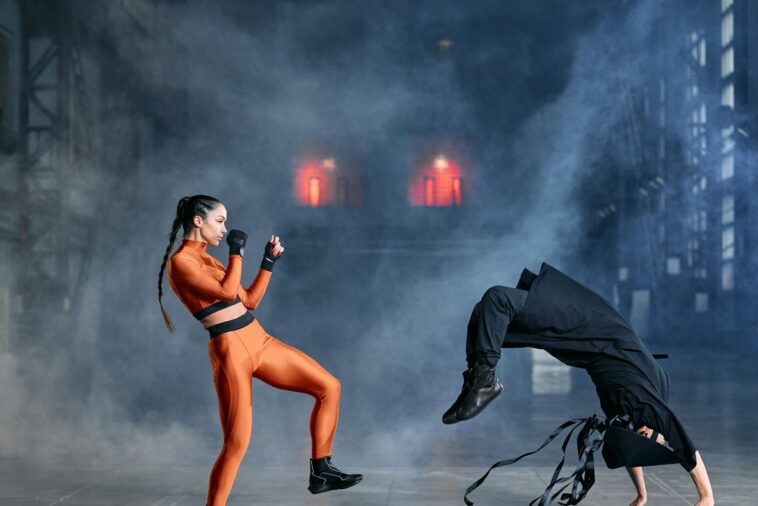
The world of Avatar: The Last Airbender and The Legend of Korra has captivated millions, making a fighting game adaptation a long-held dream for many fans. Now, that dream becomes a reality as **the Avatar fighting game will release on July 2 for PC and consoles** in 2026. This highly anticipated title promises to bring the unique bending styles and rich character roster to life in a competitive arena. But can it truly capture the essence of the beloved series while delivering a polished, engaging fighting experience? Our comprehensive review and analysis delves into what players can expect from this ambitious title, scrutinizing its gameplay, visual fidelity, and long-term potential. Is this the definitive Avatar gaming experience we’ve been waiting for?
📋 In This Article
- Gameplay Mechanics & Combat Flow: Bending the Rules of Fighting Games
- Graphics, Art Style & Performance: A Visual Feast for Bending Enthusiasts
- Roster & Content Depth: A Universe of Fighters and Stories
- Online Multiplayer & Competitive Scene: Bridging Worlds with Rollback Netcode
- Sound Design & Voice Acting: The Echoes of Bending and Beloved Voices
- Pricing, Editions & Value Proposition: Is the Investment Worth It?
- ⭐ Pro Tips
- ❓ FAQ
Gameplay Mechanics & Combat Flow: Bending the Rules of Fighting Games
A fighting game based on the Avatar universe demands more than just standard punches and kicks; it requires a nuanced representation of elemental bending. Early previews suggest a combat system that intelligently integrates each element, allowing for fluid transitions between defensive stances and offensive barrages. The game appears to balance accessibility for newcomers with deep mechanics for competitive players, a crucial factor for longevity. Expect character-specific bending styles that feel distinct, from Aang’s agile airbending to Toph’s grounded earthbending, ensuring every fighter offers a unique playstyle. The emphasis on environmental interaction, such as creating ice bridges or shattering rock formations, adds a dynamic layer to each battle, pushing strategic thinking beyond simple combo execution.
Core Bending Systems & Character Archetypes
The game successfully translates the four core bending elements—Air, Water, Earth, and Fire—into distinct combat archetypes. Airbenders like Aang and Jinora focus on evasion, mobility, and area control, while Waterbenders such as Katara and Korra (in water form) utilize ranged attacks and defensive ice constructs. Earthbenders, including Toph and Bolin, command powerful, slow-moving projectiles and robust defensive options. Firebenders like Zuko and Mako excel at aggressive, close-to-mid range pressure. Each character also features a unique ‘Avatar State’ or ‘Spirit Mode’ special ability, providing a temporary power spike that can turn the tide of a match, demanding careful resource management.
Control Scheme & Accessibility Features
The control scheme aims for a balance between traditional fighting game complexity and modern accessibility. Players can execute basic bending attacks with simple directional inputs and a single button, allowing casual fans to jump in quickly. More advanced techniques, such as elemental charge attacks, parries, and character-specific combo strings, require precise timing and multiple inputs, rewarding dedicated players. Crucially, the game includes a robust tutorial system, comprehensive move lists with frame data, and adjustable difficulty settings for AI opponents, ensuring a welcoming environment for all skill levels. Customizable button mapping and visual cues for special moves further enhance the player experience.
Graphics, Art Style & Performance: A Visual Feast for Bending Enthusiasts
Visually, the Avatar fighting game aims for an authentic adaptation of the animated series’ distinct art style, enhanced by modern graphics technology. Running on Unreal Engine 5.5, the game leverages advanced rendering techniques to create vibrant, expressive character models and dynamic, destructible environments. Elemental effects, from swirling vortexes of air to molten streams of fire, are rendered with breathtaking fidelity, making each special move a spectacle. On PC, expect support for resolutions up to 4K at 120Hz, provided you have a capable GPU (e.g., RTX 5070 or RX 8700 XT equivalent). Console versions target 4K at 60fps on current-gen hardware, with performance modes offering 1440p at 120fps for those prioritizing frame rate. The commitment to maintaining the series’ hand-drawn aesthetic while pushing graphical boundaries is commendable.
Visual Fidelity & Environmental Design
The game’s visual fidelity is a standout feature, particularly in its environmental design. Stages are meticulously crafted, drawing inspiration from iconic locations like Ba Sing Se, the Northern Water Tribe, and the Spirit World. These environments are not merely backdrops; many feature interactive elements that benders can manipulate. Earthbenders can raise pillars, Waterbenders can freeze sections of the ground, and Firebenders can ignite flammable objects, creating strategic opportunities and visual flair. The attention to detail extends to character animations, which are fluid and expressive, perfectly capturing the weight and power of each bending discipline while maintaining the series’ signature dynamic movements.
Frame Rates & Resolution Targets Across Platforms
On PC, the Avatar fighting game offers extensive graphical customization, allowing players to scale performance based on their hardware. High-end systems can expect a consistent 4K resolution at 120 frames per second (fps), with support for ray tracing and advanced particle effects. For console players, the PlayStation 5 and Xbox Series X versions target a native 4K resolution at a stable 60fps in ‘Quality Mode.’ A ‘Performance Mode’ is also available, reducing resolution to 1440p but boosting the frame rate to 120fps, ideal for competitive play. The Xbox Series S version typically runs at 1080p 60fps, showcasing optimized scaling to ensure a smooth experience across the entire console family.
Roster & Content Depth: A Universe of Fighters and Stories
A robust launch roster and engaging single-player content are critical for any fighting game’s success. The Avatar fighting game launches with an impressive 20-character roster, drawing from both Avatar: The Last Airbender and The Legend of Korra, offering a diverse array of bending styles and unique fighting archetypes. Beyond the initial lineup, the developers have outlined a clear post-launch content roadmap, including additional characters, stages, and cosmetic items. The single-player story mode is more than just a series of arcade fights; it features an original narrative that bridges events between the two animated series, providing lore expansion and character development. This commitment to both breadth and depth in content ensures significant replayability and value for money.
Initial Character Roster & Future DLC Expectations
The launch roster includes fan favorites such as Aang, Katara, Sokka (with boomerang combat!), Zuko, Toph, Azula, Iroh, Korra, Mako, Bolin, and Tenzin, among others. Each character feels distinct, with unique movesets and bending applications. The game also introduces a few unexpected but welcome additions, offering diverse combat styles. Post-launch, a ‘Season Pass 1’ is confirmed, promising four additional characters throughout 2027, with strong rumors pointing towards characters like Suki, Kuvira, and possibly even a spirit-form Avatar Roku. This ensures a steady stream of new content, keeping the meta fresh and engaging for the competitive community.
Story Mode & Single-Player Content
The single-player story mode is a highlight, offering an original narrative that sees characters from both eras interacting through a spiritual convergence event. It’s fully voice-acted by many original cast members and features beautifully animated cutscenes. Players will follow multiple character arcs, culminating in a grand battle that tests their mastery of various bending styles. Beyond the main story, the game includes an extensive Arcade Mode with character-specific endings, a challenging Gauntlet Mode with unique modifiers, and a comprehensive Training Mode that allows players to practice combos, bending techniques, and frame data. These modes provide substantial content for players who prefer offline experiences.
Online Multiplayer & Competitive Scene: Bridging Worlds with Rollback Netcode
For a fighting game in 2026, robust online multiplayer is non-negotiable, and the Avatar fighting game delivers. It features state-of-the-art rollback netcode, ensuring smooth, near-lagless online matches even across continents – a crucial element for competitive integrity. Ranked play includes a comprehensive ladder system with divisions, leaderboards, and seasonal rewards, encouraging players to hone their skills. Casual matches, custom lobbies, and spectating modes complete the package, catering to all types of online players. The developers have emphasized cross-play functionality between PC and all console platforms from day one, fostering a unified and larger player base. This commitment to a high-quality online experience positions the game well for a thriving competitive scene.
Netcode Quality & Matchmaking Systems
The implementation of rollback netcode is flawless, providing an exceptional online experience. Matches feel responsive, minimizing input delay and visual stutters, which is paramount for a fighting game. The matchmaking system is intelligent, prioritizing connections based on ping and skill level (for ranked play). It also offers region-specific server selection, allowing players to optimize their connection further. Casual lobbies allow players to set up custom rules, invite friends, and spectate ongoing matches, fostering community interaction. The game actively monitors connection quality, providing clear indicators to players before and during matches, ensuring transparency and reducing frustration from poor connections.
Cross-Play & Competitive Features
Full cross-play functionality is available across PC, PlayStation, and Xbox platforms from launch, uniting the player base and significantly reducing matchmaking times. This is a massive win for the game’s competitive longevity. The ranked system features a tiered progression (Bronze to Avatar) with visible skill ratings and detailed match history. Dedicated online tournaments can be organized directly within the game client, complete with bracket management and prize support. Spectator mode includes advanced features like input display and slow-motion replays, making it ideal for content creators and competitive event organizers. This robust online suite ensures the Avatar fighting game is ready for prime time in the esports arena.
Sound Design & Voice Acting: The Echoes of Bending and Beloved Voices
The audio experience in the Avatar fighting game is as meticulously crafted as its visuals. The sound design for each bending element is incredibly impactful, from the whoosh of an air blast to the crunch of earth shattering and the sizzle of fire. Every attack feels weighty and distinct, providing crucial audio cues for parries, blocks, and successful hits. The musical score is a blend of new compositions and iconic themes from both Avatar series, expertly woven into the gameplay to heighten tension during battles and evoke nostalgia in menus. Crucially, the game features a stellar voice cast, with many original actors returning to reprise their roles, lending an unparalleled layer of authenticity and immersion to the narrative and character interactions. This commitment to audio fidelity significantly enhances the overall experience.
Authentic Soundscapes & Elemental Audio Cues
The sound design is a masterclass in authenticity. Each elemental attack has a unique sonic signature that immediately identifies the bending discipline and impact. Airbending sounds light and swift, waterbending is fluid and impactful, earthbending resonates with heavy thuds and crumbles, and firebending crackles with intense energy. Environmental sounds, such as the distant calls of spirit animals or the ambient noise of a busy market, further immerse players in the Avatar world. These precise audio cues are not just for atmosphere; they are critical for competitive play, allowing seasoned players to react to off-screen attacks or anticipate opponent moves based on sound alone, adding a layer of depth to the strategic gameplay.
Voice Cast & Narrative Immersion
A significant draw for fans is the return of many original voice actors, including Zach Tyler Eisen as Aang, Mae Whitman as Katara, Dante Basco as Zuko, and Janet Varney as Korra. Their performances breathe life into the characters, making the story mode and character interactions feel genuinely connected to the animated series. The dialogue is sharp, often humorous, and rich with character personality, especially in pre-match intros and post-match banter. Even new characters are voiced by talented actors who capture the essence of the Avatar universe. This dedication to authentic voice acting elevates the narrative and ensures that every spoken line reinforces the deep lore and emotional resonance of the franchise.
Pricing, Editions & Value Proposition: Is the Investment Worth It?
The Avatar fighting game launches with a standard price point of $69.99 / £64.99 / €79.99 / AUD 99.95 across all platforms. Several editions are available, catering to different levels of fan engagement. The Deluxe Edition, priced at $89.99, includes the base game, a character skin pack, and early access to the first two DLC characters. The Collector’s Edition, retailing for $199.99, adds physical merchandise like a steelbook case, a statue, and an art book. While the initial investment might seem steep for the Collector’s Edition, the value proposition for the standard game is strong, given the extensive launch content, robust online features, and commitment to post-launch support. The developers have indicated a transparent monetization model, focusing on cosmetic DLC and character passes rather than predatory microtransactions, which bodes well for player trust.
Standard vs. Deluxe Editions: What’s Included?
The Standard Edition of the Avatar fighting game offers the complete base game, including all 20 launch characters, the full story mode, and access to all online features. It’s a solid package for the price. The Deluxe Edition, at a $20 premium, provides three exclusive character skins (e.g., ‘Fire Lord Zuko,’ ‘Spirit Aang,’ ‘Casual Korra’) and a 48-hour early access window to the first two DLC characters upon their release. For players who want a bit extra cosmetic flair and a slight head start on new fighters, the Deluxe Edition offers reasonable value. However, the core gameplay experience remains identical across both, so casual players might find the Standard Edition sufficient.
Post-Launch Support & Monetization Model
The developers have committed to at least two years of post-launch support, including free balance patches, bug fixes, and seasonal events. The monetization model revolves around optional cosmetic bundles and ‘Season Passes’ that introduce new characters and stages. Season Pass 1, priced at $29.99, will grant access to four additional characters and two new stages over the next year. There are no pay-to-win mechanics or loot boxes, and all gameplay-affecting content (characters) can be purchased individually or earned through in-game currency, albeit at a slower pace. This player-friendly approach ensures that the game’s long-term growth is sustainable and ethical, fostering a healthy community.
⭐ Pro Tips
- Master elemental combos early by practicing each character’s basic bending sequences in the training mode before jumping into online matches.
- Wait for post-launch patches to address potential balance issues; a ‘Deluxe’ edition might offer early access but often costs 20-30% more for minor perks.
- If planning for competitive play, invest in a high-refresh-rate monitor (144Hz+) and a wired connection for optimal input response and minimal latency.
- Don’t overlook the tutorial’s advanced sections; many players skip these, missing crucial mechanics that differentiate top-tier play.
- Avoid pre-ordering the most expensive Collector’s Editions unless physical collectibles are paramount; digital bonuses often become available later at lower prices.
Frequently Asked Questions
Will the Avatar fighting game have cross-play between PC and consoles?
Yes, the Avatar fighting game will feature full cross-play functionality across PC, PlayStation, and Xbox platforms from launch. This ensures a unified player base and faster matchmaking, benefiting the online competitive scene significantly. Players can challenge friends regardless of their chosen platform.
How much will the Avatar fighting game cost on release?
The standard edition of the Avatar fighting game will cost $69.99 / £64.99 / €79.99 / AUD 99.95. Deluxe and Collector’s Editions will be available at higher price points, offering additional digital content and physical merchandise, respectively. Look for deals post-launch.
Is the Avatar fighting game worth buying on day one?
For dedicated Avatar fans and fighting game enthusiasts, the Avatar fighting game offers a compelling package with deep mechanics, stunning visuals, and robust online features. The commitment to rollback netcode and extensive single-player content makes it a strong day-one contender. Casual players might consider waiting for reviews or sales.
What is the best fighting game controller for the Avatar game?
While personal preference varies, many competitive players prefer a dedicated fight stick or a high-quality gamepad like the PlayStation DualSense or Xbox Elite Series 2 for the Avatar fighting game. For PC, a wired connection is always recommended for minimal input latency. Experiment to find what suits your style.
How long is the story mode in the Avatar fighting game?
The single-player story mode in the Avatar fighting game is estimated to be around 6-8 hours long for a complete playthrough, depending on difficulty and player skill. It features multiple character arcs and provides significant lore expansion, offering good replayability for fans of the Avatar universe.
Final Thoughts
The release of the Avatar fighting game on July 2, 2026, for PC and consoles marks a significant moment for fans and the fighting game community alike. Our review and analysis suggest a title that not only honors its beloved source material with authentic visuals, sound, and character design but also delivers a mechanically deep and technically polished fighting experience. With robust rollback netcode, extensive content, and a player-friendly monetization model, it’s poised for long-term success. While the price point aligns with modern AAA releases, the value proposition is strong. If you’re ready to master the elements and engage in thrilling bending battles, **the Avatar fighting game will release on July 2 for PC and consoles review and analysis 2026** confirms it’s a must-buy. Prepare to step into the arena and unleash your inner bender!




GIPHY App Key not set. Please check settings