



 Shraddha Diwan
A chatbot just drove a car on Mars. Kind of.
NASA’s Perseverance rover has completed the first-ever AI-planned drives on another planet, and the AI doing the planning was Anthropic’s Claude – the same AI model you might use to write emails or debug code. Except this time, it was analyzing Martian terrain and plotting a safe route across alien ground.
What Actually Happened
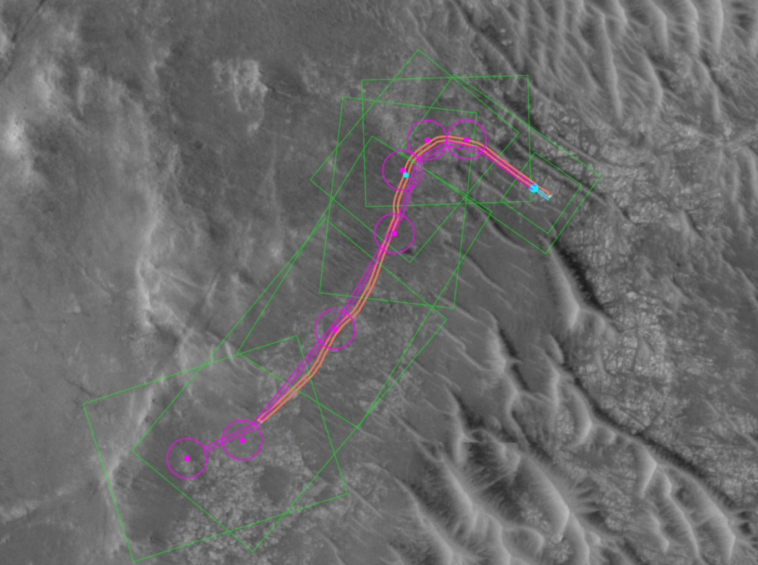
On December 8 and 10, 2025 (Martian sols 1707 and 1709), Perseverance drove a combined 1,496 feet (455.9 meters) across Mars. Nothing unusual about a rover driving on Mars – it’s been doing that for years. What was different is that the route was planned entirely by Claude’s vision-language models instead of human operators.
The first drive covered 689 feet, and the second added another 807 feet. Both went off without any issues.
Why This Is a Huge Deal
Here’s the context that makes this impressive. For 28 years, human operators at NASA’s Jet Propulsion Laboratory have manually planned every single Mars rover drive. They look at orbital imagery, analyze terrain data, identify hazards, and create waypoint-by-waypoint instructions. It’s meticulous work that takes significant time.
Claude did the same job by analyzing the same imagery and data that human planners use. Using its vision capabilities, the AI examined overhead satellite images and terrain maps, then generated a sequence of waypoints for Perseverance to follow.
There Was Still a Human Safety Net
Before you worry about AI sending a billion-dollar rover off a cliff – NASA wasn’t just blindly trusting the AI. The engineering team ran Claude’s planned route through JPL’s “digital twin,” a virtual replica of the rover and its environment. They verified over 500,000 telemetry variables before sending the commands to Mars.
So it was more like Claude did the planning homework and the humans checked every answer before submitting it. Which is exactly how you’d want it to work.
What This Means for Future Space Missions
The real benefit isn’t replacing human planners – it’s speed. Mars is between 4 and 24 minutes away by radio signal, depending on orbital positions. Every drive command has to be carefully planned on Earth and transmitted to Mars, with the rover sitting idle while it waits.
If AI can reliably plan drives, future rovers could potentially move more autonomously, covering more ground in less time. For missions to places like Europa or Titan, where communication delays are even longer, this kind of AI autonomy becomes essential.
The fact that Claude – a general-purpose AI model, not a specialized NASA tool – could handle this suggests that modern AI is more versatile than even its creators might have expected.



GIPHY App Key not set. Please check settings