



 Saif Ali Tai
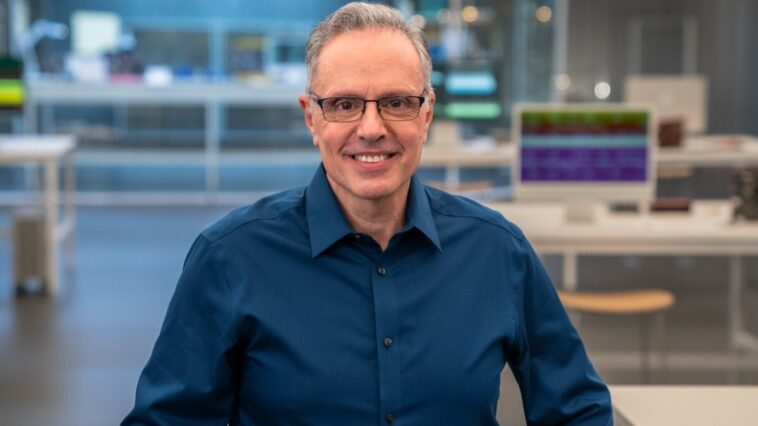
Apple is shaking up its hardware leadership with Johny Srouji, the architect behind its custom silicon, now officially stepping into the newly created role of Chief Hardware Technologies Officer. This move, confirmed by sources familiar with the matter, consolidates immense power under Srouji, placing him in charge of all hardware technology development, from chips to advanced materials and beyond. It signals a deep commitment to Apple’s in-house silicon strategy, which has been a major differentiator against rivals like Qualcomm and Intel for years. We’ll break down what this means for the iPhone 17, future Macs, and Apple’s AI ambitions.
📋 In This Article
Srouji’s Expanded Mandate: More Than Just Chips
For years, Srouji has been the mastermind behind Apple’s A-series and M-series chips, the silicon that powers iPhones, iPads, and Macs. His team consistently delivers performance and efficiency gains that often outpace competitors. With this promotion, his purview dramatically expands beyond just the CPU and GPU. He’s now set to oversee the integration of new battery technologies, advanced display components, camera sensors, and even the fundamental materials used in Apple devices. This consolidation aims to create tighter integration between hardware and software from the earliest design stages, a long-standing Apple advantage that Srouji will now amplify. Think of it as bringing the entire hardware engineering division under one, very capable, umbrella. This is a clear play to maintain Apple’s lead in integrated hardware-software experiences, which has been key to their success, especially as rivals like Samsung and Google pour resources into their own custom silicon efforts.
Consolidating Hardware R&D
Previously, various hardware engineering teams reported through different channels. Srouji’s new role unifies these efforts, allowing for more cohesive development cycles. This could mean faster iteration on technologies like mini-LED or micro-LED displays across more product lines, or a more integrated approach to thermal management in future M-series chips for MacBooks and potentially even iPhones. The goal is clearly to reduce dependencies on external suppliers for critical components and to innovate faster by controlling more of the stack.
Impact on Supplier Relationships
While Apple already works closely with suppliers, Srouji’s direct oversight might lead to even more demanding specifications and tighter integration requirements. Companies like TSMC (for chip fabrication), LG Display, and Samsung Display will likely face increased pressure to meet Apple’s evolving, in-house-driven roadmap. This could further solidify Apple’s unique hardware capabilities but also increase supply chain risks if key innovations falter.
What This Means for Future Apple Products
The immediate impact will be felt in the development of the iPhone 17 series and the next generation of M-series chips (likely M5 or M6). Expect Srouji’s team to push boundaries in areas like AI processing directly on-device. We could see significant improvements in Neural Engine performance, enabling more complex AI tasks like real-time language translation, advanced computational photography, and more sophisticated Siri capabilities without relying solely on the cloud. For Macs, the M-series chips will continue their march towards greater performance and efficiency, potentially closing the gap further with high-end desktop CPUs. Battery life, a perennial concern, might also see breakthroughs as Srouji’s team gains more control over power management silicon and battery chemistry integration. The goal is a seamless, powerful, and efficient user experience that competitors struggle to replicate.
iPhone 17: Smarter, Faster, More Efficient?
The iPhone 16 Pro models already feature the A18 Pro chip with a beefed-up Neural Engine. With Srouji now overseeing all hardware tech, expect the iPhone 17 Pro to debut with even more significant AI hardware enhancements. We’re talking about on-device LLM processing for features like advanced text summarization or personalized AI assistants, potentially running models with billions of parameters. This could mean a $1199 iPhone 17 Pro that feels more intelligent than ever before.
MacBooks and the M-Series Evolution
The M3 Max chip in the 14-inch MacBook Pro ($2399) already offers incredible performance. With Srouji’s expanded role, the focus will be on pushing the envelope further. Future M-series chips might integrate specialized AI accelerators even more deeply, potentially enabling real-time video editing effects or complex scientific simulations directly on the laptop. We could also see Apple revisit thermal designs to allow chips to sustain higher clock speeds for longer periods.
Apple’s AI Hardware Strategy Under Srouji
This move solidifies Apple’s commitment to on-device AI, a strategy that prioritizes user privacy and reduced latency compared to cloud-based solutions. Srouji’s hardware expertise will be crucial in developing specialized silicon (NPUs, AI accelerators) capable of running increasingly sophisticated AI models locally. We’ve already seen the trend with the iPhone 16 Pro’s A18 Pro chip, and this promotion suggests an acceleration. Apple aims to integrate AI more deeply into iOS, macOS, and its core applications, requiring significant hardware advancements. This isn’t just about faster apps; it’s about enabling entirely new AI-driven features that are responsive, private, and power-efficient. Industry observers believe this focus on custom AI silicon will be a key differentiator for Apple over the next five years, especially as competitors like Google continue to push their Tensor chips.
On-Device AI: Privacy and Performance
Apple’s long-standing emphasis on privacy aligns perfectly with an on-device AI strategy. By processing sensitive data locally, Apple avoids sending user information to the cloud, a major selling point. Srouji’s challenge is to make these on-device models powerful enough to compete with cloud-based services like OpenAI’s ChatGPT Plus ($20/month) or Google’s Gemini Advanced, without compromising battery life or device cost.
Beyond iPhones and Macs
While iPhones and Macs are the primary beneficiaries, Srouji’s influence could extend to Apple’s other hardware ambitions. This includes advancements in Apple Vision Pro, potentially leading to more powerful spatial computing experiences, and future smart home devices or even automotive ventures where custom silicon plays a critical role in user interface and processing power.
The Competition Reacts: What Rivals Are Doing
Apple’s relentless pursuit of custom silicon has forced competitors to adapt. Qualcomm, for example, has been investing heavily in its Snapdragon Elite X chips for Windows PCs, aiming to match Apple’s ARM-based performance. Samsung continues to refine its Exynos chips for Galaxy phones, though it still relies on Qualcomm for its flagship US models. Google’s Tensor chips, while improving, haven’t consistently matched Apple’s performance or efficiency benchmarks. Srouji’s expanded role likely means Apple will continue to widen this gap. Analysts suggest that while rivals can compete on features or ecosystem, Apple’s deep integration of custom silicon, now under a single hardware leader, provides a significant, defensible advantage. The $799 Samsung Galaxy S25 might offer a great camera, but the underlying silicon performance and efficiency race is where Apple is doubling down.
Qualcomm’s ARM Push
Qualcomm’s Snapdragon X Elite processors for Windows laptops are a direct response to Apple’s M-series dominance. These chips promise improved performance and battery life over traditional Intel CPUs. However, Srouji’s promotion suggests Apple isn’t standing still and will likely have next-gen silicon ready to counter these efforts with its own performance leaps.
Samsung and Google’s Silicon Strategies
Samsung’s Exynos and Google’s Tensor chips are key to their respective mobile strategies. While they’ve made strides, they haven’t achieved the same level of performance-per-watt or consistent year-over-year gains as Apple’s A-series and M-series. Srouji’s expanded role puts even more pressure on these companies to innovate or risk falling further behind in core performance metrics.
Is This Good for Consumers?
Ultimately, this consolidation of power under Johny Srouji is likely a net positive for Apple consumers. It reinforces Apple’s commitment to delivering highly integrated hardware and software experiences, characterized by strong performance, excellent battery life, and advanced features, particularly in AI. While Apple products remain premium-priced – think the $999 base model iPhone 16 – the company’s ability to innovate rapidly on silicon translates to tangible benefits for users. Expect future devices to be faster, more capable, and more power-efficient. The potential downside is increased reliance on Apple’s ecosystem and less differentiation between hardware components if Apple standardizes too heavily. However, given Apple’s track record, the benefits of tightly controlled hardware development under a proven leader like Srouji seem to outweigh the risks for the foreseeable future. It means the devices you buy from Apple will continue to push the envelope.
Innovation and Performance Boost
Srouji’s leadership has consistently delivered industry-leading performance. This expanded role means that trend will likely continue, benefiting users with faster devices, better graphics, and enhanced AI capabilities across all Apple product lines. The focus on efficiency also means better battery life, a crucial factor for mobile users.
Potential for Higher Prices?
While Apple’s silicon innovation is impressive, it also contributes to the premium pricing of its devices. The $1099 starting price for the MacBook Air M3 is already steep. As R&D costs for cutting-edge silicon increase, there’s always a risk that these costs could be passed on to consumers, although Apple historically absorbs much of this through volume.
⭐ Pro Tips
- Keep your iPhone 16 Pro or MacBook Pro M3 updated to the latest iOS/macOS to benefit from software optimizations for the Neural Engine.
- Enable ‘Low Power Mode’ on your iPhone or Mac when needed to maximize battery life, especially during intensive AI tasks.
- Consider purchasing AppleCare+ for your next Apple device; the advanced hardware requires specialized repair, and AppleCare+ covers accidental damage.
- Before buying a new Mac, check benchmarks comparing the latest M-series chip against previous generations to see if the performance jump justifies the upgrade cost.
- Avoid running too many demanding apps simultaneously on older iPhones (like the iPhone 14, $799) if you notice performance degradation; focus on tasks relevant to the device’s capabilities.
Frequently Asked Questions
Who is Johny Srouji and what did he do before?
Johny Srouji has been Apple’s Senior Vice President of Hardware Technologies since 2015. He led the teams designing Apple’s custom silicon, including the A-series chips for iPhones and the M-series chips for Macs and iPads.
How much does the new Apple hardware chief role pay?
While Apple doesn’t disclose exact executive salaries, Srouji’s compensation package, including stock, is estimated to be well over $20 million annually, reflecting his critical role.
Is Johny Srouji’s new role better than Tim Cook’s?
No, Tim Cook is the CEO and oversees the entire company. Srouji’s role is a significant executive position focused specifically on hardware technology development, reporting up through the executive team.
When will we see the first products from Srouji’s expanded hardware role?
The impact is already being felt in current development cycles. Expect the iPhone 17 series and next-gen M-series chips (M5/M6) to showcase the fruits of this integrated approach, likely launching in late 2025 and early 2026 respectively.
Will Apple still use Intel chips in Macs?
No. Apple completed its transition away from Intel processors to its own Apple Silicon (M-series chips) in 2022. All current Macs use Apple’s custom chips.
Final Thoughts
Johny Srouji’s promotion to Chief Hardware Technologies Officer isn’t just a title change; it’s a strategic power play by Apple. It consolidates control over the very silicon and components that define its products, promising faster innovation, deeper integration, and a continued edge in performance and efficiency, especially in AI. For consumers, this means future iPhones and Macs will likely be even more capable and refined. While the premium pricing remains, the tangible benefits of Apple’s relentless silicon R&D are clear. Keep an eye on Apple’s announcements for the iPhone 17 and next-gen Macs – they’ll be the first real indicators of Srouji’s amplified influence.




GIPHY App Key not set. Please check settings