



 Saif Ali Tai
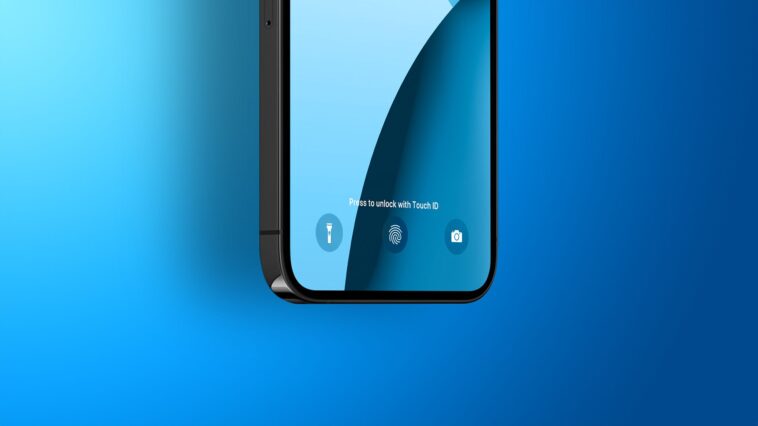
Remember the buzz around under-display fingerprint sensors for iPhones? Back in 2021, the iPhone 13’s potential exclusion of this feature, then common on Android devices, was a hot topic. Analysts like Ming-Chi Kuo speculated it might even skip the iPhone 14, pushing the innovation further out. Fast forward to 2026, and the landscape of smartphone biometrics has evolved dramatically. While under-display tech matured, Apple has continued to refine its Face ID system, exploring new ways to integrate authentication seamlessly. This evolution highlights Apple’s unique approach to biometrics, prioritizing security and user experience in ways that continue to shape the industry, even as under-display sensors become standard elsewhere.
Ming-Chi Kuo is the flagship analyst when it comes to the Apple universe. Extremely knowledgeable, he often hits the mark. Today, he evokes the future generations of the iPhone, that of this year and that of 2022. In a note recovered by MacRumors, he indicates for example that the fingerprint sensor under the screen would only arrive with the ‘iPhone 14. This is an innovation already present on many Android phones, whether they are high-end or less expensive products, such as the Nord CE 5G from OnePlus. Apple isn’t using it at the moment and that shouldn’t change this year.
Kuo says the more affordable iPhone 14 models, which are said to cost less than $ 900, may not even come with one. He adds some interesting little things regarding the format of these products. He predicts that the iPhone 13 would be the last generation to offer a 5.4-inch format. This is not surprising, since the iPhone 12 Mini, of this size, has not really found its audience.
THE IPHONE 14 WOULD ONLY OFFER TWO SCREEN SIZES
The iPhone 14 could therefore consist of only two distinct sizes (cut into several models) of 6.1 inches and 6.7 inches. Finally, concerning these next products, he indicates in his note that the series of smartphones presented in 2022 could offer a big improvement in the photo module with a wide-angle sensor of 48 megapixels. There was talk of the price being $ 900 higher, which would make the 14 series a cheaper series than the previous ones.
In the same note, he finally writes that the iPhone SE should make a comeback in an updated version. It would be, in its own words, “the cheapest 5G compatible iPhone so far.” It would have the same design as the current model but with improved performance. It should be presented in early 2022, according to the analyst.
Have you all enjoyed the Post!! Friends, your suggestions are always welcomed. Feel free and drop the message and also comment on the comment section, don’t hesitate to Contact us
Have a good day! See you all soon.
Source : MacRumors
It may interest you
The Evolution of iPhone Biometrics: Beyond the Fingerprint?
As of 2026, the smartphone biometric market is a diverse ecosystem. While under-display optical and ultrasonic fingerprint sensors are now mainstream, appearing in mid-range and high-end devices across brands, Apple has largely stuck to its Face ID strategy. Recent advancements in 2025 and 2026 have focused on enhancing Face ID’s speed, accuracy, and even its ability to work in challenging conditions, such as through masks or with sunglasses. Furthermore, rumors persist about potential future integrations, perhaps combining Face ID with other less intrusive methods or exploring entirely new biometric modalities. The focus remains on a secure, reliable, and user-friendly authentication experience, a testament to Apple’s long-term vision for device security.
More Questions Answered (2026)
Will iPhones ever get under-display fingerprint sensors?
While under-display fingerprint sensors are common in 2026, Apple has historically focused on Face ID. Future iPhones may integrate new biometric technologies or enhance existing ones, but a direct adoption of under-display fingerprint sensors remains speculative, with Apple likely prioritizing its own unique security solutions.
What are the latest biometric trends for smartphones in 2026?
In 2026, under-display fingerprint sensors are standard, with advancements in both optical and ultrasonic technologies. We’re also seeing improved facial recognition, enhanced iris scanning, and increased exploration of behavioral biometrics for continuous authentication, offering a more layered security approach.




GIPHY App Key not set. Please check settings