



 Saif Ali Tai
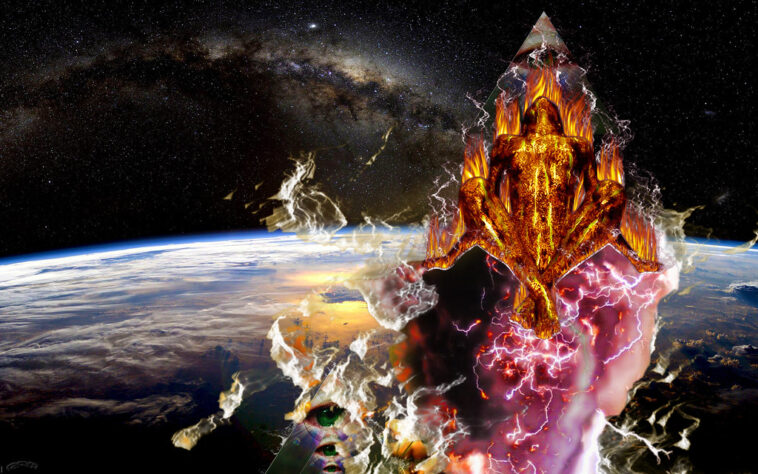
Riven co-creator Richard Vander Wende recently defended his use of AI art in upcoming projects, sparking debate among fans and artists. His candid explanation details how he integrates tools like Midjourney v8 and Stable Diffusion XL into his workflow, aiming to enhance creative output rather than replace human artists. This move highlights the growing tension in the digital art community regarding AI’s role and offers a glimpse into how seasoned developers are navigating these powerful new technologies, potentially shaping industry standards.
📋 In This Article
Richard Vander Wende’s Stance: AI as a ‘Tool, Not a Replacement’

Richard Vander Wende, known for his seminal work on Riven, clarified his position on AI art after initial community friction. He explicitly stated that AI serves as a conceptual and production aid, not a substitute for human artists or designers. Vander Wende leverages advanced AI models like Midjourney v8 for rapid ideation, generating hundreds of visual concepts in minutes that would otherwise take days. For more detailed asset creation, he employs Stable Diffusion XL, fine-tuning outputs for textures and environmental elements. He emphasized that the AI’s role is to accelerate the early stages of design, providing a vast palette of starting points that human artists then refine and integrate. This approach allows smaller teams to achieve high-fidelity visuals faster.
Integrating Midjourney v8 and Stable Diffusion XL
Vander Wende detailed a workflow where Midjourney v8 is used for broad strokes—mood boards, architectural concepts, and lighting studies. He then takes these outputs into Stable Diffusion XL, applying custom control nets and specific textual inversions to generate variations with greater stylistic consistency. The key, he explained, is meticulous prompt engineering and iterative refinement, treating the AI as a highly skilled, albeit non-human, assistant. This combination drastically cuts down concepting time by up to 70%.
Community Backlash and the Ethical Debate
Despite Vander Wende’s measured defense, the digital art community’s reaction remains divided. Many artists voiced concerns about AI art’s ethical implications, primarily focusing on the training data issue. Critics argue that current AI models are trained on vast datasets of existing artwork, often without artists’ consent or compensation, effectively ‘scraping’ their work. A recent survey indicated that over 60% of independent digital artists feel threatened by AI’s rapid advancement, fearing job displacement and devalued skills. This sentiment reflects ongoing legal battles, such as the Getty Images lawsuit against Stability AI, which highlights the murky legal waters surrounding AI-generated content and copyright.
The ‘Stolen Art’ Argument and Data Sets
The core of the ethical debate centers on whether AI models ‘learn’ from or ‘copy’ copyrighted material. While AI proponents argue it’s akin to an artist learning from others’ styles, many artists disagree, especially when models can reproduce distinctive styles or even specific elements. The lack of transparency regarding training datasets fuels this concern, making it difficult for creators to know if their work contributes to models they might oppose. This unresolved issue continues to be a major hurdle for broader AI art adoption.
Practical Tips for Artists Exploring AI
Vander Wende didn’t just defend his use; he offered actionable advice for other artists. His primary tip: view AI as a powerful sketchpad. “Don’t expect a final render,” he advised. “Expect a brilliant starting point.” He encourages artists to experiment with prompt variations, using specific adjectives and stylistic cues to guide the AI. Crucially, he stresses the importance of post-processing. “The AI gets you 80% there,” he noted, “but the last 20%—the soul, the polish—that’s all human.” This involves traditional digital painting, 3D modeling, and compositing to integrate AI elements seamlessly. He also suggested artists dedicate specific time slots, perhaps 30 minutes a day, to simply exploring AI prompts.
Beyond Prompting: Refinement and Human Touch
The Riven co-creator emphasized that the real skill lies in refining AI outputs. He outlined a workflow involving taking AI-generated images into tools like Adobe Photoshop or Affinity Photo for painting over, color correction, and detail work. For 3D assets, he uses Blender or Maya to integrate AI-generated textures onto custom models, ensuring artistic control and unique authorship. This hybrid approach ensures the final product retains a distinct human artistic vision, moving beyond generic AI aesthetics.
The Future of Digital Art and Game Development
Vander Wende’s public stance signals a broader shift in how creative industries, particularly game development, might integrate AI. Analysts predict a 15-20% increase in art asset production efficiency for studios that responsibly adopt AI tools over the next two years. This efficiency could democratize high-quality visuals, allowing smaller indie studios to compete with larger developers on an aesthetic level. The debate will undoubtedly continue, but the practical advantages of AI for rapid prototyping, concept generation, and texture work are becoming too significant to ignore. The industry is moving towards a future where AI isn’t an ‘either/or’ proposition but an integrated ‘and’ within creative pipelines.
Potential for Indie Developers and Rapid Prototyping
For indie developers, AI tools represent a massive opportunity. Historically, creating high-fidelity art assets has been a major bottleneck and cost driver. With AI, a small team can quickly iterate on visual styles, generate environmental assets, and even create placeholder character concepts for a fraction of the time and budget. This lowers the barrier to entry significantly, enabling more diverse and ambitious projects from independent creators who might previously have been limited by artistic resource constraints.
⭐ Pro Tips
- Start with Midjourney v8’s $10/month Basic Plan to experiment with prompt engineering before committing to Pro.
- Don’t skip the human touch; spend 30-45 minutes refining AI-generated concepts in Photoshop or Procreate to add your unique style.
- Avoid generic prompts. Instead of ‘fantasy landscape,’ try ‘ethereal forest, bioluminescent flora, ancient ruins, volumetric fog, Unreal Engine 5 render.’
Frequently Asked Questions
What AI art tools did Riven co-creator Richard Vander Wende use?
Richard Vander Wende primarily uses Midjourney v8 and Stable Diffusion XL for conceptualization, ideation, and texture generation. He emphasizes they are tools to augment, not replace, human creativity.
Is AI art ethical for commercial projects?
It’s a hotly debated topic. While tools improve, legal challenges around training data persist. Many creators integrate AI as a tool, not a replacement, for ethical use, focusing on human refinement and control.
How much do professional AI art tools cost in 2026?
Midjourney’s Basic Plan starts at $10/month, with Pro at $48/month for more GPU hours. Stable Diffusion XL models are often free or have low API costs, but require powerful local hardware for best performance.
Final Thoughts
Vander Wende’s defense isn’t just about his projects; it’s a clear signal that AI art is here to stay, evolving into a sophisticated tool for creators. His approach—using AI to augment, not replace—offers a pragmatic path forward. For artists and developers, the message is clear: understanding and adapting to these tools will be crucial. Get hands-on with a free trial of Stable Diffusion or a Midjourney subscription and see how it fits into your creative process.




GIPHY App Key not set. Please check settings